Many workers look forward to Friday both as the last workday of the week and for the paycheck. But for some workers, Friday delivers little or no pay.
In an effort to keep their skills sharp, some unemployed or career-changing people are taking unpaid positions at companies, hoping they turn into paid jobs or that the skills and connections they gain land them jobs elsewhere.
“I think because of the economy today and because of the length of time people are out of work, they need to find every way they can to stay in touch with people in the field,” said Marie R. Geary, an alumni career adviser at the University of Rhode Island.
Geary and other career counselors report that a small contingent of the unemployed is seriously considering – and accepting – professional-type positions without a paycheck. And while internships are typically associated with college students or recent graduates, the difficult job market is leading former professionals into the positions as well.
Geary said the reasons vary but generally her clients hope the positions will avoid work gaps on their resume, add to their skills, let them keep up with industry trends or forge connections with potential employers.
Such a position may also smooth the way to a new industry by providing base experience, said Alex Vilner, the owner of Lincoln-based Sinoma Consulting, which provides career advice.
“In the modern day and age the market situation is fairly tough,” he said. “For somebody with no experience whatsoever to just blindly go and change their field of expertise – it’s just not going to happen.”
Some are so anxious to change career fields that they swap paying jobs for opportunities to garner experience.
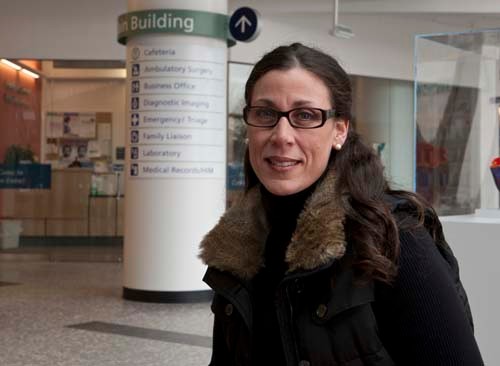
Carolyn Frangos quit her job as a teacher’s aide in Cranston making $7.50 an hour last fall for an AmeriCorps position that pays about $3.60 an hour via a scholarship. But Frangos, 47, said the experience of volunteering at Women & Infants Hospital in Providence more than offsets the pay cut.
The experience, she hopes, will position her for nursing school at the Community College of Rhode Island and later, as a professional in the health care field.
To gain even more experience, she started volunteering last week at Rhode Island Hospital in the oncology department. The hands-on practice can never be recreated in a classroom, she said.
“Building skills is really important but experience is probably the most important,” she said. “That’s something really, really crucial.”
Frangos, a single mother, said she hopes the volunteer jobs also inspire her children to reach for their dreams, while teaching them the importance of volunteering.
Career counselors say that Frangos, once a graphic designer earning as much as $65,000 annually, is lucky.
Some job seekers need to accept the first job that comes along – even a low-paying one – just to pay the bills.
“I think in most cases people can’t afford to [take low-pay or unpaid internships],” Geary said.
People – especially those that formerly held high-ranking jobs – may also need to overcome a stigma of working for nothing, said Jerry Vastano, a career adviser at Lee Hecht Harrison’s West Hartford, Conn., office. Vastano, who is also treasurer of the Association of Career Professionals International, said positions where senior-level people can volunteer at the same levels are hard to come by.
In other cases, unpaid positions at companies are reserved for interns attending college. Companies may also be hesitant to open themselves up to charges of labor abuse or seeing a worker they train land at a competitor, said Thomas Wharton, managing partner at OI Partners-Lifocus Inc. in Warwick.
“I think that it’s not a common occurrence and where I have heard it in the past is usually involving a small company that would like an extra hand around but is not in the spotlight for labor laws or confidentiality,” he said.
It worked. When Northeastern career-center administrators asked him in an interview if he had experience advising college students, Egan replied with an unequivocal yes, and cited examples.
“I’m an advocate of it because it added structure to my workweek – or lack of workweek,” he said. “I should say it also gave me an opportunity to network and a reason to get up.”
There are people similar to Eagan across North America, said Heather Turnbull, president of the Association of Career Professionals International.
Turnbull said older workers in particular feel pressure to stay involved with the industry and keep abreast of the latest trends. Some may be willing to work for free in return for experience. Others are willing to accept a nominal paycheck merely to get their foot in the door, Turnbull said.
Many industries, she said, are changing so fast some employees have no choice. Take journalism, for example. No one, she said, could have imagined 50 years ago the technology that reporters routinely rely on today. And who could have dreamed of reporters dodging bullets in battlefields as part of an “imbedded” team of journalists with the military.
Perhaps it’s an extreme example, but the same underlying principles stretch across industries, Turnbull said.
“Some people need to work from a social, emotional, or a good mental health perspective. They want to remain engaged. They’re used to a routine,” Turnbull said. “But there’s usually some quid pro quo. We’re not usually by our nature going to do something without some numerical compensation.” •