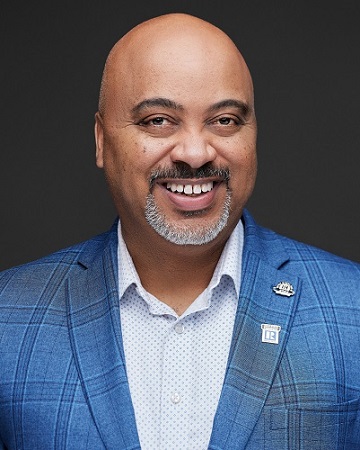
Bryant Da Cruz is the 2023 president of the Rhode Island Association of Realtors. Da Cruz, who was the first person of color to head the Rhode Island Association of Realtors, also sits on the organization’s Diversity Equity and Inclusion Committee.
Da Cruz is a real estate agent at Century 21 Guardian Realty in South Kingstown. A graduate of Johnson & Wales University and a resident of South Kingstown, he previously served as the publicly elected vice president of the South Kingstown Town Council. He is also a member of the board of advisors for Bishop Hendricken High School and is a federal political coordinator for the National Association of Realtors.
Building a Strong Data Foundation in the Age of AI
Artificial intelligence (AI) has become a key priority in the boardroom and across management —…
Learn More
PBN: What should we know most about racial disparities in homeownership and trends in the Rhode Island real estate market?
DA CRUZ: When you look at some of the national statistics and stats we have for the state of Rhode Island, one of the biggest things in terms of looking by race, for example, the African American population nationally and in our state has been making progress in the past but has not been making as much progress comparatively in recent history relative to other races.
The biggest thing when it comes to homeownership is, of course, it helps with fulfilling some of Maslow’s hierarchy of needs, but also, just as importantly, throughout history owning property has been a significant determining factor in generational wealth in our country.
PBN: What do the statistics say?
DA CRUZ: These are stats that come from the Census Bureau and data gathered by the NAR [National Association of Realtors] when you look at homeownership rates. When we look at the state of Rhode Island for white Americans, the homeownership is 70%. Comparatively, for Black Americans in Rhode Island, it’s 32%. The homeownership rate for Asian Americans in Rhode Island is 55%. For Hispanic Americans, it’s 38%. The overall homeownership rate nationally is 65.5% based on the last stat we had from 2021, and that’s fluctuating.
PBN: What else have you gleaned from these reports?
DA CRUZ: In this report, the “2023 Snapshot of Race and Home Buying in America,” it states that for Rhode Island, 26.7% of white Americans, 35.9% of Black Americans, 19.3% of Asian Americans and 38.1% of Hispanic Americans are spending more than 30% of their incoming on housing.
When people get approved for a mortgage, they look at the debt-to-income ratio. Thirty percent used to be the rule of thumb for what a household should be spending at the maximum. It shows that there is a huge affordability factor for housing across the board.
PBN: Can you tell us what the Rhode Island Association of Realtors is doing to address racial disparities or other problematic trends among different races when it comes to homeownership and representation among real estate professionals in the state?
DA CRUZ: What we’re doing is, at the national level, state and local levels of the association, is putting DEI [diversity, equity and inclusion] at the forefront of our minds. We have DEI committees nationally. Every part of our organization has DEI committees. At the national, state and local levels, we try to provide education, tools and also one of the things we’re doing is working to make our Realtor population more diverse as well by having mentorship programs and things of that nature. That’s something we’ve been working on for a while. Diversity is so important to all of us.
If you’re a Realtor, you need to understand certain cultures are underrepresented in the real estate world, in homeownership and among Realtors. We need to be sensitive to that and make sure we’re encouraging homeownership and fair housing for all. The other thing that is important is representation in leadership within our organization.
PBN: What kind of benefits are there for those considering membership in the Rhode Island Association of Realtors, especially those in underrepresented racial groups?
DA CRUZ: In order to be classified as a Realtor, you have to be part of a local association, which gives you membership to the state and national association. Anyone can get a real estate license from the state to practice real estate. But in order to be called a Realtor, you have to be part of our organization at the local level first.
The biggest thing is our Code of Ethics. Prior to the National Association of Realtors, it was like the wild wild west and consumers were not being protected, as well as practitioners. The NAR was formed to address that. The Code of Ethics was adopted in 1913. It gets updated yearly. It lets clients know we adhere to this Code of Ethics in our business practices. The organization teaches us how to treat the public and everyone fairly. And there is accountability for those who violate the Code of Ethics.
The benefits of membership include that we are absolutely doing everything we can to make sure that we have a diverse population of Realtors within our organization. We provide advocacy at the state and local level, education, networking and other resources.
We monitored 284 bills this past session at the Statehouse by the General Assembly. And there are things in there that play into fair housing. We were able to get the landlord tenant handbook finally updated. It has to be updated by the end of 2024. It had not been updated by the state for 16 years. It’s now going to be required that it gets updated every two years.
Marc Larocque is a PBN contributing writer. Contact him at Larocque@PBN.com. You may also follow him on Twitter @LaRockObama.