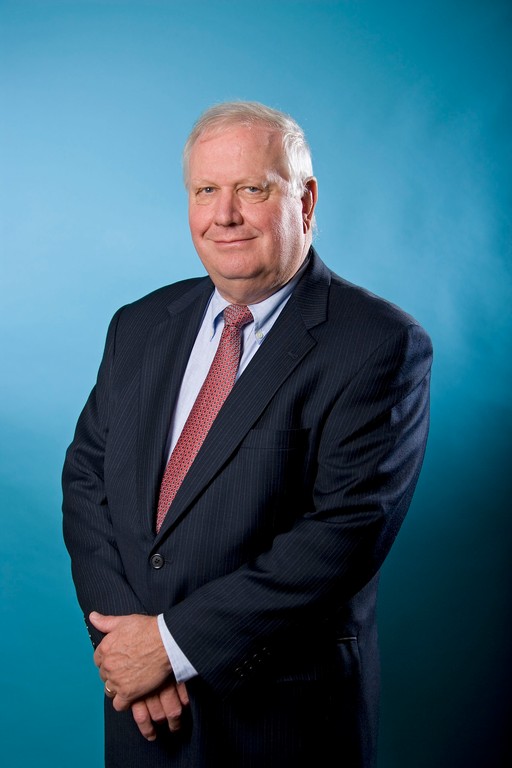
“I’m going to have look under my car when I finish,” joked Charles S. Kinney, president and CEO of The Westerly Hospital, as he began his comments Feb. 9 before the R.I. Senate Commission studying hospital costs, aware his comments would rock the boat.
Kinney advocated “blowing up” the current system, which he called dysfunctional. He urged a transition to a more physician-driven health care system.
As a follow up, Providence Business News asked Kinney to provide some specifics about his recommendations for disruptive change. He responded, with the caveat that his answers were meant to be directional.
PBN: You called for a transitional hospital reimbursement system during the next five to 10 years, moving toward a physician-driven model of health care? How would this work?
KINNEY: The most efficient models of care delivery are the large multi-specialty groups, such as the Mayo Clinic in Minnesota, the Geisinger Clinic in Pennsylvania and the Lahey Clinic in Massachusetts. They are successful for a number of reasons – shared governance of both the physician and hospital practices, integrated medical staff under the same economic model, common medical records, a large-enough group to assume risk, and common clinical protocols. They are a good benchmark for the future.
The first [thing we need to do] is to change the payment methodology for both physicians and hospitals. Until that happens, nothing will change.
For example, currently there is no relationship between quality, patient satisfaction and hospital payments. Let’s tie reimbursement to both of these measures.
Medical homes are just beginning; the primary care physicians will assume more financial and clinical control of their patients.
The [current] system is fragmented in that everyone is paid separately for what they do – physicians, hospitals, free standing centers, etc. We can begin with some selected bundled payments for hospitals and physicians, which will have everyone starting to see what a new system will be like. From that there can be episodic care bundles of payments. These can have a dramatic impact upon readmission rates.
Beyond Cash Donations: How New Forms of Giving Are Transforming Not-for-Profit Accounting
Evolving Funding Landscape for Not-for-Profits Not-for-profit organizations are being asked to do more with less,…
Learn More
PBN: You predicted a crisis in workforce with fewer and fewer primary care physicians in Rhode Island unless there is better reimbursement. What’s creating that crisis and how can it be addressed?
KINNEY: The declining numbers of primary care physicians is a public health crisis in the making. The root cause is both economic and workload driven. All physicians are paid on a fee-for-service basis. That means they get paid for each visit and procedure. Physicians do not do procedures, i.e., endoscopy, surgery, cardiac imaging. That is where the money is.
The system needs to change where one is rewarded more for their cognitive skills than their procedural skills. The change needs to start with Medicare, which traditionally has skewed payments towards the “proceduralists.”
This [change] will not come easily, as there will be winners and losers, and most of the proceduralists are already feeling the reductions in payments from many insurers. Blue Cross & Blue Shield of Rhode Island, to its credit, has recognized this problem and has begun the process of increasing fees to PCPs. However, all insurers need to do this and do it faster. Medicare also needs to join in and use both its payment methodology and bully pulpit to force the change.
PBN: As president and CEO of The Westerly Hospital, how have you positioned your community hospital to respond the challenges of the current health care delivery system?
KINNEY: At, Westerly, we have been anticipating the changes in medical care delivery for some time. Over the last three years, we have added 11 primary care physicians and seven specialists to the staff.
We are investing more than $8 million into an entirely new health IT infrastructure and will meet “meaningful use” criteria by the end of the year. We have interconnected many physician office IT systems to the hospital system, whereby they can receive laboratory, digital radiology images, and all electronic reports. This interconnectivity is critical to the medical home model.
We are working with BCBSRI [to develop] the medical home model on a regional basis.
We are positioning ourselves to participate in the value-based purchasing aspects of reform. This will tie our high patient satisfaction to our reported clinical measures. Even though we are already a low-cost provider, we are engaging a national firm to redesign workflow to maximize our efficiencies.
If and when accountable care organizations are created, hospitals may become mere vendors in the system, and we intend to be the low-cost, high-quality and high-patient-satisfaction provider.
PBN: How would reform the rates for “emergency” care at hospitals?
KINNEY: People have worried about the “over” utilization of Emergency Rooms for decades. Yet, in Rhode Island, the number of emergency visits has remained flat for the last four years. When one thinks of this issue, one needs to remember, physician offices are open for approximately 40 hours per week – less than 24 percent of the time people need or want service.
Many people do not have a primary care physician, due to the shortage. When health care reform kicks in during 2014, where will many of these newly insured find care? The emergency room.
Right now, it is not uncommon for a physician to be so overbooked during the day that he/ she cannot “work-in” the sick patient. They go to the emergency room; emergency room visits are reimbursed on a level basis from 1-to-5, with 5 being the sickest. Physicians are also reimbursed on this same scale. Because the Level 1 and 2 visits could be seen in an urgent care setting outside of the hospital, my suggestion is to rebase the Level 1 and 2 visits to approximate those of the urgent care centers. Co-payments for all emergency visits should be the same as urgent care centers. Level 3-to-5 visits should be increased to reflect the resources of the emergency room.
PBN: You described the current hospital financing system as dysfunctional, and that despite flaws, those hospitals that are doing well under the current system will fight to keep it. Is there a middle ground to be found between hospital systems in Rhode Island?
KINNEY: While the large systems have obtained better payments than the independent hospitals based upon their clout due to market size, no one is doing very well financially. With everyone’s finances ranging from limited to poor, those with limited finances are just trying to hang on.
Under my proposal, there will be a more rational basis for payments – not market size. There would be a base rate which would be modified based upon direct medical education costs, government payer mix (government payers pay at best approximately 80 percent of the cost of care, some or all of this 20 percent is then paid by commercial insurers), net uncompensated care, quality, patient satisfaction and other creative measures to move us forward toward the next model of both reimbursement and care delivery. This will result in a more rational payment system for the interim and will be the necessary first step in creating the new care delivery models.