Great hospital care, many argue, requires more than top-quality medicine – it also requires connecting with patients, having empathy, advocating for their best interests.
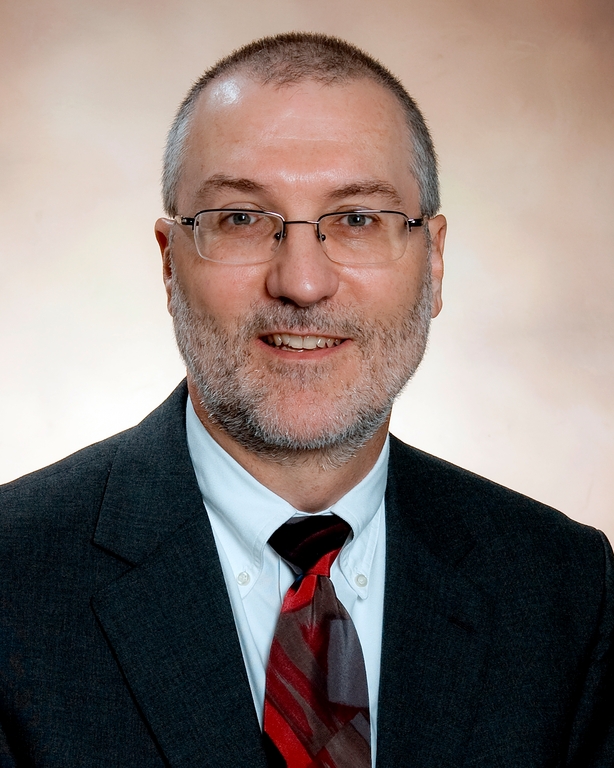
Dr. David A. Marcoux , an internist, is that kind of physicians, his colleagues at The Miriam Hospital say. They chose Marcoux, who joined the hospital in 1992, serves on the ethics committee, and is on the clinical faculty of Brown University’s Warren Alpert Medical School, as the 2010 Charles C.J. Carpenter, MD, Outstanding Physician of the Year.
Marcoux, they said, combines clinical excellence and compassion and is an “extraordinary role model” for his patients, students and co-workers.”
Marcoux, who is also a member of University Internal Medicine Inc. in Pawtucket, answered questions about his work, his approach to patients, and the balance between hospital care and his community-based practice.
PBN: How do you divide your time, and what is your role at The Miriam?
MARCOUX: The bulk of my work week is spent in the office seeing my patients. At The Miriam, I chair the ethics committee, have recently joined the board of trustees, and will be adding a new assignment as a member of the medical executive committee. I also spend one afternoon weekly teaching and supervising the medical residents in their ambulatory clinic. My week is long and busy, but is varied, challenging and very satisfying.
Rhode Island's Market Has Changed. Developers, Builders, Investors and Sellers Must Change With It.
By Emilio DiSpirito IV License Partner | Engel & Völkers Oceanside Leader | The DiSpirito…
Learn More
PBN: You’ve been recognized for “compassionate care.” What does that concept mean to you? How is that different from what might be the default in hospital settings?
MARCOUX: I’m not exactly sure what that means, either. I think it may have to do with that which physicians just generally do – care for and about their patients. I don’t think venue, office versus hospital, has much to do with the quality of care; it’s just that the pace is admittedly a bit quicker and more intense in the hospital.
PBN: As someone who is involved in both hospital and community-based care, how well do you think we’re doing in connecting and coordinating the two?
MARCOUX: My colleagues in this office and I continue to do things somewhat the old-fashioned way – we see our patients in hospital, and do not use a hospitalist [a hospital-based doctor who takes over patient care during the hospitalization]. We are the only group admitting patients to the Miriam doing this, and remain proud of this fact. We have continued to it this way for several reasons: This is the system we grew up with; we have a critical mass of patients in the hospital that makes this time- and cost-effective; and our patients prefer it. We have no plans to do anything different for the moment. The hospitalists at the Miriam do a very good job of caring for patients, and I think of their work and ours as two parallel ways of reaching the same goal – good patient care.
PBN: What is your role at Brown?
MARCOUX: My faculty position at Brown is an entirely clinical one – assistant clinical professor of medicine. I do not teach students in the classroom, but rather in my office, the hospital and the residents’ medical clinic. I would hope that I can offer students and residents an opportunity to see someone who genuinely likes the work that he does and perhaps to serve as an example of the viability of internal medicine as a career choice. It’s a great job, and they need to know that some of us still think of it as such.
PBN: When Brown’s medical school was founded, primary care was a very big priority. Over time, that has declined. Do you see a resurgence in interest in general internal medicine (and family medicine, for that matter), both on the institutional side, and on the student side? Or do we still have a long way to go on that front?
MARCOUX: Indeed primary care – and you are correct in recognizing that this means both internal and family medicine – has slipped considerably in interest. My sense is that we work longer and for less pay than just about any medical subspecialist.
This model is unique to America in terms of health care delivery. It didn’t happen overnight, and it can’t be corrected overnight, but something must be done soon before primary care shrinks below some critical mass compromising the long-term survival of primary care as a viable career choice.
I believe firmly, and the data supports it, that primary care represents the best hope going forward of delivering high-quality patient care fairly, justly, cost-effectively and sustainably in any system that is coming down the pike. If the insurers and the federal government don’t take meaningful steps – and I think that they are, actually – in improving the quality of life and the pay of primary care providers, we’re going to be in trouble. The dangers are that health care goes completely broke or there are too few of us to provide care to a growing pool of willing patients seeking an internal medicine or family doctor.