When President Barack Obama signed an executive order in March 2009 allowing federal dollars to fund a broad range of embryonic stem-cell research, scientists across the country hailed it as a victory for medicine and the key to a potential treasure trove of discoveries. Still, a law remained in place banning the use of federal dollars to create new stem-cell lines from embryos.
On Monday last week, a federal district judge blocked the Obama order, saying it violated the law, because its distinction between funding the destruction of embryos and funding research on stem cell lines created with other funds from destroyed embryos was meaningless.
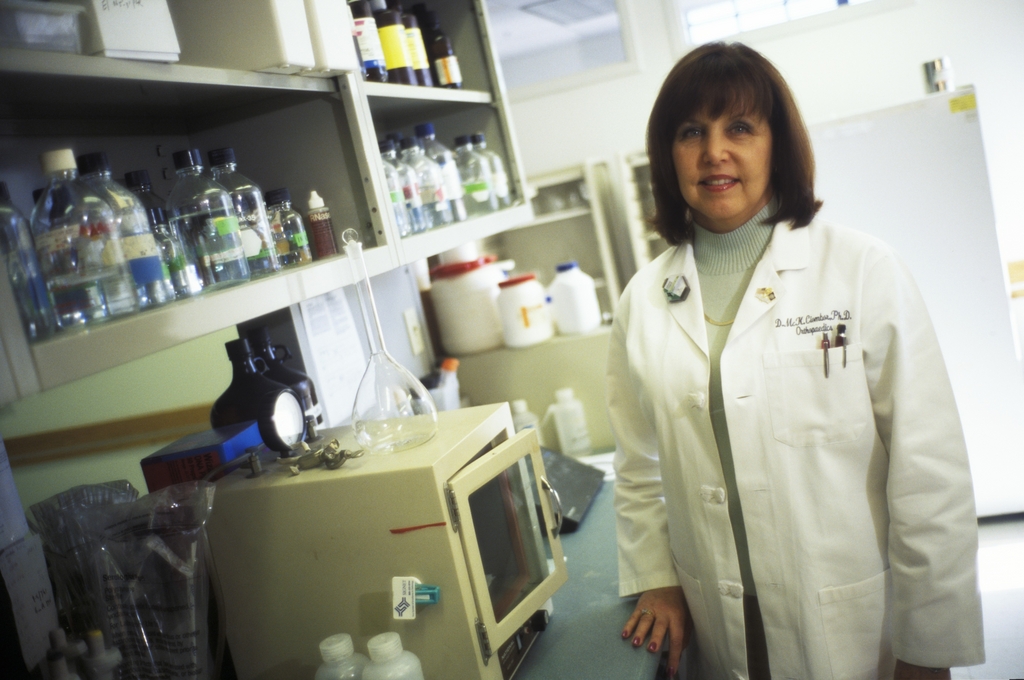
Dr. Deborah Ciombor, associate director of the Center for Restorative and Regenerative Medicine at Brown University and the Providence VA Medical Center, answered questions about the court ruling’s implications for research at Brown and nationwide.
PBN: Can you tell us a bit about your research, and how you use stem cells in it?
CIOMBOR: I have used embryonic stem cells in the past, but now work on adult mesenchymal stem cells. We use cells from the synovium of a knee joint (synovial cells line the interior of large joints and, among other things, produce synovial fluid which lubricates the joint) as a source of cells for tissue-engineered replacements to be used in place of lost or damaged connective tissues such as cartilage and bone. We are working on a biocomposite for cartilage replacement and have begun a bone tissue-engineering program for large defects, such as those found in major traumatic wounds seen in our soldiers fighting in Iraq and Afghanistan. Like many people who work in regenerative medicine, however, I have colleagues working on embryonic stem cells.
PBN: How much do you rely on federal funds for your research, and is that fairly typical for U.S. researchers? I’m wondering how well most scientists could adjust if federal funds for their projects were withdrawn.
CIOMBOR: With the exception of a moderate corporate grant, which just ended, our entire laboratory is run on federal funds. Private research foundations are somewhat rare and corporate grants generally do not fund stem cell work. There is not enough nonfederal funding available for us – or most other labs that I know of – to support our cell work if we were suddenly told that tomorrow we can’t use the materials purchased with federal dollars.
As a matter of fact, I don’t know if I could get supplies ordered and here fast enough to keep the cells going, even if I had such dollars available. We feed the cells every other day at a minimum and some embryonic stem cells need feeding every day; after three days, the cells begin to die.
Beyond Cash Donations: How New Forms of Giving Are Transforming Not-for-Profit Accounting
Evolving Funding Landscape for Not-for-Profits Not-for-profit organizations are being asked to do more with less,…
Learn More
PBN: Why are embryonic stem cells in particular so important to regenerative medicine research?
CIOMBOR: Stem cells can become any other kind of cell. There are many common and often fatal diseases, including neurodegenerative conditions such as Parkinson’s, cancer and cardiac disease, which may benefit from stem cell therapy. And while I feel that adult stem cells show great promise, it is far too early to know with any certainty that either adult stem cells or embryonic cells will be successful therapeutically. But if the research community can’t work with embryonic stem cells, we won’t find out and may leave important therapies undiscovered.
Most of the work in embryonic stem cells to date has been either to elucidate aspects of normal development or as “proof of therapeutic principles,” and mostly in mouse cells. Any work in human stem cells has been either very limited or begun since the current administration has modified some of the Bush-era edicts. It takes a great deal of time to start up such an enterprise. Much the same as manufacturing lost here in the United States, these programs in human stem cell research will take quite a long time to be reintroduced into laboratories around the country. Scientists in Europe and Asia have gotten a huge head start on us so our competitiveness has been hurt.
PBN: How had the Bush administration policy on embryonic stem cells affected research at Brown, and how well do you think the Obama administration had addressed the issue?
CIOMBOR: My colleagues who work with embryonic stem cells have been affected. I feel that the changes made by the current administration were a step in the right direction; I’m saddened at the recent ruling and somewhat puzzled. What I have read of the ruling did not seem very well-reasoned, but then again I’m not a lawyer.
PBN: What happens now? What will you be doing in response to the ruling in the next few weeks?
CIOMBOR: It’s not at all clear what happens now, but I’m sure it’s not over. Unfortunately, my sense is that the public at large doesn’t understand what an embryonic stem cell really is and what its potential might be. Often when people find out that I’m a cell biologist, I get asked questions about embryonic stem cells. Invariably, the initial impression of the questioner is misguided.
I can’t help but think that if some of the politics, emotion and misunderstanding were taken out of the subject, we’d make some progress towards agreement. I am member of the American Society of Cell Biology’s Congressional Liaison Committee, so I suspect there will be some action there. However, I think the answer will come only from the Obama administration’s appeal of the ruling and request for the court to lift the injunction.