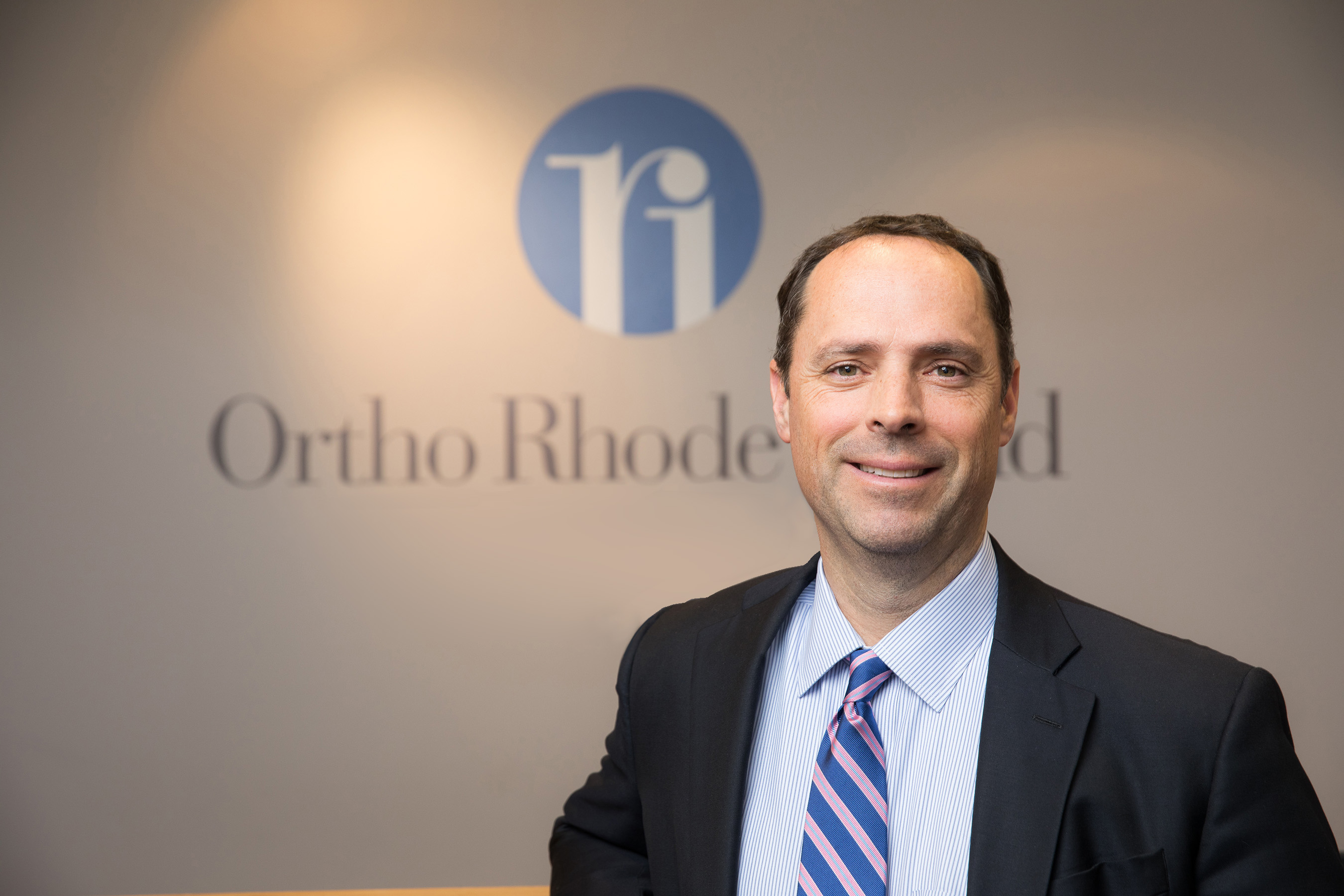
Dr. Michael Bradley, the CEO and president of Ortho Rhode Island, discusses the practice’s new 66,000-square-foot facility at 300 Crossings Blvd. in Warwick, where a topping-off ceremony was held in July.
The traditional ceremony, held to celebrate the placement of the final beam in the structure, marked significant progress on the project, which broke ground in April 2019.
A modernized health plan: Supporting cost management and the employee experience.
The Surest health plan came from a group of innovators wondering: What if health care…
Learn More
PBN: When do you expect Ortho Rhode Island’s new facility will open to patients, and what are some unique features of the building?
BRADLEY: Ortho Rhode Island will open our flagship orthopedic campus at 300 Crossings Blvd., Warwick, in February 2021. The almost 70,000-square-foot building includes an Ambulatory Surgery Center, physician offices, Ortho RI Express immediate care, advanced imaging, and physical and occupational therapy.
The interior of the building has been designed around a patient-centered workflow and will have leading-edge technologies for each phase of care. It also includes an abundance of natural light, outdoor walking space, terraces and ample free parking. This campus will be the new home of our Warwick office, and is an addition to our current facilities in Providence, Wakefield [in South Kingstown] and Westerly, as well as our satellite offices.
PBN: Will patients experience any changes in their care once the new building is open?
BRADLEY: The innovation we’ve built into this campus will support our mission to deliver the best patient experience in our industry. To us, innovation doesn’t necessarily mean more technology. It’s about progress, with high quality and value as the focus. That’s why we’ve taken forward-looking steps like introducing patient navigators and integrating patient medical records across the new facility.
The addition of our Ambulatory Surgery Center at this site will also enhance the patient experience. With the exception of complex cases like hip fractures, spine cases and some total joint replacements, most orthopedic procedures are outpatient by definition and can be done in an ambulatory surgery setting. Our new location will provide easy and convenient access to our patients for every phase of their care, resulting in more time-efficient and cost-effective experiences that produce great outcomes.
PBN: What is the cost of the building, and how many providers will work out of it?
BRADLEY: The new campus is a $30 million project. The building is three stories high, with the Ambulatory Surgery Center on the third floor. It will have eight operating rooms and two pain management rooms, with six to seven providers working there.
The second floor is home to orthopedic and podiatric offices for 15 to 20 providers. And the first floor is designed for Ortho RI Express, imaging and therapy. So, another two or three providers will practice there, along with 10 therapists. In other words, there will be a lot of access for patients.
PBN: How did the COVID-19 pandemic change daily routines for Ortho Rhode Island?
BRADLEY: COVID-19 certainly changed our routines. During late March, April and early May, we ceased doing elective surgery and began using telehealth to see patients. Elective surgeries are back now, and telehealth appointments are still an option for patients when clinically appropriate. Our patients, staff and providers are all wearing masks in our offices, social-distancing guidelines have been put in place at all locations and all patients go through a screening process before their appointments. We are following all precautions and policies recommended by the CDC [Centers for Disease Control and Prevention] and the R.I. Department of Health to help protect staff and patients.
PBN: Has Ortho Rhode Island recovered from impacts caused by the delay of elective surgeries due to the COVID-19 health crisis?
BRADLEY: We are in the process of recovering. We are adjusting to new procedures, like our patients having COVID-19 tests prior to surgery. It’s stressful for them. Patients waiting for surgery are in pain and are anxious to have their procedure, yet they also want to understand COVID-19 risks. We are laser-focused on following CDC and R.I. Department of Health protocols. We work with each individual patient to address their concerns and help them make informed decisions that are right for them.
Elizabeth Graham is a PBN contributing writer.