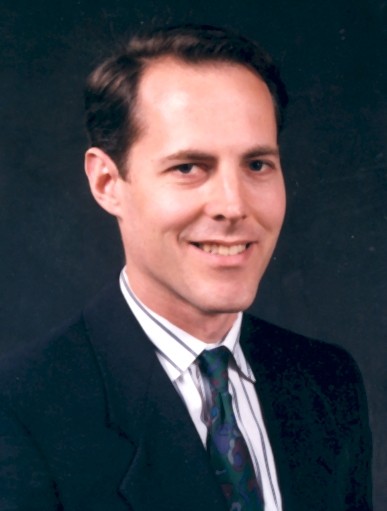
Edgar Adams, a professor of architecture at Roger Williams University, says the architecture world is not as bleak as it may seem. Despite a year that saw building slow to a crawl and many architectural firms merge or close, Adams says there is reason for hope. He recently took some time to discuss the state of the industry.
PBN: Looking back at 2010, what were some of the trends that emerged in architecture locally and why?
ADAMS: Looking back, it was a time for architects everywhere to take stock. I am hoping that the lag that in the past has impacted Providence will be less of a factor this time around. We still have so much unrealized potential as a city and as a region that I have to think that the momentum that was gained in the last few years, will allow us to get back up to speed more quickly this time. Infrastructural improvements for air, rail and car will continue to benefit the development climate for years to come; however the job market must keep up in order for the housing market to recover more fully.
What is unique about the last five years is the degree to which Providence has become a destination for creative young people in a variety of fields. This is in large part due to the strength of our institutions of higher education; however, it has become something far more dynamic than that recently. We need to find a way to capitalize on this trend as a state. The threat to this is that the current budget crisis will begin to erode some of the support or incentives for artists and other creative professionals within the state.
The recent American Institute of Architects [Rhode Island chapter] awards dinner was far more upbeat than one might expect. We do live in a region that has always had a vibrant architectural community. This heritage has been an important part of Providence’s recent renaissance and although there were the usual awards for larger projects done by out-of-state architects, the quality and unique sense of local identity, that was evident in the work of this region’s practitioners, was truly a step above that of our larger neighbors to the north. I am not talking about architecture that simply adopts a more traditional garb; but work that has a unique sense of craft or materiality and that relates to the landscape (urban or natural) in a more responsive manner.
Seifert Systems Invests in Energy Efficiency to Strengthen Operations
For manufacturers, energy is more than just another operating expense. It plays a critical role…
Learn More
PBN: Now looking ahead to 2011, what do you see the trends here being and why?
ADAMS: As an architect with a background in urban design, I try and get my students to look at the big picture. I think the recent economic crisis and our ever more urgent environmental issues make this increasingly critical.
There is a huge need for architects who are skilled at working as part of a larger team of professionals and consultants. The days of Howard Roark (of Ayn Rand’s “Fountainhead”) or the star architect of the more recent past are over.
The specialization required for today’s more complex building systems and the more integrated responses required to address our larger environmental issues, all call for a more collaborative approach. Buildings account for a significant portion of our energy usage and when combined with the transportation costs associated with our wasteful development patterns account for over 60 percent of all energy usage. Our new buildings need to be more efficient and located in more densely settled mixed-use communities to facilitate less reliance of the car.
PBN: What about building in Rhode Island’s already crowded communities?
ADAMS: Rhode Island’s Land Use 2025 provides a strong road map for concentrating growth and reenergizing our urban and village cores. This will increase the need for historic preservation and the retrofitting of existing structures to perform more efficiently. New England has a rich agrarian tradition and wonderful historic resources that tend to be clustered in areas close to water for commerce and industry. The land, the water and the historic fabric of our cities and towns are all bound together in a way that is integral to our identity.
Infill development and gray or brownfield development opportunities also require architects and developers to be more adept at navigating the complex permitting and funding processes that make these projects possible. It is also important to work with state and local agencies to develop codes and processes that allow this kind of more integrated development to happen and do not drive development to greenfield sites on the periphery where more predictable formulas are all too often applied.
PBN: This has been a busy year in terms of architectural firms merging or closing. Is it a sign of the poor economic times or something more?
ADAMS: Our firms need to be more active within the larger region. To do this they will need to have people with experience in a broader range of specialized markets. We have firms that have a great deal of experience in preservation and adaptive reuse and other more specific markets. The move toward consolidation is driven by the need to diversify, or to corner a greater portion of a particular market.
The only other way to diversify is to value collaboration between firms. Unfortunately, the client also has to value this form of collaboration as an alternative to larger firms that offer one-stop shopping for this to take hold.
The other driver is the need to offer more expertise in new service and project delivery methods facilitated by Building Information Modeling. This transformation in how architects communicate with consultants, contractors and manufacturers has the potential to transform what architects do and how we collaborate. If we are not keeping up with these trends, we will be at a significant disadvantage. We have changed our curriculum to prepare our students for this new paradigm of practice; however it also requires firms to keep pace with these trends within the profession.
The South Coast of Massachusetts is also poised for a revival. If the proposed South Coast Rail Project maintains its momentum this area will benefit from increased investment and economic activity that could help drive the growth of the whole region. Providence was once the economic and cultural center of the southern tier of New England. Pawtucket, Fall River, New Bedford and Woonsocket were all powerhouses during the industrial revolution. We were all interdependent economically.
Now that Boston has more clearly become the hub of our region, if we are to compete with other larger and more integrated Mid-Atlantic or Southern regions, we must try and revitalize those regional ties. This means looking beyond municipal boundaries and state lines in all that we do.
PBN: So what do you tell your aspiring architecture students who are preparing to graduate in May and head into the real world?
ADAMS: There are jobs out there for talented individuals and there is a strong projected need as baby boomers retire. The AIA is actually concerned that we will be facing a shortage of architects in the not too distant future. The developing world is urbanizing at a tremendous pace. This is creating a significant demand that is keeping many firms here and in Boston afloat. This can be a big advantage for young professionals who are more mobile and are open to new experiences.
At the same time competition from outsourcing may be on the horizon as people look to make up for this demographic trend in other ways. Here as well, our local practitioners, our students and we as academics have to be more nimble to keep pace.