With the new Warren Alpert Medical School of Brown University scheduled to open Aug. 15, with its entering class of 108 arriving that day, much of the discussion has focused on the building’s construction.
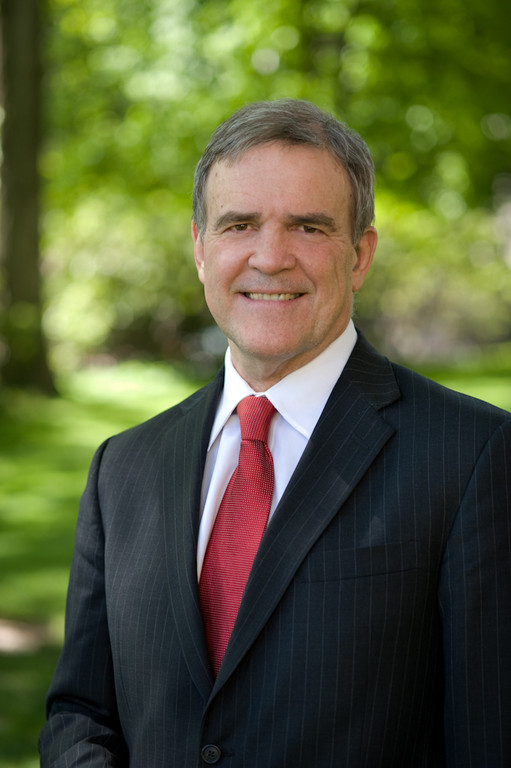
Providence Business News asked Dean Edward J. Wing to talk about how the medical school will converge with new business opportunities in Rhode Island, and serve as a catalyst for economic development in the Knowledge District – from a health care and life sciences perspective.
Seifert Systems Invests in Energy Efficiency to Strengthen Operations
For manufacturers, energy is more than just another operating expense. It plays a critical role…
Learn More
PBN: The opening of the new location of the Warren Alpert Medical School of Brown University in the Knowledge District, with its largest entering class ever, puts it front and center in the economic development of Rhode Island. What do you see as the medical school’s role in being a catalyst for new business opportunities?
WING:Health care is critically important to strengthening Rhode Island’s economy. According to the U.S. Bureau of Labor Statistics, 10 of the 20 fastest-growing occupations are health care related. The medical school building project created hundreds of construction and related jobs, and now will create many more permanent jobs in a range of fields. Research at the Warren Alpert Medical School together with the hospitals lays further groundwork for the health care industry. All of this activity will stimulate economic growth and simply put – create jobs for Rhode Island.
The new medical school building will also further drive the rejuvenation of an already transformed neighborhood in Providence, attracting even more biotech, medical and research entities. The medical school, along with some other administrative functions, is moving about 500 people from Brown to the area. These individuals will frequent the excellent restaurants in that area and will support emerging retail.
PBN: A number of health care experts have predicted the growing need for more primary care physicians in Rhode Island. How are you planning to address that need?
WING: Having access to quality primary care is essential for Rhode Islanders. As the state’s only medical school, [we are] addressing the need for more primary care physicians in a number of ways.
First, we have increased the class size by 60 percent since 2001, from 65 to this year’s entering class size of 108. The class [size] will top off at 120 students the following year. We have also changed the curriculum to include components like “Doctoring,” which pairs students with community physician mentors, who model best practices of the doctor-patient relationship. This program is being expanded to all four years.
We have interested community partners with whom we work to promote this field, too. For example, we received two grants that support primary care; the first from the Rhode Island Foundation promoting primary care career choices in Rhode Island, and the other from the Health Resources and Services Administration that provides direct support for curriculum development in family medicine and provision of care to the underserved. Finally, in the class of 2011, 55 percent chose primary care disciplines, a slight increase over last year.
It is noteworthy that many of the clinical departments in the Warren Alpert Medical School that are considered primary care focused are nationally recognized for excellence. For example, the Family Medicine department received an overall Program of Excellence Award from the American Academy of Family Physicians for its outstanding activities in generating interest in family medicine.
PBN: What are the plans for the Prince Neuroscience Institute? Where will the facility be located? Who will serve as its initial director?
WING: Rhode Island Hospital received the Prince gift for the creation of a world-class neuroscience institute with an understanding that Brown, given our strengths in this area, most notably with the Brown Institute for Brain Science, would be a close collaborator.
BIBS and Prince can have a profound impact on the growth of health care in Rhode Island.
To coordinate and maximize these many assets that Brown and the hospitals offer, a steering and advisory committee has been formed consisting of representation from Neurology, Neurosurgery, Psychiatry as well as BIBS. Plans are presently underway which include leadership, staff, and location. More details will be announced in the near future.
PBN: The new medical school building will have a top LEED rating. How important is it for the medical school to be a leader in environmental design? Do you think that it will “rub off” on future new buildings in the Knowledge District?
WING: We are very proud of this major renovation project. It restores a great building and gives it a new purpose for the 21st century with many sustainable elements. In keeping with Brown’s commitment to the environment the building is designed to LEED Gold standard. Just two examples are the windows and the roof. High efficiency, low-E window systems keep it warm in the winter by reflecting heat back inside and in the summer infrared heat from the sun is reflected away, keeping it cooler. The rooftop terrace is designed to include vegetation that will combat the urban heat island effect.
As for the Knowledge District, we hope that our lead will be followed. In fact, there is already a project underway with Brown, the University of Rhode Island and others seeking to “green” the Knowledge District.
PBN: A new transportation system is envisioned to serve the Knowledge District. Is Brown willing to invest in making that transit system a reality?
WING: Brown is making a number of investments above and beyond the building itself to enhance the neighborhood. Discussions are underway to collaborate on transportation enhancement in the future. Among other things, Brown is playing an active role in planning public transportation initiatives that we hope will benefit the whole community, including Transit 2020 and the streetcar study. Dick Spies is co-chairing the Transit 2020 task force and Mike McCormick serves on the Technical Working Group for the core connector study. Right now, Brown has a shuttle service and is increasing the frequency of its transit system to the medical school and hospitals to support the influx of staff, students and faculty to the area. We also already offer free RIPTA passes to students, faculty and staff to encourage them to leave their cars at home.
We have also expanded the sidewalk, added street trees, and we have committed to creating a “pocket park” just off of Ship Street to encourage public gathering and activity. These kinds of public space improvements benefit the entire community.