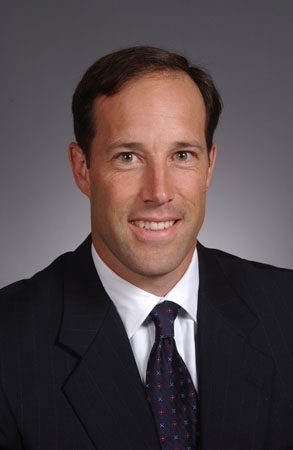
Nest eggs have taken a hit in the last year or so in the turmoil in the financial markets. Cash-starved workers have held back some of their contributions to their retirement plans, and skittish employers have reduced or suspended their 401(k) matches. James L. Worrell knows all about it. He’s the founder and president of Providence-based GPS Investment Advisors, a firm that advises companies on retirement plans. He answered a few questions about defined-contribution retirement plans.
PBN: 401(k) plan fees seemingly have gotten a lot of attention lately (including proposed legislation and several class action lawsuits). Why all the scrutiny?
WORRELL: There is a lot of money at stake and a lack of clarity on how fees are charged and disclosed. Many plan participants and employers don’t understand their 401(k) fees or know if they are reasonable. Even worse: they may face road blocks or confusing answers when they try to find out. Major 401(k) fee legislation is pending in Congress and a spate of class-action lawsuits have been brought against high-profile companies such as John Deere & Co., Lockheed Martin, Kraft Foods, Caterpillar, International Paper, Boeing and General Dynamics.
Beyond Cash Donations: How New Forms of Giving Are Transforming Not-for-Profit Accounting
Evolving Funding Landscape for Not-for-Profits Not-for-profit organizations are being asked to do more with less,…
Learn More
PBN: Nonprofit 501(c)(3) organizations, schools and hospitals typically offer employees a type of retirement plan called a 403(b), which is similar to a 401(k). Recently, the 403(b) regulations changed for the first time since 1964 when they were first published. What is involved and how are nonprofits responding?
WORRELL: The IRS wanted to make 403(b) regulations more consistent with other defined-contribution plans like 401(k) plans. The result is greater burdens and restrictions on 403(b)s, the employers and the product providers; 403(b) employers and providers are scrambling to comply. One big requirement is that all 403(b) plans must now have a written plan document. Another change effects employees’ choice of who to invest with. Many employers have historically offered multiple 403(b) vendors (mutual fund and insurance companies) to employees, and that is becoming more difficult. Multiple vendors must establish information sharing agreements now to “share” information among each other. Some vendors have chosen to cease offering 403(b)s rather than meet this burden. Employers are burdened with ensuring that their vendors can comply. Some employers will have to have their plan audited and/or file a year-end IRS form 5500 tax form – all at some cost to the employer. Despite all this, 403(b)s still have appeal. The changes could lead to enhancements as plans are consolidated and as prudent governance procedures and fiduciary “best practices” (similar to what is seen in 401(k) plans) are implemented or reassessed in light of the changes.
PBN: What is new with Roth IRAs and Roth 401(k) plans?
WORRELL: There is a terrific opportunity coming up in 2010 for IRA holders. The rules for converting a regular IRA to a Roth IRA (a Roth conversion) will change in 2010: (a) the adjusted gross income limit of $100,000 or less to be eligible for a Roth IRA conversion goes away, and (b) for conversions done in 2010, the taxpayer can spread the taxable income due over two years (instead of the normal one year). We handle these types of accounts from an investment perspective and get the client’s accountant involved for advice on the tax issues.
PBN: Last year was a tough year for retirement plan investors. How did you and your clients manage to get through it?
WORRELL: Our clients sought cash-flow flexibility by changing their company 401(k) match or profit-sharing contributions. We provided extensive handholding for our plan sponsor clients and their employee 401(k) participants. This meant more time in investment committee meetings discussing the plan’s investment options and reviewing investment changes, more face-to-face employee 401(k) meetings, more one-on-one time with individual employees to discuss their accounts, more time walking people through their options on the phone and discussing what to do in response to the market declines.
Though many of our clients left their 401(k) match and profit-sharing contributions alone, some reduced or suspended their contributions. Some of our plan sponsors changed their plan design to provide flexibility – they would not be required to contribute anything, but they could if circumstances allowed once they saw how 2009 turned out to be for their business. A small number of 401(k) investors panicked at the depth of the crash and got out of the market, but we have seen risk appetites return with remarkable resilience since the first quarter.
PBN: You have said that you still think the 401(k) is a good retirement savings vehicle. Why?
WORRELL: Although every 401(k) isn’t perfect, in most cases, most 401(k)s offer the basic tools to save and invest towards a comfortable retirement. Once people join their 401(k), it is convenient, automatic, and their savings become automated. On top of that, it offers the dual benefits of pretax contributions and tax deferred growth. Once people join the plan, their 401(k) gets funded with their deferrals no matter how busy they get. There is a lot to be said for that kind of momentum. The good news is 401(k)s are improving constantly. When I started in this business nearly 20 years ago, it was not uncommon to have plans where you only could only choose from three funds and could only change your investments or get an account value once per quarter. Now the typical 401(k) has 10 to 20 investment choices and can be accessed and managed daily/nightly in a variety of different ways. So, I still think 401(k) plans are a good vehicle, and improving all the time. Understandably, since retirement is so far off and since most people aren’t versed in the technical aspects of saving and investing, the hard part is getting people to join the plan and to save enough of their pay every paycheck to create a secure retirement. We all (in the industry) need to work on making saving easier. Unfortunately, most people don’t have a pension plan, and Social Security is only designed to replace 30 to 40 percent of one’s income. So, the 401(k) is a very important leg of the stool that supports a comfortable retirement.