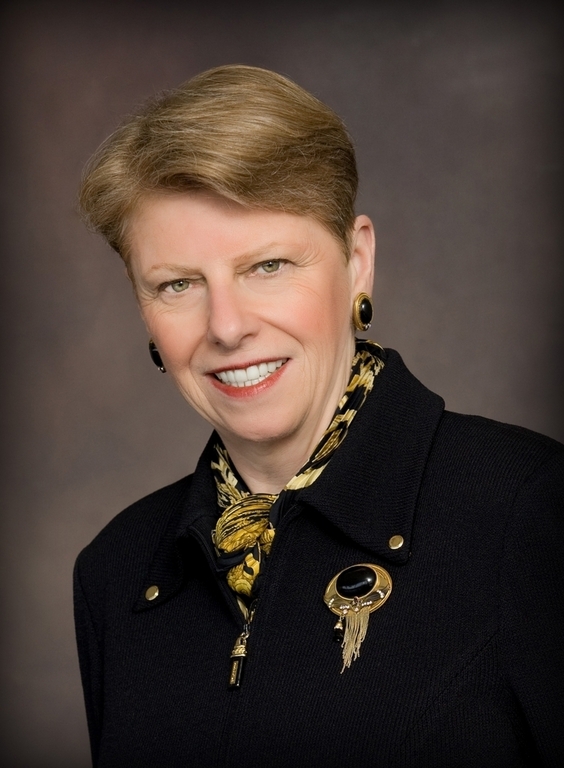
Jeannine Rivet is an executive vice president of UnitedHealth Group and the company’s top liaison to the pharmaceutical industry and a key player in shaping United’s business strategy. But before joining the insurance world in the 1980s, she was a nurse, studying and then working in pediatrics at Rhode Island Hospital. And throughout her career, she says, her experience as a nurse has helped shape her perspective.
Last week, Rivet visited Providence to speak, among other things, about United’s new Center for Nursing Advancement, an effort to enhance nursing practice by providing stronger support and professional development to thousands of the 7,000 nurses who work for the company.
Rivet answered questions about the project, for which she was the catalyst.
PBN: United employs more than 6,000 nurses. In what capacities?
RIVET: We have [slightly more than] 6,000 in actual care delivery, but we also have nurses who are doing quality reviews, claims, fraud and abuse, account management. … So if you add them all up, I would say we have about 7,000 nurses.
[On the clinical side], a good portion staff the lines where people call in with questions, 24/7. We have proactive case managers who work with people with diseases or provide decision support if somebody’s going to have a procedure or surgery, helping them with questions they may have pre-surgery or after discharge. We have nurse practitioners who do hands-on care in nursing homes and in homes, with frail elderly and special-needs people; they work directly with gerontologists and physicians. We have a fairly large group that does that. But I would say the majority are doing case management and care coordination on the phone.
We also have nurses who do clinical trial work with the pharmaceutical and biotech companies … and do the coordination and the data collection with patients and physicians. We do that in 57 countries.
And then we have nurses in sales, account management, working with customers, product development, retooling our systems through Six Sigma approaches … We have quite a few nurses who are “black belts” who help us really look at are we as efficient as we should be, and are we focused on the right things?
Rhode Island's Market Has Changed. Developers, Builders, Investors and Sellers Must Change With It.
By Emilio DiSpirito IV License Partner | Engel & Völkers Oceanside Leader | The DiSpirito…
Learn More
PBN: How great a voice do nurses have in shaping United’s practices?
RIVET: They do it every day, because they’re the direct contact to the consumer … so they are actively involved in day-to-day helping people make the right decisions and being there for them. The thank-you letters that we get and the stories that we hear from people who’ve been helped are just phenomenal, very touching.
And because we have nurses involved in our product design, they help us target where we can make the most difference and how to do that, so they are involved in both delivering the service and in creating and modifying it. And they do it within their respective businesses, because United is a fairly large company. We’re market-specific, so we’ve got AmeriChoice, which is here, that focuses on the Medicaid population. We have Ovations for our elderly population, which is where a lot of our nurse practitioners are. And now, through our center, what we’re doing is looking across the whole: How do we share best practices with each other?
PBN: What is the status of the center? Is it up and running?
RIVET: We created the center in the last year. We have been pulling the nursing leadership together from the different businesses for about three years, mostly to learn about what everybody’s doing, to create an opportunity for sharing knowledge and streamlining things like continuing education programs. The leadership group decided that we should put more energy into staffing this, so we could be more effective, and so we put together a business plan that has a business return – we like to do things for social good, but we need to understand what we’re going to measure and make sure we’ve made a difference – and we got full endorsement from senior leadership across the company. We created it as a three-year demonstration project in September of last year, with a staff of two.
PBN: What has the center been focusing on?
RIVET: We started with some very tactical, important things for our company: We wanted to improve our recruitment and retention of nurses, particularly during what we saw as a shortage and a difficult economy. … And the more we looked at our work force, we realized it was really important to put some energy around this. About 45 percent of our nurses are 50 or older, which is fabulous – we have a mature work force – but the anxiety is that when the economy returns, they’ll want to retire, so we want to make sure we have a good incoming flow of talent.
We’re not a hospital environment, which is what most nursing schools tend to train for, so we decided we needed to think about our training programs for when we hire people out of the community environment. Because it’s different when you’re talking to patients and families in hospitals, where you’re seeing what’s happening, than being on the phone. We have a lot of computer supports, but how do we train people to use their ears and their voice in a different way than they might have to in a doctor’s office or in a hospital setting? So we are retooling a lot of our programs, and we are starting to work with a lot of academic environments, universities, to help them work with us so we can do rotations and internships in our environments and show nurses what we do. And we’re looking to add some of our very talented staff to be adjunct professors, particularly since universities are having a faculty shortage … we have got to look at that model nationally and support it in the markets where we have a pool of nurses, as we do in Rhode Island.
PBN: What are the major ways in which the center’s work can strengthen United from a business perspective?
RIVET: Retaining our nurses will be extremely valuable, because you save money – every time you train someone and they leave, you lose productivity and you’ve got to go through a recruitment process that costs $3,000 to $5,000 at a minimum, and then you’ve got limited productivity while they’re on-boarding. So there’s cost savings. There’s satisfaction levels. If we can keep our nurses engaged and feeling good about what they’re doing, creating a culture where they’re controlling and impacting the care of people, they actually do better, and for us that means our customers engage with us as well, and that helps our retention of business. The other thing is, the healthier we can keep people, everybody wins. And that’s our goal, particularly in this day and age with stress and obesity and diabetes, helping people deal with these issues and take responsibility, but do it with knowledge and information and support, is very, very important. … And just like everyone in any business, our nurses are looking for career opportunities, and we have opportunities in this company, whether it’s a clinical track, so they can get more clinical expertise, maybe in diabetes, and become a diabetes educator, or it’s a management track, and we train them and add more business skills and management skills … or specialize in other ways.