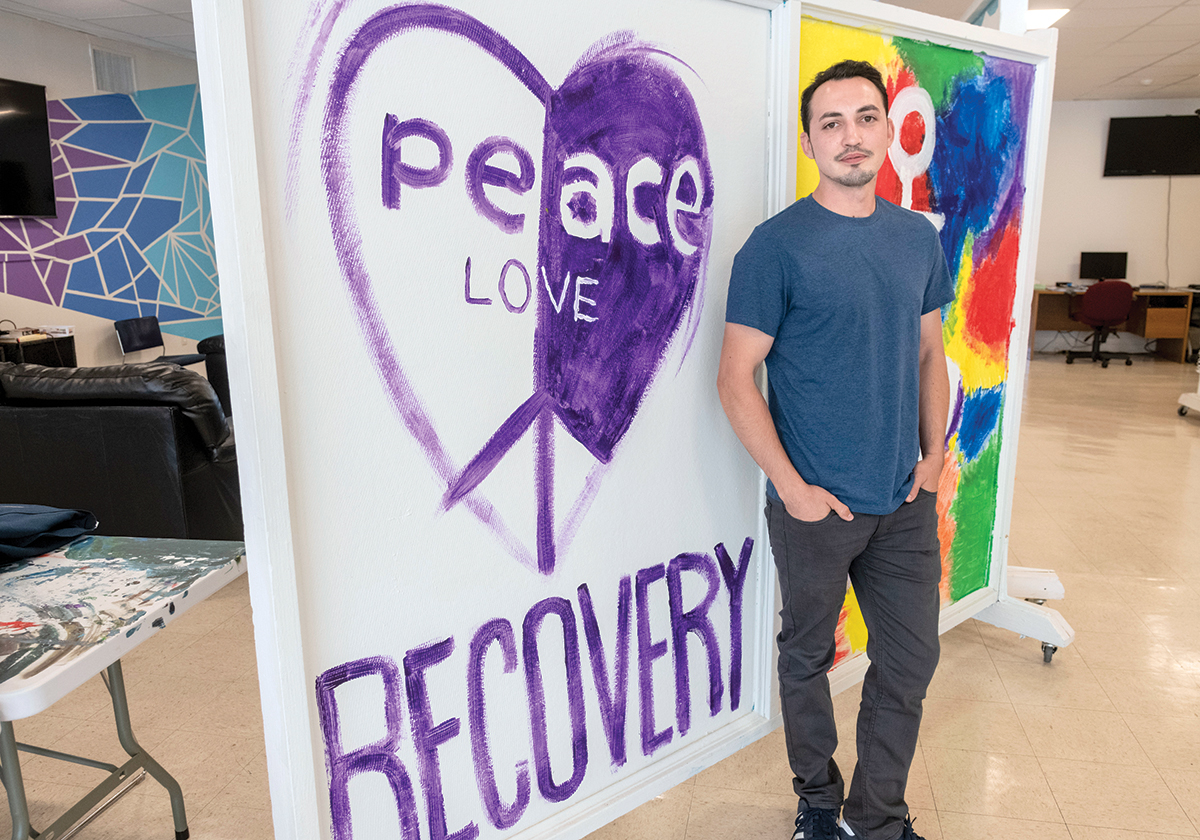
Jonathan Goyer | Manager, Anchor MORE
1. How does your recovery from an overdose in 2013 inform the way you relate to people struggling with addiction? What many people don’t know is that I had more than 30 unsuccessful attempts at treatment before that [overdose]. My experience tells me that there is no person who uses drugs or alcohol daily who does not enter into windows of willingness to seek help. We cannot determine when those windows will open, nor can we force them open. We must love them until they can learn to love themselves.
2. How can treatment and recovery services in Rhode Island do better? I have seen people get better from hospital beds, in outpatient settings, residential facilities, recovery houses and on medications. In Rhode Island, we have greatly increased availability of resources in all of these sectors. I have also seen people get better with 12-step programs, faith-based supports, gyms, yoga studios, meditation retreats … etc. We need to begin incorporating a basis for and access to all pathways of recovery.
3. Is there a need for more funding for recovery support resources? State agency partners have been incredible in expanding peer-recovery specialists, as well as monitoring and expanding treatment. We need to broaden our scope in a way that addresses the reality of our situation: We are not in an opioid overdose epidemic, but rather … an addiction epidemic of colossal proportion.
4. The PVD Safe Stations initiative was launched in 2018. Has it been successful? We have helped more than 90 people and have capacity to help more. Anyone can walk in 24 hours a day and ask for help with their drug and/or alcohol addiction. Firefighters will take your vital signs, and within 15 minutes there will be two people who understand exactly how you feel, because they struggled in previous years.
5. How much of a responsibility does the community have when it comes to support? All of us are required to play a role. If you are an employer, consider hiring someone in recovery. … If you are a church member, encourage your congregation to consider lending space for recovery-support meetings. If you are a first responder, embrace your role as a recovery advocate. … If you are a journalist, begin shedding light on stories of those in recovery.
And if you are a person in recovery, talk about it! Your story will inspire and empower others.
Elizabeth Graham is a PBN staff writer. Contact her at Graham@PBN.com.