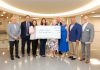
 / " title=""IN THE IT industry, as well, there are many opportunities to get your certifications, whether it be in programming in hardware, with Cisco certifications, or others," said Kathie Shields, executive director of the Tech Collective.
/"/>
/ " title=""IN THE IT industry, as well, there are many opportunities to get your certifications, whether it be in programming in hardware, with Cisco certifications, or others," said Kathie Shields, executive director of the Tech Collective.
/"/>/
Kathie Shields is executive director of the Tech Collective, the nonprofit trade association that represents Rhode Island’s IT and biotechnology sectors. Shields talked with Providence Business News recently about the group’s work and the many job-training programs it has available.
PBN: Some people may not be familiar with Tech Collective. Can you briefly describe who you are and what you do there?
SHIELDS: Tech Collective is the industry association for technology in Rhode Island. Right now our two core industry sectors that we focus on are information technology and biotechnology. We have two core functions – one is community development, and the other is work force development. Community development is really where we bring all the members within our community and also the general public together to be informed, have awareness, bring networking together, bring collaboration together, and really group the communities so that they can have a collective voice.
Beyond Cash Donations: How New Forms of Giving Are Transforming Not-for-Profit Accounting
Evolving Funding Landscape for Not-for-Profits Not-for-profit organizations are being asked to do more with less,…
Learn More
PBN: Let’s talk about those work force development initiatives you do. I know you have some grants for that right now – could you run through what those are and what they do?
SHIELDS: Sure. The first grant that we have is called the Industry Partnership Grant, and this is through the Governor’s Workforce Board of Rhode Island. The Governor’s Workforce Board is the strategic entity which helps to decide where money will be spent in the Department of Labor and Training’s work force system in Rhode Island. So the first grant that we have is the Industry Partnership Grant, and we actually have one for information technology and one for biotechnology.
The main focus of this grant has two functions. One is for the community development, and that is so that we can identify who are the companies and the skilled workers that are here in the state, identify what their needs are throughout the work force pipeline – and we do that through skills gap studies, as well as bringing people together and doing different kinds of services, analysis – and also publish the results of all those. Most recently, we are getting ready to complete our biotechnology skills gap study. That’s actually going to be coming out at the end of August.
There is a third grant, which is the information technology Industry Skills Development Initiative. It’s also referred to as “ISDI.” This grant’s function is really looking at what the results are of those studies that are done and conducted in the Industry Partnership Grants, and then inventing programming throughout the state. There are four areas where we implement the programming that both helps the employers and those people that are either displaced workers or in transition. And those functions are the training and development piece, which is training for incumbent workers – that’s actually grant money that is available for our member companies to be able to come and take advantage of “skilling up” their incumbent workers so that they can continue to advance and also broaden the skill scope that’s within a particular company in the state.
The second is the one-stop section, and what this is – we have our local one-stops, which are also referred to as Network Rhode Island locations, and these locations are able to assist those that are out of work. And what we’ve been doing is going into the locations and also interviewing and working with people to coach them on their skills to gain jobs and be successful, and also looking at what kinds of skills are available to them, so they can get employed in high-growth, high-wage industries.
And then the third piece is a youth component, and the youth component is where we go out and do career awareness type of activities, all the way from kindergarten through youth centers here in the state of Rhode Island which go all the way up to age 24. And this component does thing like job shadows. It has industry speakers that go out to the centers; [it has] mentorships and other kinds of awareness activities.
PBN: Who are these available to? How does this work for an employer, or a worker?
SHIELDS: The Industry Partnership Grants do not necessarily offer training money or any type of money directly to the employers. But the ISDI grant that we’re talking about does.The training grant component [allows] employers to have the IT workers in their company go after different types of skills that they need … and they are getting 100 percent reimbursement on that money, which is still available today. To receive the money, you have to be a member of the Tech Collective and you need to be able to come and take advantage, but also give back to the community. Some of the things that they do to match some of the funds that they’re being given is to participate as an employer in some of the youth activities we’re doing. So they’re giving back, as well.
PBN: I know you’re looking at applying for other grants this summer. What’s in the pipeline?
SHIELDS: We actually are in the process of creating a proposal to respond to the next round of ISDI grants, which is going to be for our biotechnology industry. So what we’re looking to do is not only continue with the work that we’re doing for the next two years with information technology – and providing not only grant money for training incumbent workers and the youth awareness activities, and also the displaced worker activities – but also we’re getting into the biotechnology industry and going to be getting into doing the same thing for that industry, as well.
PBN: Unemployment is very high in Rhode Island, and lots of people are looking for jobs. Is this all work that can only be done by someone with years of experience, or a Ph.D.? Or are there job opportunities out there for everybody.
SHIELDS: The simple answer is yes, there are lots of opportunities. And there are opportunities in both IT and biotechnology in entry levels. The other thing to really understand and know about what we’re doing with the training programs, as well as with these industries, is that there are lots of training opportunities for certificates and for certification, which do not require the two-, four-year and so on type of degrees.
In the biotech area, [workers with or without skills who] are unemployed currently can go into the Network Rhode Island centers and take advantage of grant money that’s provided through the federal government, which is called WIA – Workforce Investment Act – money. That money provides them the opportunity to look at a number of areas. … They can start training right away in different programs so that they can get into some of these skills that they need, and certifications, and then get entry-level positions. URI and CCRI offer certificates in biotechnology manufacturing, which of course is something that Amgen has positions for, as well as Alexion, which is a brand-new company here in the Rhode Island and has many job openings currently.
In the IT industry, as well, there are many opportunities to get your certifications, whether it be in programming in hardware, with Cisco certifications, or others, there are a great deal of training providers right here in the state, both college and university level, down to private trainers like New Horizons, Techcomm Partners, MTTI and many others. Funds are available for people who are out of work to be able to go into these training programs – with no money up front – get their certifications, and then go out there and get into these jobs. There are, currently, openings today.
If anybody’s interested in any of the information we’re providing today, they can contact us at the Tech Collective and we’d love to be able to make sure that we match them up to the right resources. •