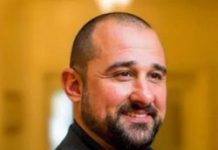
Laura Meade Kirk, a former reporter for The Providence Journal and now a public relations and social media specialist for Amica Insurance Co., recently took the time to answer five questions on her latest venture on trying to figure out the “do’s” and “don’ts” of social media, the recently formed Professional Rhode Islanders Social Media Group.
PRISM, whose members come from an array of Rhode Island companies, has a LinkedIn Group to discuss topics such “How to handle negative posts and comments – aka, when to respond, remove or ignore?” and bimonthly meetings.
PBN: Tell us about the Professional Rhode Islanders Social Media Group.
KIRK: I’ve attended a variety of conferences and workshops on the use of social media, but wanted to connect with other corporate communicators here in Rhode Island who actually use it to promote their companies, as I do here at Amica Insurance. So I reached out to another former journalist, Gregg Perry, who owns his own public relations firm, The Perry Group, and we came up with a list of individuals and companies who might be willing to share information and advice. We sent out a few emails, and word quickly spread. We soon had reps from Amica, Blue Cross Blue Shield of RI, Brown University, FM Global, Lifespan, Nail Communications, the Rhode Island Blood Center, Save The Bay, the University of Rhode Island and even a lawyer, Brian Lamoureux, who focuses on social media legal issues.
Seifert Systems Invests in Energy Efficiency to Strengthen Operations
For manufacturers, energy is more than just another operating expense. It plays a critical role…
Learn More
PBN: What topics were discussed at PRISM’s April meeting and what’s on the drawing board for the future?
KIRK: April was the first time we met as a group, so it was great to meet everyone. We talked about where our companies were with social media, and some of the challenges we face. And we talked about ways that PRISM could help us going forward. We created the LinkedIn group, to share tips and ask questions of other members. We also decided to hold bi-monthly meetings on different topics. For example, at our next meeting in June, we’ll discuss best ways to handle negative posts and comments on our company Facebook pages or other social media sites.
Future topics include: creating a social media policy for your company or organization; integrating social media into marketing initiatives; selling social media to the top decision-makers of your company; and measuring the return of investment on your social media strategies.
PBN: You mentioned that there are no “experts” when it comes to social media. A lot of people would disagree, especially some well-paid PR firms. What do you mean by this?
KIRK: Social media is, by its nature, dynamic and volatile – which is part of its appeal. But because it’s always evolving, it’s virtually impossible for anyone to have all of the answers when it comes to deciding which platform is best to use, which approach is best to take and which practice is best to follow at all times for everyone. Some individuals and companies are certainly more experienced with social media than others, and they’re able to share information and advice based on what has worked (or hasn’t) for their companies and/or clients in the past. And what works for us here at Amica Insurance may not work for other members of the PRISM group. But when it comes to social media – which is often aptly referred to as emerging media – there’s always something new to learn and some new tip to try. That’s why it’s great to have a group like PRISM, to brainstorm ideas and techniques.
PBN: It seems like there is a lot of discussion but no conclusions on the do’s and don’ts of social media. Does PRISM have a goal beyond laying out what each company is doing?
KIRK: There is no right or wrong way to use social media, and even fewer “do’s and don’ts.” But what PRISM does is enable us to discuss what has worked for us and our companies – and what hasn’t. This helps us define “best practices” for corporate use and provides leverage when we’re proposing social media tactics within our companies. Instead of telling my bosses here at Amica, “I think this is best,” I can say, “This is what Blue Cross Blue Shield of RI did and this is how it helped them,” or “FM Global tried this and it worked great.” PRISM also provides a resource of technical help. So much of social media is trial and error that it helps to talk to others who’ve tried something so we can save time in trying to figure it out on our own.
PBN: How do you envision PRISM evolving?
KIRK: I’m hoping PRISM remains as fluid and dynamic as social media itself. We created the group with the idea of it being a support and information network, and I would hope that it evolves to meet the collective needs of the group’s members as we go forward.