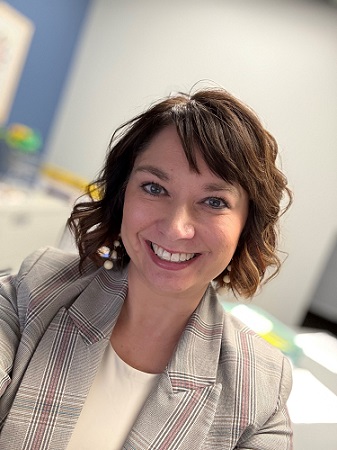
Melissa S. Cherney is the CEO of the Rhode Island Community Food Bank. Cherney began her new role in the Ocean State in August to lead the Providence-based nonprofit food supplier, succeeding Andrew Schiff, who retired earlier this year.
Cherney previously led the Great Plains Food Bank in her native North Dakota since 2019, both as president and then as CEO. She spoke with Providence Business News about her plans for the local food bank.
PBN: You’ve lived and worked in North Dakota most of your life. What attracted you to Rhode Island?
CHERNEY: From my first visit to Rhode Island, I was welcomed with open arms. I saw a strong food bank that was primed and ready for its next chapter. After spending 18 years at the Great Plains Food Bank, I’m excited to bring my skills and passion to make a positive impact here. There are challenges ahead and the need is greater than ever, but at a moment when the food bank is serving more people with fewer resources in the face of federal cuts, I’m energized by our strong community of supporters.
PBN: Since the COVID-19 pandemic, food need has remained at all-time highs in Rhode Island. After your first month, is that need still that high? If so, why?
CHERNEY: I think we all expected the need to decrease after the pandemic, but we actually saw the opposite. We are in the midst of a perfect storm, struggling with high food costs, a housing crisis, looming federal cuts and an ever-widening gap in overall economic security. More people need support than ever before. I’m proud of the work we do together to help people when they need us most.
PBN: How will the food bank respond to that need and what new initiatives does the food bank plan to establish in the near future?
CHERNEY: Every month, the Rhode Island Community Food Bank serves 89,000 Rhode Islanders, working with our statewide network of member agencies to put food on the table for families in need. At the same time, we’re working upstream on prevention. Hunger is a social determinant of health. As a community, we have to examine and understand the depth of the issue to drive progress. It’s imperative we provide people with healthy, fresh and culturally relevant food that meets their needs. We don’t do this work alone. Our partners – across food and financial donors, member agencies, government leaders, and beyond – stand beside us on this journey. I look forward to building on that strong foundation to advance more solutions to hunger.
PBN: In January, you’ll become chairperson of the Policy Engagement and Advocacy Committee for Feeding America. What are your goals for that committee as chair and how will Rhode Island benefit from that?
CHERNEY: Obviously, we have some urgent challenges ahead, with looming cuts and changes to federal nutrition programs. In the face of these hurdles, there is power in having a united message and direction, and that’s what the Policy Engagement and Advocacy Committee aims to demonstrate. The committee serves a unique role, helping to shape the policy priorities for a network of 198 food banks across the nation. Through PEAC and Feeding America, I also have the opportunity to engage with other food banks to learn best practices and about innovative solutions that we can implement here.
PBN: Are you optimistic that Rhode Island’s hunger problem will decrease over the next five years? And what will it take to get there?
CHERNEY: I am an optimist by nature, and I’m truly inspired and encouraged by the depth of support that the food bank has across the state. Our work is only possible because of our generous donors, and they continue to step up to help us address this critical need time and time again.
I’m also a pragmatist, though, and the reality is that we are tasked with serving more people with less food and resources. Paired with cuts to other social services, the impact on our community is significant and will be devastating for families. We have a lot of work ahead, and we can’t do it alone. I hope more people join us in the fight. Follow us on social media, subscribe to our newsletter, volunteer with a member agency, vote for sound policy and get engaged. Together, I do truly believe that we can end hunger.
James Bessette is the PBN special projects editor, and also covers the nonprofit and education sectors. You may reach him at Bessette@PBN.com. You may also follow him on X at @James_Bessette.