The Providence Preservation Society recently released its 2022 Most Endangered Properties list in an effort to shine a light on the city’s places of architectural, historical and cultural significance that are facing threats to their existence.
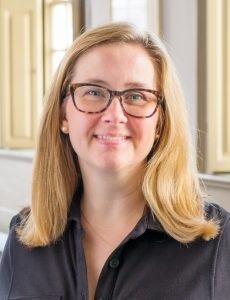
Rachel C. Robinson, the director of preservation for the organization, helps put that list together. Robinson, who joined the Providence Preservation Society in August 2017, is the former executive director of the Vieux Carré Commission Foundation and Felicity Redevelopment Inc., both located in New Orleans. Robinson also serves on the board of Preservation Action and the New England Chapter Society of Architectural Historians.
Your Business Has Gone Global. Has Your Insurance?
A decade ago, “doing business internationally” was mostly a large-company concern. Today, a manufacturer in…
Learn More
PBN: The Providence Preservation Society recently came up with its annual list of Providence’s most endangered properties, with the Industrial Trust Co. Building, better known as the “Superman” building, at the top of the list, its eighth time being featured. What’s the latest you’ve heard about the state’s negotiations with owner High Rock Development on potential redevelopment?
ROBINSON: We only know what is reported by the media, but recent news was promising, with several outlets confirming that the state is actively negotiating with the owner. We believe Gov. [Daniel J.] McKee, [Commerce] Secretary [Stefan] Pryor and other state leaders understand how important the “Superman” building is to the capital city and how much potential it represents in terms of providing housing and jobs.
We are cautiously optimistic this year, and are very hopeful, that we will not have to list the Industrial Trust Building next year because an adaptive reuse plan will be finalized. As for housing, that is a common sense and practical solution use and solution. The plan must include below-market-rate housing.
PBN: Why is it important to make sure that the Industrial Trust Building stays intact, and why does the Providence Preservation Society fear that its existence has been threatened?
ROBINSON: Prolonged vacancy is not good for the health of a building and decreases its potential to be reused. Buildings need people inside them, using them. That said, we understand the “Superman” building to be in good shape and a great candidate for adaptive reuse. It was built in the era of early, really tall skyscrapers, and therefore was overbuilt – meaning it is a solid piece of architecture and engineering.
The building embodies energy and materials that must be reused instead of ending up in the landfill. “Superman” will mark eight years of vacancy this April and the building turns 100 years old in 2028. Now is the perfect time to reuse and repopulate the building and start its next chapter.
PBN: Of all the other properties on this year’s list, which most interests you personally, why is that and can you explain what puts this property in danger?
ROBINSON: I’m grateful to be working closely with two groups in particular represented on this year’s list: the Prince Hall Masons, who experienced a devastating fire at their Eddy Street lodge [in] Christmas 2020, and the leadership behind the Tockwotton Fox Point Cape Verdean Community living history project.
Both of these listings have allowed PPS to expand conventional understanding of preservation and to learn about and share the deep cultural histories of the Cape Verdeans and Prince Hall Masons. I am a history student at heart; therefore, I personally appreciate learning about untold and undertold histories while working with these community leaders.
PBN: How did you get involved in this line of work, and what drives you to continue to contribute to the preservation of historic buildings in Providence?
ROBINSON: I am the daughter of an architect and a history nerd, so it was probably inevitable that I found historic preservation and architectural history as a career. I love architecture and cities and discovering and sharing the lesser-known histories of people and places.
I came to Providence for the job at PPS and enjoy working with the many smart and interesting people on staff and in the community who really care about the past, present and future of our city. I am from the South originally and think that it is important for any American preservationist or architectural historian to know the architecture of New England, which I have really enjoyed getting to know.
PBN: At your recent annual meeting, PPS hosted Milan Jordan, of the National Trust for Historic Preservation, as its featured speaker. What did you take away from her speech?
ROBINSON: PPS is just one citywide preservation organization in the country, and one of many prioritizing workforce development around much-needed building trades.
It was great to have Milan speak to our membership to share a national perspective and to show that PPS is part of the movement to train and support the next generation of tradespeople, who are really the doctors of our historic structures.
Marc Larocque is a PBN staff writer. Contact him at Larocque@PBN.com. You may also follow him on Twitter @LaRockPBN.