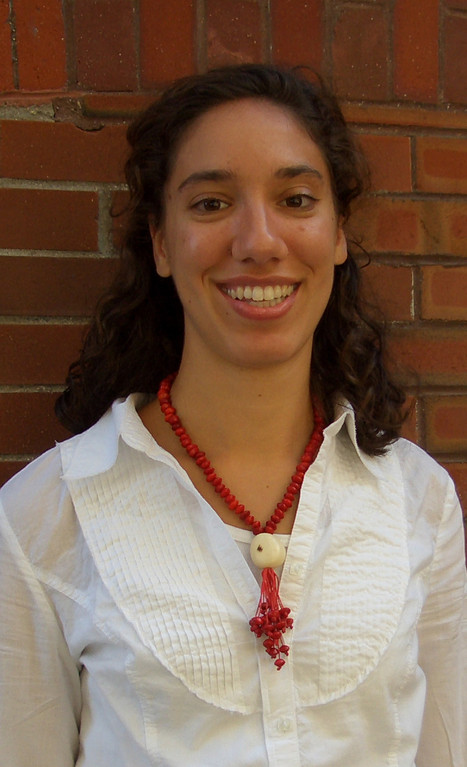
The automobile may dominate the landscape of the United States but in other countries feet remain the dominate mode of transportation. Stephanie Zurek, an architect at Donald Power Architects, believes the United States could learn something from nations where walkable villages are the norm.
Armed with a grant from the LeBrun Travel Grant Program at the Center for Architecture in New York City, she will soon head to Indonesia to study kampungs, small villages unlike anything in the United States.
She recently took some time to discuss kampungs and her trip.
PBN: Your grant will send you to Indonesia to study traditional kampung neighborhoods. What are those?
ZUREK:Kampung means “village” or “neighborhood” in Indonesian. The kampungs that I will study are located throughout the larger cities of Indonesia. I will be visiting those in Jakarta, Surabaya and Yogyakarta, three cities on the island of Java. These kampungs are older neighborhoods that have so far survived the wrecking ball for new high-rise residential and commercial developments.
The kampungs are densely settled and contain many community resources, such as schools, clinics and shops. Originally, each neighborhood was settled by immigrants moving to the city from the same rural region. In the urban centers, the kampungs have long been the home of lower and middle-income populations.
Rhode Island's Market Has Changed. Developers, Builders, Investors and Sellers Must Change With It.
By Emilio DiSpirito IV License Partner | Engel & Völkers Oceanside Leader | The DiSpirito…
Learn More
PBN: That sounds very different from what I think of when I envision a U.S. metropolitan neighborhood. Is there anything like kampungs in the United States?
ZUREK: We really don’t have neighborhoods like this in the United States. These neighborhoods are extremely dense, with narrow lanes and footpaths serving as the main travel arteries. There is very little room for vehicular traffic. Residents travel on foot and bicycle to access all of their daily needs. The buildings are one to two stories in height and are built using a range of materials, from bamboo with clay tile roofs to masonry with metal roofs.
PBN: If I understand correctly, you want to see if this concept will work in the United States. Any pre-trip thoughts on if it will? Would it work in Rhode Island?
ZUREK: Well, it is not my intention to see if kampungs can be built in the United States. There are many reasons why this would not work. The goal of the study is to observe the ways in which public space can be utilized in such densely developed areas, as well as to understand the various building types that exist throughout each kampung. While the patterns of the kampungs cannot be replicated in whole in the United States, there is still much that we can learn from the way this land has been developed organically over time.
PBN: Why actually travel there to study the neighborhoods? With all the technology we have today, couldn’t you stay in Rhode Island and learn about the neighborhoods?
ZUREK: Traveling is a tried and true study method for architects. There is an enormous difference between being able to stand in a space, sketch it and sense its proportions, as compared to looking at a picture of that same space on a screen. Internet research is not quite the same as being immersed in a different culture, walking through the lanes and bumping shoulders with the residents. As architects, we try to comprehend the implications of the spaces that we design and how they affect the rest of society. This understanding is improved through experience and first-hand observation.
PBN: I never knew there were grants that sent architects around the world to study concepts. How did you find out about this one? What do you suggest to other architects aspiring to study foreign concepts firsthand?
ZUREK: The travel grant for which I applied has been established by the New York State Chapter of the AIA. There are various travel grants and fellowships available through different foundations and nonprofit organizations. Young architects can also take advantage of study abroad programs offered at their schools. Though, learning through observation of the built environment can happen anywhere, not just in an international setting. There is something to be learned from every place we visit.