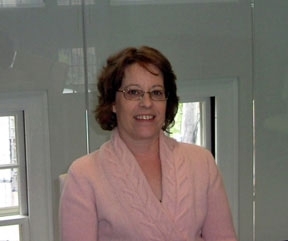
Susan Newman is chief financial officer at Moran Shipping Agencies Inc. in Providence.
PBN: Many people may have never heard of ships agents. What does a ships agent do?
Seifert Systems Invests in Energy Efficiency to Strengthen Operations
For manufacturers, energy is more than just another operating expense. It plays a critical role…
Learn More
NEWMAN: I am proud to be part of the steamship agency family, a fascinating profession which focuses on meeting the needs of a ship and crew who are far from home. As an agent, we serve as sort of the general contractor for port calls. It is our job to assemble and vet a team of vendors who will work with us to ensure that vessels get in and out of port safely, securely and cost effectively.
The services we coordinate range from logistical – arranging pilots, tugs and longshoremen – to regulatory: planning and coordinating compliance to a host of government requirements, particularly the U.S. Coast Guard, and Customs and Border Protection, among others. As husbandry agents, we provide services to the crew and vessel, such as handling medical services, repatriation, and all repairs and inspections. Consulting and accounting services include port call vendor management and vessel cash flow management.
PBN: Has technology changed the industry in recent years?
NEWMAN: The steamship agency industry has changed significantly in recent times. Increased globalization and heightened security concerns have required ship owners and charterers to find new ways to manage information, reduce port call costs and increase port call safety and security measures. When I started in the industry in 1979, the Telex machine, the typewriter and Ma Bell were just about the only technologies used on the agency side and the pace of business was often limited to what we now call snail mail.
As with many industries, the Internet completely revolutionized our industry, creating both challenges and opportunities, and ushering in the 24/7 work environment, where everything needs to be done yesterday, or so it seems.
PBN: Moran Shipping manages thousands of ships and hundreds of ports. How do you use technology to get it all done?
NEWMAN: Technology touches every aspect of our business. With 140 employees in North America and Europe, we invest heavily in technology solutions that allow us to best leverage the talents of all our employees. This boils down to innovative communication and intranet solutions. Most importantly, dependable and well coordinated communications with our clients and their vessels, and IT systems is paramount to success in our industry. On the government compliance side, submitting U.S. regulatory filings increasingly requires secure and sophisticated IT solutions. In the world of shipping, every minute counts, so ensuring reliable and redundant communication infrastructure is key.
Technology has also allowed us to expand the scope of the services we provide, which include designing and implementing customer extranet portals, Electronic Data Interchange solutions, e-archiving, and voyage reporting. Rhode Island is central to this strategy, as we benefit from the intellectual capital of our local universities.
PBN: You recently moved into new headquarters in the renovated Rhode Island Medical Association building near the Statehouse, and I know you used a lot of green-building techniques on that project. Could you talk about that?
NEWMAN: Many people feel historic preservation and building green are mutually exclusive. What is unique about our project is that thanks to a great architect and general contractor we have been able to demonstrate that sustainable design can be integrated with the preservation of a historic building.
With the assistance of federal and state historic tax credits and renewable energy credits, we are on track for a Silver LEED certification and have successfully drilled the first geothermal wells in downtown Providence, allowing us to heat and cool the building with renewable energy. Sustainable design solutions also include selecting low volatile organic compound, or low-VOC, paint and glues, nontoxic building materials, energy-efficient mechanical, water and IT systems, maximizing natural light, and innovative storm-water management to name a few.
PBN: Now that you’re in, how are you liking the new building?
NEWMAN: I was very pleased to be part of the team that renovated the Rhode Island Medical Society building and am very happy with how well the project came out. Early on, we knew that we wanted to provide an exciting and healthy work environment for the staff. By being located in the downtown area with all its amenities and using LEED criteria while designing the adaptive reuse, I feel we have accomplished these two goals. I am very pleased to be working in this wonderful building. •