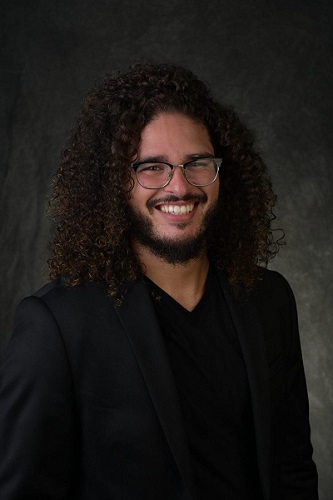
A mighty team powers CS4RI, or Computer Science for Rhode Island, says Yovanny Vargas, where he is a computer science fellow. CS4RI was launched by the state in 2016 to bring computer science learning to more students. The initiative is a collaboration between the state, the R.I. Department of Education, schools, businesses and nonprofits.
Vargas says he and his colleagues are now reaching out to those in computer science careers to make some time to bring a little bit of their everyday worlds to high school students in ways that can have a big impact.
Building a Strong Data Foundation in the Age of AI
Artificial intelligence (AI) has become a key priority in the boardroom and across management —…
Learn More
PBN: How did the CS4RI Virtual Industry Mentorship Program come about?
VARGAS: It was part of a $3.5 million federal grant that the R.I. Department of Education was awarded from the U.S. Department of Education. The grant supports the design and pilot of a computer science, work-based learning high school program in Rhode Island. What we learn from this research will inform national WBL practices, replicating what we do here in other states.
The program establishes three-course computer science pathways in 20 Rhode Island high schools, with 10 of those schools also implementing a one-semester CS WBL course. That CS WBL course has students learn the software development process from their high school teacher, who has been trained by our partners at the University of Rhode Island. Students engage in the software development processes working in groups of five to six students to develop a semester-long software project alongside their teacher and a mentor from the software or technology industry.
PBN: What kinds of projects can students and mentors work on together?
VARGAS: Students can do any type of software development project, depending on their skill level and the skill level of their mentor. Projects generally fall under three main categories: community, industry, or entrepreneurial, with student groups following the software development process from ideation to product presentation.
Ultimately, each group develops a website to promote its product or service. Mentors guide students and help situate this experience within an industry context. Final products should be feasible and relevant.
PBN: What does service as a mentor involve?
VARGAS: Mentors complement the high school teacher’s in-class instruction by serving as a guide. Mentors provide feedback and encouragement throughout the semester while their student group works to develop their project. They also expose students to different career options in computer science and help students from all backgrounds see the potential in themselves within the CS industry.
The time commitment is about 20 hours total, including a virtual onboarding meeting in January 2022, meeting with the students virtually at set points in their software development process, and two Community of Practice meetings with CS4RI and fellow mentors to provide feedback and share best practices.
PBN: You say that students who work with industry mentors get a broader range of exposure to careers in the field. How so?
VARGAS: Students get a broader range of exposure to careers in CS than they would from high school academic classes alone. Students hear about the mentor’s own path to becoming a CS professional; hear about – and sometimes see – the mentor’s place of work; learn the software development process through a series of videos from Google software developers and successful software company startup founders/developers; complete modules on professional skills for CS, e.g., effective communication and time management; learn about a wide range of CS careers; explore the development tools used by professionals such as GitHub; and follow a common industry standard, [and] agile software development processes, to build a product from idea all the way through to testing and marketing.
PBN: Are mentors still needed, and if so, in any CS areas as opposed to others?
VARGAS: Mentors are still needed! Any professional in the computer science industry who has any experience in software development is welcome.
CS4RI provides an extensive mentor toolkit with everything a person needs to be a mentor, such as seed questions for meetings with students, protocols, guides to working with teachers, etc., as well as an onboarding that explains expectations and mentoring techniques, and an ongoing community of practice for mentors to share experiences and get support from one another.
This is a chance for industry professionals to have a very rewarding experience helping Rhode Island high school students discover the excitement of the software/tech industry. For information on becoming a mentor, please see: cs4ri.org/mentor, or to sign up, fill out this form.
Susan Shalhoub is a PBN contributing writer.