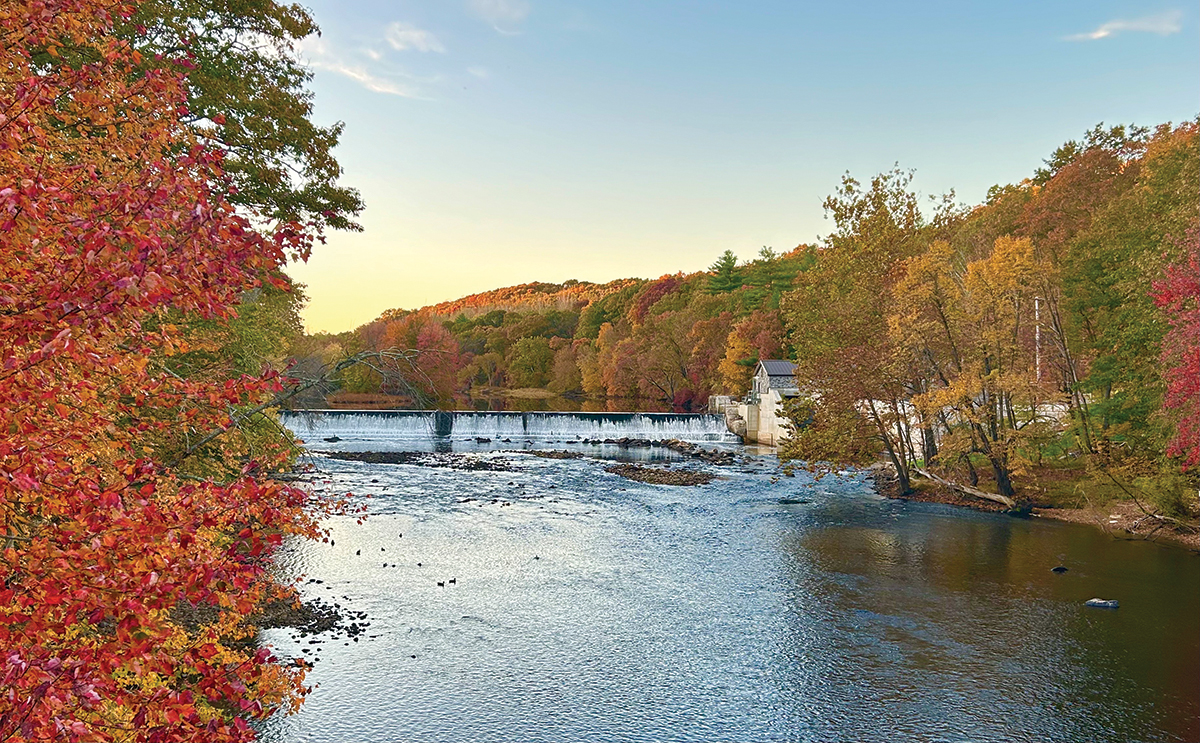
The Blackstone River played a key role in the Industrial Revolution: more than 100 mills and mill villages were built around it and its tributaries, harnessing the waterpower created by its 438-foot drop as it cascaded 48 miles from Worcester, Mass., to Pawtucket Falls in Pawtucket.
The first water-powered cotton spinning mill in the U.S. was built along its banks – Slater Mill in Pawtucket.
And while the development along the river created one of the busiest industrial areas, it also generated another problem: the river became known as one of the most polluted in the country.
Efforts to improve the Blackstone River have been underway since the 1970s, and while great strides have been made to better the water quality, there is still more work to be done.
Enter the nonprofit Blackstone Watershed Collaborative and Horsley Witten Group Inc., an environmental consulting firm with offices in Providence.
They are working together on a hydrologic and hydraulic study of the Blackstone River expected to be completed this year as part of the Worcester, Mass.,-based collaborative’s two-year river restoration planning project called Mish(kittacuck)sepe Restored; the name is a combination of the Narragansett Indian Tribe’s and the Hassanamisco Nipmuc Band’s names for the river. The project is being funded by a $1.1 million National Fish and Wildlife Foundation grant through the R.I. Department of Environmental Management.
“The Blackstone’s time is now,” Nicholas Cohen, Horsley Witten Group’s senior environmental planner, said in a recent interview. “We’re at the dawn of the Blackstone.”
Stephanie Covino, the Blackstone Watershed Collaborative’s executive director, agreed, saying the river has been “used and abused” for centuries.
Covino has been in touch with the Narragansetts and Nipmucs as part of the project, noting the group is committed to respecting the river’s indigenous and colonial history. They have also met with representatives from municipalities along the river to get their input and hear their concerns.
The goal is to work together on a collective vision for the river, to identify ways to improve natural hydrology, aquatic connectivity/restoration and recreational access for the public; the plan is to create three to five priority projects in each category.
Many of the Blackstone’s public access points are now “unofficial” or “small,” she said. One exception is the Central Falls public boat ramp, which also features kayak rentals, Covino said. They will identify areas used by community members along the river for fishing, boating, birdwatching and other recreational activities so they can create renderings of what new or improved points could look like, as well as identify next steps for planning, permitting and implementation, according to information from the Blackstone Watershed Collaborative.
Covino explained that the river is evenly split between Massachusetts and Rhode Island – with 24 miles in each state.
With industrialization came changes to its natural topography – the river has been dammed in nearly 50 spots, and some of the dams haven’t lasted. A total of 22 dams remain today, including nine in Rhode Island. There is also a manmade canal system that was built in the 1820s.
Covino said the study will create a detailed inventory of the dams and other sites along the river.
The study may result in recommendations for dam removal, she said.
There are hundreds of additional dams in the watershed, many of which are in disrepair and no longer serve a purpose, and are preventing aquatic life to move freely, changing flow and possibly blocking recreational river access, according to information from the collaborative.
Cohen emphasized that Horsley Witten will not remove dams or change conditions and is providing information for potential projects.
Because there is so much modified hydrology, the study will help determine how the river flows and will be a key component to future improvements, Covino said. Officials will use a computer modeling exercise based on field data to determine how water that originates as precipitation moves through the river system and its adjacent floodplain under various conditions.
The collaborative will also identify “critical areas near the river that need protection,” Covino said. “Just because it’s open space does not mean it’s open space forever. We can help promote and find funding to purchase and conserve these areas along the river, to protect water quality and habitats into the future.”
Because there were so many mills along the river, there are concerns about pollutants in the sediment, Covino said.
“Water quality has drastically improved since the time of the Industrial Revolution and since the ’70s,” Covino said, adding the river is still not clean enough that swimming is advised.
James Toomey, Blackstone Valley Tourism Council’s executive director, said the Blackstone River is an asset to the region, and there is a “tremendous upside” to the study, which will look at the river through a different lens.
“It’s one of the most powerful rivers with its drops. Industrialists came and harnessed that power. Our job is to look at things and learn from that past,” Toomey said. “We’ve seen an amazing amount of change over time and we’re excited to continue the process. Wildlife has returned and you can fish the river now, but obviously there’s a lot more work to be done.”