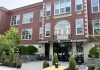
The event was meant to mark the 39th anniversary of the Fair Housing Act, the civil rights legislation that banned discrimination in housing. But the focus of the discussion last Monday was a big new threat to housing equality: the rapid rise in foreclosures.
Six panelists invited by the U.S. Department of Housing and Urban Development to speak about mortgage lending and predatory lending at a half-day conference in the University of Rhode Island’s Providence campus expressed concern about the current trends.
Foreclosures have been rising rapidly nationwide, and Julia Reade, a senior research associate at the Federal Reserve Bank of Boston, presented data to the audience showing that Rhode Island’s foreclosure rate has surpassed the national average.
Reade based her conclusions on data from the Mortgage Bankers Association’s National Delinquency Survey, which showed that lenders foreclosed on 0.59 percent of mortgages in Rhode Island in the fourth quarter of 2006, compared with a 0.54-percent national average.
No other New England state had a higher new foreclosure rate, though Massachusetts came close, at 0.57 percent, and the total share of loans in foreclosure as of Dec. 31 was higher in Massachusetts, at 1.03 percent, and in Maine, at 1.36 percent, than Rhode Island’s 1.01 percent.
Reade said subprime loans account for half the foreclosures nationwide, and in Rhode Island, they account for 60 percent.
In separate data presented to an audience of about 125, Richard Godfrey, executive director of Rhode Island Housing, said what really troubles him is that foreclosures are taking place within a short span of time due to the increase in subprime lending across the country.
“We would usually see foreclosures … in the fifth, sixth, seventh years,” he said. “Now they’re happening in year one or two, which is an indication that right off the get-go, people are in trouble.”
In an interview, Godfrey said foreclosures have increased “dramatically” in the past two years. And 90-day delinquencies – homeowners who are not in foreclosure yet, but are in peril – also have risen sharply: From the first quarter to the fourth quarter of 2006 alone, the share of loans with payments past due for more than 90 days in Rhode Island went from 0.49 to 0.81 percent, National Delinquency Survey figures show. (Nationally, the increase was far smaller, from 0.95 to 1.02 percent.)
The major problems are occurring with “exotic” and aggressive loans, Godfrey said, which provide easy access to money without the need for a down payment. Lenders also bombard consumers with ads, he said, and the sheer number of lenders has skyrocketed.
“When I came here 13 years ago, there were less than 40 lenders in Rhode Island. Now there are over 800,” he said.
Godfrey said minorities have been hit the hardest by predatory lenders and other hard-sell tactics because they have been traditionally excluded from the housing market. As they seek to buy homes, they are likelier to end up in the subprime market.
Kim Kendrick, HUD’s assistant secretary for fair housing and equal opportunity, said at the conference that Rhode Island’s overall homeownership rate is 64.6 percent, but it’s only 35 percent for African Americans and 24 percent for Hispanics – lower than the national averages.
Nancy Smith Greer, field office director for HUD in Rhode Island, said 48 percent of minorities nationwide are homeowners, based on U.S. Census Bureau data.
Greer echoed Godfrey’s assessment that minorities have been more heavily affected by the subprime lending problems, since that market tends to attract lower-income people with weaker financial histories. But the whole industry, she said, has been affected.
- Economy
- Economic Activity
- Industries
- Financial Services
- Government
- Nonprofit & Education
- Nonprofit
- People
- Personnel