Wednesday, 01 April 2009
No mother wants her 5-year-old son to suffer with illness, especially one that could take his life. But for Cambridge resident Kathy Antilla, that was reality.
Beyond Cash Donations: How New Forms of Giving Are Transforming Not-for-Profit Accounting
Evolving Funding Landscape for Not-for-Profits Not-for-profit organizations are being asked to do more with less,…
Learn More
After more than 100 appointments with specialists, the Antilla family got their diagnosis. Their son Isaac has primary immunodeficiency disease, which kept him from running and playing with other children.
Following the passionate testimony of Kathy Antilla and patients struggling with such diseases and deficiencies, the Minnesota Senate Health, Housing and Family Security Committee on March 26 passed the Quality of Care bill.
Image
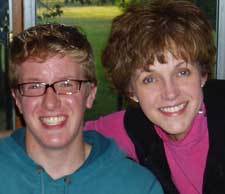
Today: Isaac, 17, with mom Kathy Antilla of Cambridge
Under the legislation, introduced by Sen. Kathy Sheran, DFL-Mankato, and Rep. Kim Norton, DFL-Rochester, patients with rare, chronic diseases and disorders who rely on plasma protein therapies to control their disease would be ensured access to the life-saving therapies they need to lead healthy, productive lives.
The goal of this legislation is to protect the proper care these patients with rare, chronic conditions are receiving now from insurance cost-cutting decisions in the future. And, as proposed, the legislation will not have a fiscal impact on the state.
Individuals suffering from primary immunodeficiency diseases, alpha-1 antitrypsin deficiency (hereditary emphysema) and von Willebrand disease (a blood clotting disorder) all require complex, biological plasma protein therapies in order to replace specific proteins that are missing or deficient in their blood.
In the case of Isaac Antilla, his disease sparked nausea and vomiting so regularly that he seldom tried to run at all.
He had no colds; if he got sick, he contracted pneumonia or bronchitis, which often took months to clear up. His family was afraid to take him to the hospital because of the risk of infection.
After starting his plasma protein therapy called immune globulin, which uses a plasma product to rebuild his immune system, the son they loved so much came to life.
At 5-and-a-half, Kathy remembers Isaac saying, “Look mom, I’m a normal kid now!” Now a 17-year-old Isaac still enjoys normal activities that are allowed now by health.
As Isaac’s life got back on track, Kathy Antilla jumped into patient advocacy with both feet. She served as director of education for the Immune Deficiency Foundation, teaching families about the hope plasma protein therapies can give to patients with these rare conditions. She has seen many patients struggle to get and maintain coverage for services they desperately need.
“I testified at the hearing in part because of Isaac, but also for the other patients and their families that struggle with these diseases,” Antilla said. “We have to make sure that we can get these life-saving treatments out to the people who need them and that the standard of care is clear for everyone.”
Antilla notes that some insurers only pay for a limited number of treatments because of the costs associated with them. In many cases, getting the treatments administered in-home by specially trained nurses isn’t covered, requiring patients to travel to hospitals or outpatient clinics to receive them.
Since many patients need weekly treatments, this can be a major disruption to work and family and puts them at greater risk for infection because their immune system already is compromised.
Hope
While he still needs plasma protein therapy every two weeks, Isaac is an active, healthy young man. An honor student, he is starting to think about college.
He gets his treatments at home, allowing him to complete them after school rather than missing a day of classes while he receives his treatment at a hospital.
“For Isaac, this is a matter of life and death,” Antilla said. “I hope the Legislature will pass this bill to protect him and the hundreds of Minnesotans fighting for their lives.”
Senator Sheran’s bill returns to the Senate floor for referral to the State and Local Government Committee this week. The House companion bill is currently with the Health Care and Human Services Policy and Oversight Committee.