
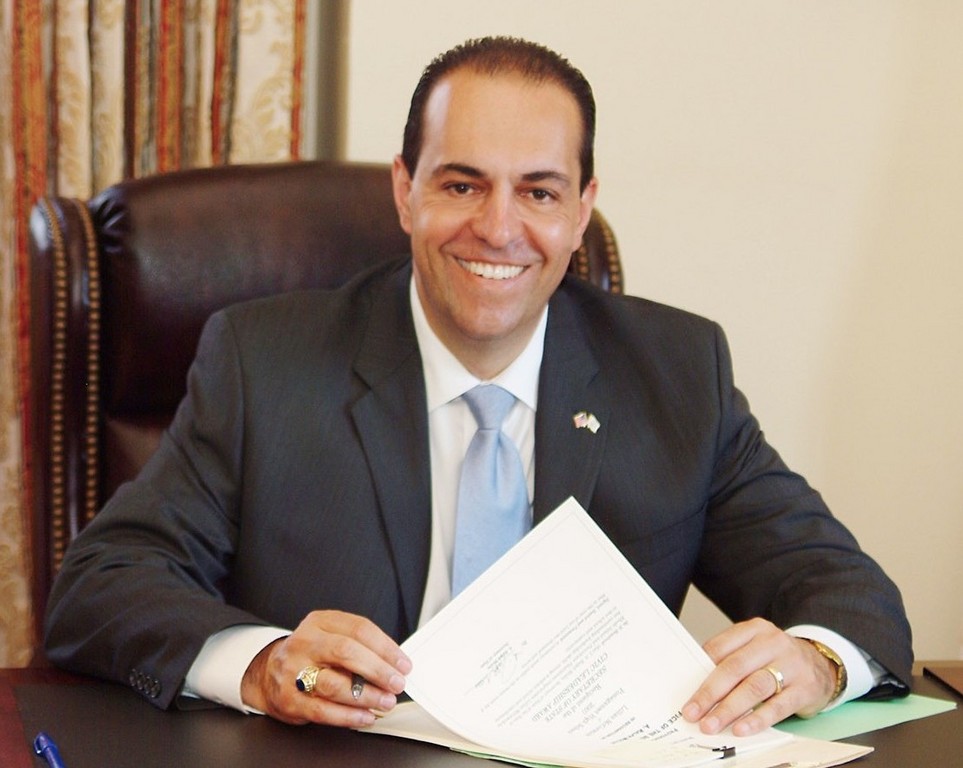
PROVIDENCE — Gov. Lincoln D. Chafee signed a law July 12 moving the state presidential primary vote to April from March in hopes of bringing more campaign attention and spending to the Ocean State.
The 2012 primary will be held April 24, the same day as primaries in Connecticut, New York and Pennsylvania.
Secretary of State A. Ralph Mollis, who initiated the legislation, said candidates are more likely to stop in Rhode Island if they can combine the visit with stops in nearby states.
“I’ve been calling for a national system of regional primaries since I first took office,” Mollis said in a statement. “They can make small states like ours more relevant.”
Mollis added that the law could “trigger a spurt of campaign spending here on everything from advertising to catering to phone banks.”
Rep. Donald Lally, D-Narragansett, North Kingstown, South Kingstown, and Sen. Erin Lynch, D-Warwick, proposed the legislation at Mollis’ request.
The later date will also give the state more time to comply with the federal Military and Overseas Voter Empowerment Act, which is designed to help citizens living abroad vote by absentee ballot.
The law also moves deadlines for filing for candidacy and collecting signatures to late January, whereas previous deadlines were before the winter holidays.
Rhode Island has held its presidential primaries in March since 1984.
Lynch also proposed a bill in which Rhode Island would join an interstate compact agreeing to devote each state’s electoral college votes to whichever presidential candidate wins the national popular vote. The bill passed the Senate 30-4 but never reached the House, and an identical House bill sponsored by Rep. J. Patrick O’Neill, D-Pawtucket, never came to a floor vote.
The General Assembly passed a national popular vote law in 2008 but it was vetoed by then Gov. Donald L. Carcieri.












The two bills contradict each other as economic stimuli. The bill that was enacted, which I agree with, is designed to increase the attractiveness of Rhode Island as a place for Presidential candidates to visit and spend money. The proposed interstate compact relating to electors, however, (besides being unenforceable) would send the TV advertising dollars to Boston, because most of Rhode Island is covered by the Boston stations and they reach a wider audience than the Rhode Island stations.
If Rhode Island entered into a regional compact, as opposed to a national one, that might make some sense (similar to the bill that did pass). It would still be unenforceable, though.