The Providence City Council in December approved a tax-increment financing (TIF) plan for the American Locomotive Works project in Olneyville. The plan will allow Maryland-based developer Struever Bros., Eccles & Rouse Inc. to take out a 25-year, $7.3 million bond for the next phase of construction.
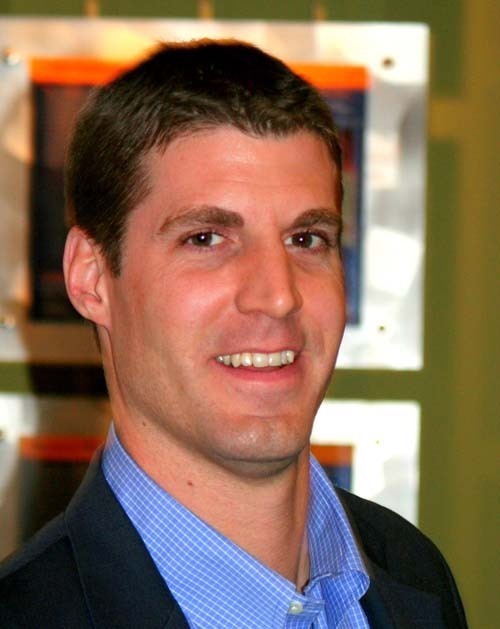
SBER Development Director Eric Busch spoke recently with Providence Business News about the need for that bond and the future of the ALCO project.
PBN: Can we start with a little background about this TIF plan?
BUSCH: For ALCO, three or four years ago when we began to put together the ALCO master plan there was a lot of input from people in the neighborhood, housing advocates and the city. It was really a large group of stakeholders deciding what could be done with the property that is now American Locomotive Works. And part of that original plan was to request TIF financing.
At that time, it was thought to be a much larger TIF bond, because we were thinking of building two large parking structures. So I think if you go back to 2006, there was an informal TIF … being discussed for $40 million.
Now it’s $7.3 million.
Your Business Has Gone Global. Has Your Insurance?
A decade ago, “doing business internationally” was mostly a large-company concern. Today, a manufacturer in…
Learn More
PBN: That’s a large difference.
BUSCH: It’s been refined over time, shaped over time. But it’s primarily because those garages were something that we could never get to a point where it would make sense for both sides to move forward on.
PBN: What exactly is the $7.3 million for and how does the process work?
BUSCH: It’s a bit complicated. I think that’s one of the hardest parts of this process: getting people to understand exactly what it is.
It’s a true public-private partnership. What it does, basically, is says that if and when property taxes increase because of improvements being done on the site, then a portion of that increase in property taxes would basically go to the city and they would use a portion to pay the debt service on these bonds.
So the city would issue bonds based on the credit of the development and the anticipated increase in taxes in the future.
The key point that I think separates this from other programs – we hear some people sometimes refer to this TIF district as a giveaway or a tax break – is it’s a very different approach. Those terms don’t apply to this. It really is based on the value of the development. If those property taxes never increase, the city is not liable for the debt service payments, the developer themselves are. And that’s a big difference from some situations in the past.
PBN: What if the property doesn’t increase in value after the bond is issued?
BUSCH: Let’s say there was a situation where we’re expecting the taxes to increase by $100 and $30 of that increase would be used to pay that debt service. If those taxes only increase by $20 and the city wasn’t receiving enough money to cover the debt service, then it’s not their responsibility. The owner of the property will have to make up that difference.
PBN: Why does the city have to be involved at all?
BUSCH: The city has to be involved for two reasons: they issue the bond and they also are obligated as a pass-through [entity] – if they receive that $100 in taxes, they’re obligated to pay that debt service.
PBN: What will this pay for?
BUSCH: A series of things. The majority of the TIF bond will be used to fund affordable housing. And this is in partnership with Olneyville Housing Corporation and McCormack Baron Salazar, the best-in-class, mixed-income developer and manager with properties all over the country.
PBN: How many housing units will that part of the ALCO development create?
BUSCH: In total, there will be 350 or 400 housing units created, with 135 of those units as income-restricted. It’s a combination of [renovation and new construction]. The ALCO project [has] six different phases of development, so what you see out there now is [the first phase]. That’s been completed and is now being leased up. United Natural Foods coming in from Connecticut, that’s the first phase.
In spring 2009, we’ll be starting [the second phase], which will be the historic renovation of the old U.S. Rubber buildings. That will have income-restricted housing, as well as office space.
PBN: How dependent is the project on this TIF bond?
BUSCH: It basically allows the project to continue. Because of the program, as it’s been created and refined by the stakeholders and us, the next two phases involve a significant amount of income-restricted housing and also a significant amount of public improvements. …
There are a lot of great things that will come out of this – public green space, access to the river, affordable housing – but right now what the city needs more than anything is to create jobs. This immediately starts to create jobs. During construction, there will be roughly 3,000 full-time-equivalent jobs.
PBN: The building climate isn’t as strong as it was a few years ago when the project started. Will the economy affect ALCO as it moves forward?
BUSCH: We still have a lot to do and it’s very difficult to do anything in the current climate. We’re continuing to work to push things forward, but I think in the current environment it’s very tough to forecast the timing of things, especially the future phases. •
INTERVIEW
Eric Busch
POSITION: Development director, Struever Bros., Eccles & Rouse
BACKGROUND: Busch has been at SBER for four years. Before that he had worked in the affordable housing division of the City of Oakland, Calif.
EDUCATION: B.A. in finance and real estate, James Madison University, 1997; MBA, University of California, Berkeley, 2004
FIRST JOB: When he was a teenager, Busch co-founded Busch Brother’s Lawn Service, which is still in business in Tolland, Conn.
RESIDENCE: Pawtuxet Village, Warwick
AGE: 33