Entertainment Law Firm,
describes her job.
One-woman firm focuses on all aspects of show business
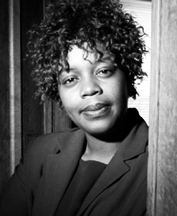
When attorney Daphne Clarke goes to work it isn’t to the local courthouse.
You’re more likely to see the Providence-based lawyer chatting with people at local music venues than you are to see her addressing a jury. She wouldn’t have it any other way.
ISO 9001:2026: A Practical Opportunity to Build for What’s Next
For Rhode Island manufacturers, ISO 9001 has been much more than a certificate on the…
Learn More
As head of DC Entertainment Law Firm, Clarke says her job is the perfect combination of business and pleasure because it allows her to search for new talent, provide advice to novices in the industry as well as seasoned professionals, promote unsigned talent, and negotiate contracts, tours, and live performances.
“I love to talk and be creative,” she said. “I went to law school because I thought that it would allow me to use my creative abilities.”
Clarke also has experience in the local music scene. As an undergraduate student at Brown University, she was the music director and on-air personality for 95.5 WBRU’s 360 Degrees Black Experience – a Sunday program dedicated to black and gospel music.
“I studied pre-med and English as an undergraduate,” she said. “But after I graduated I realized that if I went on to medical school I wasn’t going to be able to do many of the things I was enjoying. So I decided instead to go to law school.”
After graduating from the University of North Carolina at Chapel Hill, Clarke packed her bags and moved back to Rhode Island. She set up shop at the Center for the Advancement of Minority Businesses at 570 Broad St. in Providence.
And while Clarke admits at times it has been difficult, she said it never occurs to her to leave.
“People told me that I was crazy,” she said. “They told me that I need to be in New York. But I disagree. We have had some amazing success.”
With a client list of more than 20, and countless others stopping in for advice, Clarke is quickly learning that there is a market for her services in the Ocean State. Her clients include entertainment companies, radio stations, Internet companies, record labels as well as individual artists and DJs.
As diverse as her client list is, her job description might be even more so. From listening to demos, to critiquing potential artists, to looking at new material, Clarke’s practice covers a wide variety of legal issues.
“Entertainment law is a specialty that you have to keep up with,” she said. “Things change every day in this industry and it’s my job to be aware of that. One of the biggest issues right now is copyright laws”
Clarke does face a few hurdles. As a small, specialized law firm, she has to carve out a niche for herself in the local legal arena. She had hoped by now to employ at least one additional partner. She recently opened a Boston office.
She said her greatest challenge is convincing some people that there is a music scene in Rhode Island and that fostering it makes good, economical development sense.
“There is a lot of talent in this area, but many people don’t know what to do with it,” she said. “A recent study found that people stay in a place that has a good music scene. So I think that every business should be involved in the local music scene. If we can tap into tourism and festivals like Convergence, then we can build on that. It’s a challenge, but I think we can do it.”
Clarke isn’t afraid to lead the way. Last spring she brought the regional music industry to Rhode Island when she coordinated the New England Music Summit, a conference that highlighted urban music such as spoken word, neo soul, R&B and rap. She said the goal was to show that there is a thriving industry in the area.
“There is enough of a music community here to support these kinds of events,” she said. “I look at it as growth potential. My job is to get that support and inform people that we have a great industry here.”