
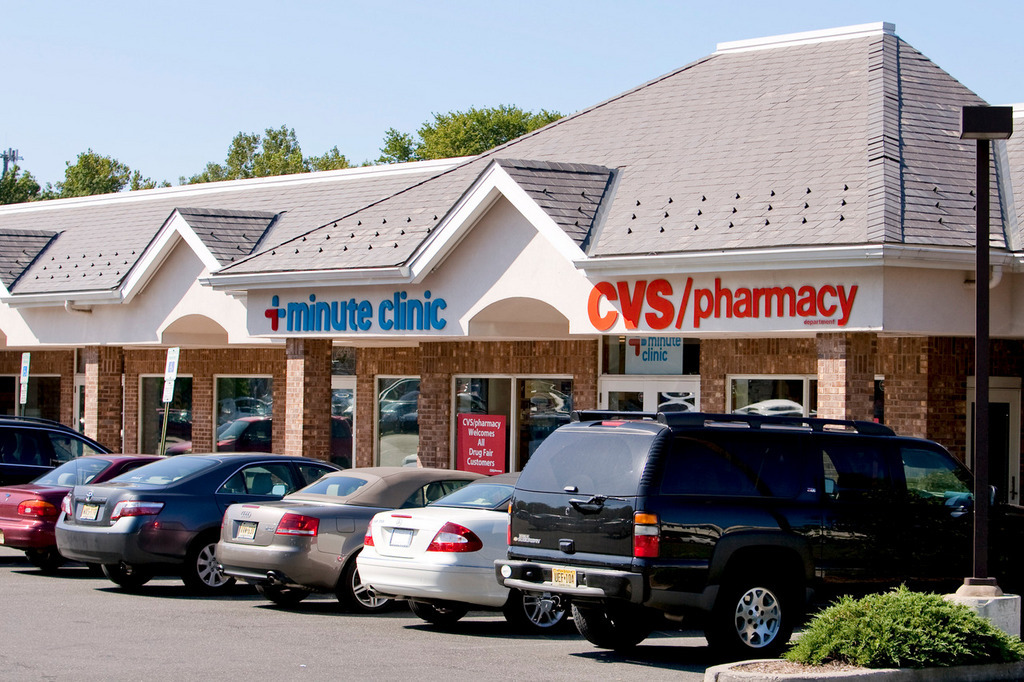
NEW YORK – Research published in the Annals of Internal Medicine indicates that the quality of health care provided in medical clinics in retail locations, such as CVS Caremark Corp.’s Minute Clinics, is similar to what is found in physician’s offices and urgent-care centers, but for prices that can be as much as one-third less.
“They’re serving a patient population that’s not frequently going to a primary-care physician,” Dr. Ateev Mehrotra, a study author and a professor at the University of Pittsburgh School of Medicine, told Bloomberg News.
But, he added, “A lot of emergency-room visits are for reasons that you don’t need an emergency-room level of care, so to the degree that retail clinics can deter those kinds of visits, I think it’s good from a societal perspective.”
The average cost of care at retail clinics was $110, versus $166 at a physician’s office, $156 at an urgent-care center, and $570 at an emergency room.
Forty-two operators manage 982 retail clinics in the United States, according to Bloomberg, with CVS, Walgreen Co. and Target Corp. operating three-quarters of them.
The study comes at a time a major part of the health care reform discussion revolves around the cost of primary care, especially when it is accessed in emergency rooms.
“More than a third of the U.S. urban population lives within a 10-minute drive of one of these clinics,” Mehrotra told Bloomberg. “They have the potential to serve a significant fraction of the U.S. public. If people start going to these clinics in larger numbers, they could really have a significant impact.”












Retail health care is a terrible idea. Much (40-60%) of health care visits involve social and emotional issues that impact the subsequent health outcome of patients. Retail health delivery has already been a dismal failure to health care quality and prevention of health problems. Doctors need to know and care about their patients, and retail health care is a business model that creates financial incentives that undermine health care delivery quality. Instead we should invest in continuous preventive care with a primary care physician, with incentives for individuals to seek primary care physicians – not retail centers that have no incentives to control costs.
The retail mealth center is another example of the private free market system creating a more efficient and effective delivery model. The current system encourages those who do not have a primary care physician to visit the hospital emergency room. The cost of providing primary care services in an er setting is at least three times greater than providing the same or better care in a clinic. The problem with todays healthcare delivery system is that we are stuck in a system that is outdated, inefficient and expensive. Rather than create more government bureaucracy we should strive for a system that creates incentives for healthcuare professionals, and business people, to generate the best clinical and financial outcomes. Neighborhood clinics are one example of a better way to provide primary care.