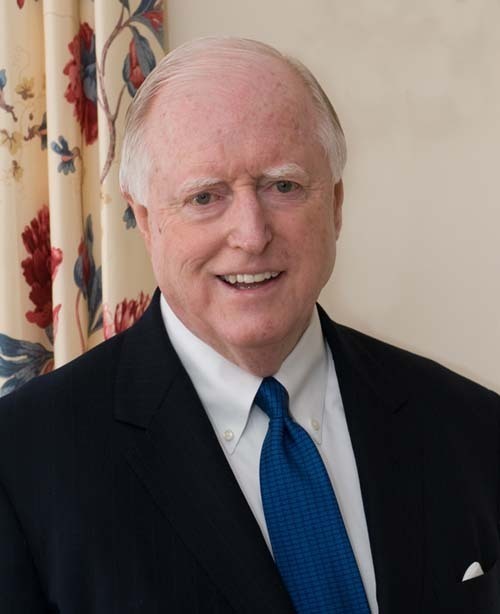
Lawyer James J. Skeffington mostly has done his work behind the scenes without much fanfare.
He helped create and guide many of the state’s quasi-public authorities, such as the R.I. Economic Development Corporation, the Health and Education Building Authority, the Student Loan Authority and the R.I. Convention Center Authority.
Over the years, he had a hand in numerous economic development efforts, including attracting Fidelity Investments to the Ocean State and the construction of the Providence Place mall and The Westin Providence.
Now Skeffington is in the spotlight. He was recently named winner of the 2009 Gold Heart Award from the American Heart Association of Southern New England for his charitable efforts with the association and his other community involvement.
PBN: Where does the Gold Heart Award rank on your lengthy list of accomplishments?
SKEFFINGTON: I’m deeply honored by it. The award is named after a former client and a personal friend, Richard Oster, who died in December from illnesses, one of which was heart-related. … It was also an opportunity to help raise funds for the American Heart Association, and making Rhode Island more heart-healthy. My strongest charitable interest is cardiovascular research, particularly with children born with congenital heart defects, as my son was. [The Gold Heart Award] is an opportunity to elevate public awareness of what the Heart Association does and the impact they have on saving lives.
Rhode Island's Market Has Changed. Developers, Builders, Investors and Sellers Must Change With It.
By Emilio DiSpirito IV License Partner | Engel & Völkers Oceanside Leader | The DiSpirito…
Learn More
PBN: Did many of the 400 people who attended the awards luncheon last month donate to the cause?
SKEFFINGTON: The luncheon set the record for the most attendees and the most money raised since its inception 14 years ago, and in a difficult economy. It was more than $250,000. I’m gratified and humbled by it.
PBN: But it’s not just charitable work for which you have been recognized. Over the years, you have been involved in the creation of various agencies in the state.
PBN: Do you do the work for legal fees, or were you appointed on a volunteer basis?
SKEFFINGTON: Much of the work was done without a fee, pro bono. However, over the years, I have been retained by various public authorities – I did a lot of bond counsel work, for example. They have raised hundreds of millions of dollars – probably over a $1 billion – for various projects in Rhode Island that I have been involved in as a paid counsel. Then there are bonds issued by agencies I help create – I do that as either a particular project for a governor who asks me to come with ideas of how we can build better housing … fund better health care … fund student loans … build highways, move rivers, create hotels, attract Fidelity… They are all involved in … trying to raise substantial sums of money with the involvement of the private sector and public sector.
PBN: Are you still playing that role?
SKEFFINGTON: I am. The governor and members of the General Assembly have asked me from time to time how we should solve particular problems or if we have any ideas. I serve on the board of directors of the [Greater Providence] Chamber of Commerce to help create economic initiatives.
PBN: You must have some opinions on what’s happening now with economic development in the state. PBN: But it can argued that we are cutting back on social services to lower taxes at a time when the social services needs are the greatest, and it might not be the best time to do that.
SKEFFINGTON: This is the most difficult economic condition I have seen in my 40 years of practice. … I have been very active in talking about tax reform in Rhode Island. One of the major impediments to economic growth is we’re perceived to be a very high tax state – one of the highest income taxes in the country. … Rhode Island has to address its tax structure and make it more competitive, particularly with our neighboring states. … Rhode Island took a major step forward three or four years ago when they adopted the so-called “flat tax option,” which was an idea that came from the Chamber and I was involved in. … Without the flat tax option, taxes for higher income people were almost twice as high as Massachusetts. … While we all have desires to help those in need – whether the elderly or children or people without jobs – the fact is we have to build a strong economy that will generate revenues that will allow us to meet those social obligations while at the same time provide people with the jobs they want.
SKEFFINGTON: You have to send a signal to the business community that you are serious about wanting to remain competitive. Businesspeople want stability, and they want to know what a state is going to do, from a tax point of view. So you don’t want to keep changing taxes up and then down depending upon the social needs. You want a state that is known for being competitive, known for stimulating economic growth. There are going to be important, difficult and challenging social needs that have to be addressed, and we have to the best to do that. But at the same time we don’t want to sacrifice our economic future by being so generous on the social welfare side that we have to raise taxes and end up in a situation that we’re spiraling downward. •
INTERVIEW
James J. Skeffington
POSITION: Senior partner at Edwards Angell Palmer & Dodge
BACKGROUND: Skeffington has been a partner at Edwards Angell Palmer & Dodge since 1974. After graduating from law school in 1967, he first served as a law clerk for state Supreme Court Justice Thomas F. Kelleher for a year. Skeffington then joined now-defunct Tillinghast, Collins & Tanner in Providence. Five years later, he moved to Edwards Angell Palmer & Dodge. Outside of his professional life, Skeffington is a founding member of the Coalition for Community Development, the creator of the Ocean State Charity Trust and chairman emeritus of the John E. Fogarty Foundation for the Mentally Retarded, among other things. He is also a strong supporter of the American Heart Association.
EDUCATION: B.S. in finance and economics, 1964, Boston College; J.D., 1967, Georgetown University Law Center; L.L.M. in taxation, 1969, Boston University School of Law.
FIRST JOB: Skeffington was a summer parks counselor in North Providence at age 16.
RESIDENCE: Barrington
AGE: 66