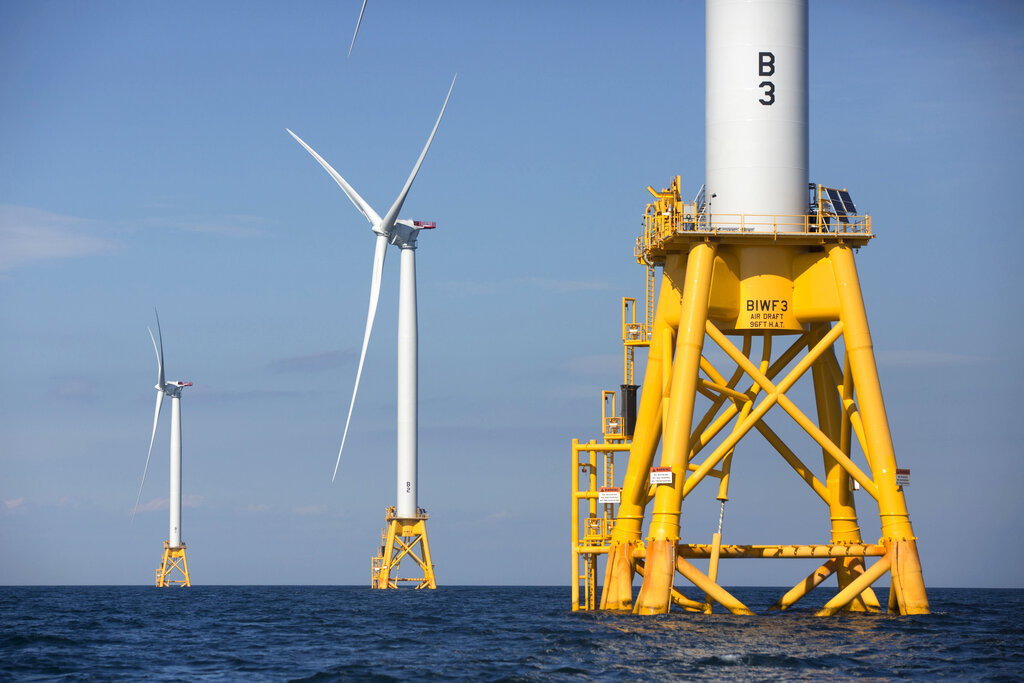
The Trump administration’s stop work order on the Revolution Wind project just days before Christmas cost project co-developer Orsted A/S more than $10 million, the company reported in year-end earnings on Feb 6.
But the Danish co-developer behind the 65-turbine project under construction in Rhode Island Sound still managed to end with more than $500 million in profits across its portfolio, in line with company expectations. Year-end earnings before interest, taxes and amortization were $3.6 billion, a 30% decrease over the end of 2024.
Beyond Cash Donations: How New Forms of Giving Are Transforming Not-for-Profit Accounting
Evolving Funding Landscape for Not-for-Profits Not-for-profit organizations are being asked to do more with less,…
Learn More
Stocks rose more than 4% in early trading Friday immediately following the earnings release. As of midday Monday, stocks were trading at $7.86 per share.
The upswing comes despite costly setbacks to Orsted’s United States offshore wind portfolio due to federal anti-wind policies. Federal regulators first ordered work to stop on Revolution Wind in August, citing national security concerns.
The suspension was reversed by a federal judge in Washington, D.C. one month later, with what appeared to be no setbacks to the 2026 completion date, according to Orsted executives. On Dec. 22, a second suspension order came down from the Trump administration, affecting five U.S. offshore wind projects, including Revolution and a second Orsted venture, Sunrise Wind, off New York.
The same federal judge again overruled the Trump order on Jan. 12, allowing work to resume.
As of Dec. 31, the project was 87% complete, and on track to begin delivering power on a test basis to Rhode Island and Connecticut “within weeks,” Rasmus Errboe, Orsted CEO, said on a 90-minute call with investors Friday. Once fully operational in the second half of the year, the 704-megawatt project will provide enough renewable electricity to power 350,000 homes across both states.
Despite the positive outcome for progress and finances, Erroboe acknowledged the uncertainty still clouding the company’s U.S. projects. The court-ordered preliminary injunction is a temporary solution, but offers little long-term assurance that the Trump administration won’t again seek to halt the project.
“We are determining how it may be possible to work with the U.S. administration to achieve an expeditious and durable solution,” Errboe told investors.
At the same time, the company is also talking to other developers and suppliers as part of its backup plan. Errboe declined to share details of the conversations during the call, but stressed the company’s commitment to finalizing Revolution and Sunrise Wind quickly and safely.
The company has already kicked off a major restructuring aimed at shoring up its balance sheet that centers around worldwide jobs cuts, divestment from less lucrative business segments and a $9.4 billion rights issue. On Feb, 3, Orsted announced an agreement to sell its European onshore energy business for $1.7 billion.
Divestment proceeds, along with more favorable interest rates and “positive market price developments” helped to offset the losses associated with Trump’s suspension orders and reciprocal tariffs. Despite consecutive write-downs of the value for Revolution Wind in the third and fourth quarter of the year, the project ended the year with an upward reevaluation: $12.9 million higher than 2024, according to company earnings.
Speaking to the company’s balance sheet more broadly, Errboe called 2025 a “defining year.”
“We have taken significant steps to solidify our financial foundation and improve the robustness of our business,” Errboe told investors.
Looking ahead, the company is honing in on Europe and Asia as major sources of business growth, noting its “distinct competitive advantage.”
Future U.S. projects were not expressly mentioned in the earnings call or annual report. A separate Trump order halting reviews on offshore wind projects still seeking federal approval was thrown out by a Massachusetts federal judge in December, but investors and industry forecasters have taken a dim view of the industry’s future, at least under Trump.
Orsted projects a $4.5 billion profit before interest, taxes and amortization in 2026, driven by completion of a pair of offshore wind projects in Taiwan, and Revolution Wind. Higher wind speeds are also expected to boost income; in 2025, average wind speeds fell below historical averages, Trond Westlie, executive vice president and chief financial officer, said on the call.
Nancy Lavin is a senior staff writer for the Rhode Island Current.