With almost 80 million baby boomers nearing retirement age, marketers and product developers know there is a big opportunity to sell new innovations aimed at easing the aging process.
The key to successfully marketing those products to the senior set will be offering things that increase their independence without making them feel old, according to a panel of medical and retail experts who spoke on Feb. 26 at the Brown Forum for Enterprise’s annual conference, which this year was titled “Silver Linings: Innovation and the Demographics of Aging.”
The biggest fear older people have about aging is losing their independence, followed by fear of pain and illness and fear of becoming a burden, said Linda Resnik, an assistant professor of community health at Brown University and a research health scientist at the Providence VA Medical Center.
Resnik has surveyed senior citizens on their experiences, and the most common physical problems they encounter are diminished balance and slow motor response; hearing and vision loss and diminished movement, she said. “The space that people travel tends to condense, and get smaller and smaller” as they age, she said.
Jessica Pichs, a senior research and product strategist at the Providence-based medical device company Ximedica, focused on seniors’ homes, which she has found “[are] incredibly important” to most elderly people.
In an AARP survey, 80 percent of people over the age of 50 said they would prefer to stay in their home and their community as they get older. The problem, Pichs said, is that 31 percent of noninstitutionalized people over the age of 65 live alone, in homes that were not designed with the needs of the elderly in mind.
“Second-floor bedrooms can put people in a nursing home,” Resnik said.
Since staying at home will remain the preferred option for many, there will be a market for household modifications, such as renovations to bathrooms and kitchens, stair lifts, ramps and enhanced lighting, she said.
Resnik sees a need for both high-tech and low-tech assistive technologies, which will “help people do what they couldn’t do, or make it safer and easier.” She expects to see those products migrate from specialized health retailers to mainstream stores.
Two particularly promising innovations, she said, are wheelchairs with collision-avoidance systems, which slow down automatically when they encounter an obstacle, and navigation systems that provide directions to people with cognitive difficulties.
Although there is a strong desire among seniors for independence and control, they fear that mobility aids are stigmatizing, making them look older than they feel.
Other people pointed out that some mobility devices make other tasks more difficult – for instance, a walker can leave the person using it with no hands free to carry other items around the house.
“Technology needs to be marketed as a way to increase independence,” Resnik said.
Too often, Pichs said, younger industrial designers work from stereotypes of senior citizens, imagining them as sick, forgetful and sedentary. The reality can be very different, she said.
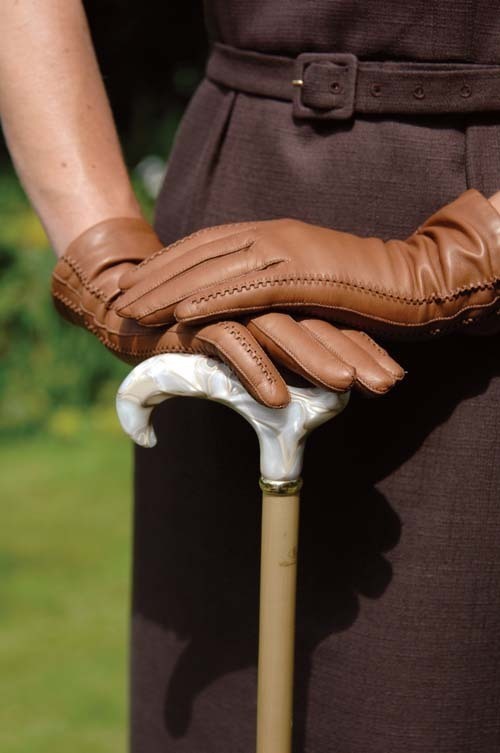
Resnik said there will be a huge market for “fashionable, sporty, mobility aids.”
“People don’t want things to look like hospital equipment,” she said.
At the Humana Innovation Center in Louisville, Ky., researchers are exploring ways of adapting popular products to match seniors’ needs. They have created Humana Games for Health, a set of games for older people that enhance cognition and movement but are designed to be fun, said L. Miguel Encarnacao, the center’s director of emerging technology applications.
One of the most successful games has been a new version of the popular game “Dance Dance Revolution,” where players stand on a lighted dance platform and are scored on how well they follow the steps that light up.
It has been a big hit with people into their 90s, Encarnacao said. “They do it because it’s fun, it’s social, and it contributes to a positive lifestyle,” he said. •