(Corrected, Oct. 20)
Thousands of miles of gas mains, electric lines, fiber-optic wires and water pipes managed by dozens of utilities and municipal agencies snake under Rhode Island soil. Figuring out where they all are can sometimes prove a challenge.
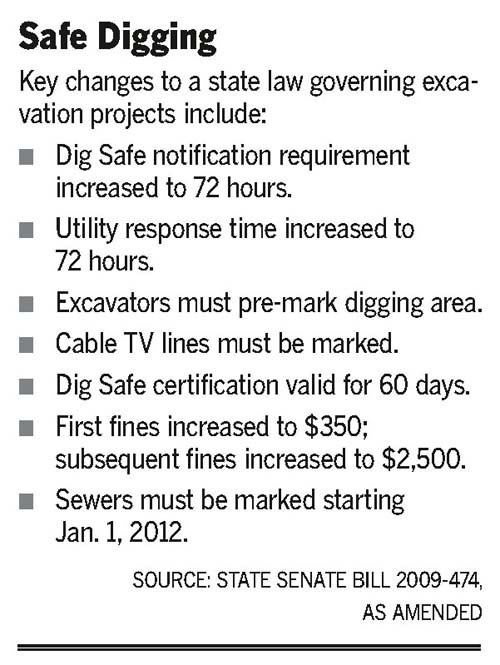
Since 1986, Rhode Island law has mandated anyone excavating so much as a patio contact Dig Safe System Inc., which in turn calls utilities and asks them to come mark their lines in an effort to prevent what could quite literally be an explosive situation if someone strikes a gas main. Next month an updated version of the law takes effect requiring excavators to provide earlier notice to Dig Safe and give utilities an extra 24 hours to respond.
Starting Nov. 1, anyone looking to dig into the ground must call Dig Safe 72 hours beforehand, up from the existing 48 hours notice. The updated law also provides utility companies additional time to mark their phone, water, gas, oil, steam, electric, data and television lines.
“Utilities were scrambling before to get [markings] done,” Dig Safe Executive Director Robert Finelli said.
The longer timeframe brings Rhode Island in line with every other New England state except Vermont, which mandates a 48-hour response, and was favored by the state’s major utilities.
“During construction season when everyone is active you do need some time to get out there and get the job done and you need to make sure you’re not rushing to do it and do it accurately,” said David Graves, a spokesman for National Grid, which maintains about 3,000 miles of underground gas mains and about 1,000 miles of underground electric lines in the state.
The heads of two construction industry associations called the legislation forged in the spring and passed in June a compromise among the contractors, the state and some of Rhode Island’s largest utilities.
Ronald Nunes, president of the Utility Contractors Association of Rhode Island, said his group saw the law as an overall victory because it will require sewer companies to record sewer lines starting in 2012. That would make Rhode Island one of the first states in the nation to mandate recording sewer lines.
“The involvement of sewer in this legislation was an enormous goal for us because many of the underground damages that take place here, and in some cases across this country, have had tragic results and have been related to sewer lines,” Nunes said.
Nunes and Steven Gianlorenzo, president of Rhode Island Independent Contractors and Associates, added that the additional time for utility companies to respond should have minimal affect on most contractors. Gianlorenzo, an East Providence builder, said contractors usually require at least 72 hours themselves to gather the required permits before starting the work.
“Usually you conform to some sort of schedule and unless there’s an emergency there’s no reason why you can’t wait 72 hours instead of 48,” said Gianlorenzo, who is also treasurer of the Rhode Island Builders Association.
Some contractors, however, say the extra day could put pressure on them in what is a competitive market.
“Some projects I need to start right away, by waiting 72 hours instead of 48 hours that’s going to kill me,” said Ronnie Kapuscinski, owner of Four All Seasons Construction in Johnston.
Kapuscinski said the two-day turnaround helps his small firm start work quickly after signing a contract. Without a fast turnaround Kapuscinski worries that homeowners will become restless and consider another contractor. Kapuscinski said that might tempt some builders to skip the Dig Safe step.
If they do, they face fines up to $2,500 under the new law. Finelli said the Rhode Island fines amount to a “slap on the wrist,” but do give the state a method to compel compliance.
Within the last year, the R.I. Division of Public Utilities has issued roughly 40 notices of violation. Of those, about 30 resulted in fines while the others were dismissed or violators were referred to education classes, division spokesman Tom Kogut said.
The division had initially proposed even higher fines and broached the potential of banning contractors that skipped Dig Safe from state work. Nunes and Gianlorenzo said the state agreed not to pursue that in return for contractors accepting the 72-hour response time. Nunes said the decision caused angst among some contractors, but he had urged them to accept the measure as part of a broader compromise.
Nunes and Gianlorenzo said in return the industry also received a lot. Dig Safe certifications – known as tickets – will now be valid for 60 days rather than 30 days. That reduces the burden both on contractors and utilities. The associations also persuaded lawmakers to lower the utility response time for an emergency situation to two hours from three hours.
And to help the utilities, the associations supported a new requirement that excavators outline the area they wish to dig in.
The cost of the service remains free for those digging. Those excavating should call (888) DIG-SAFE (344-7233) to arrange for markings. •
Rhode Island's Market Has Changed. Developers, Builders, Investors and Sellers Must Change With It.
By Emilio DiSpirito IV License Partner | Engel & Völkers Oceanside Leader | The DiSpirito…
Learn More
An earlier version of this story incorrectly reported that sewer companies would be required to mark their lines.