Gov. Gina M. Raimondo a year ago called a press conference announcing the state could no longer wait to address the deterioration of one of its busiest roadways.
“We have to move,” Raimondo said of the Route 6-10 connector at the time. “I can’t have these bridges hurting anyone.”
The decision to move quickly ahead with the project evoked outrage from city officials and neighborhood advocates, who sought infrastructure improvements that wouldn’t continue to
divide several Providence neighborhoods that abut the road.
After months of negotiations, the state and city reached an agreement last December, and construction was expected to begin by this fall. What’s been going on since, however, has been a lot of busy work related to fielding bids from construction companies and patching up deteriorating roadways.
“It is a very large and complex project, so we’re doing our due diligence and going through the process,” said Charles St. Martin III, spokesman for the R.I. Department of Transportation.
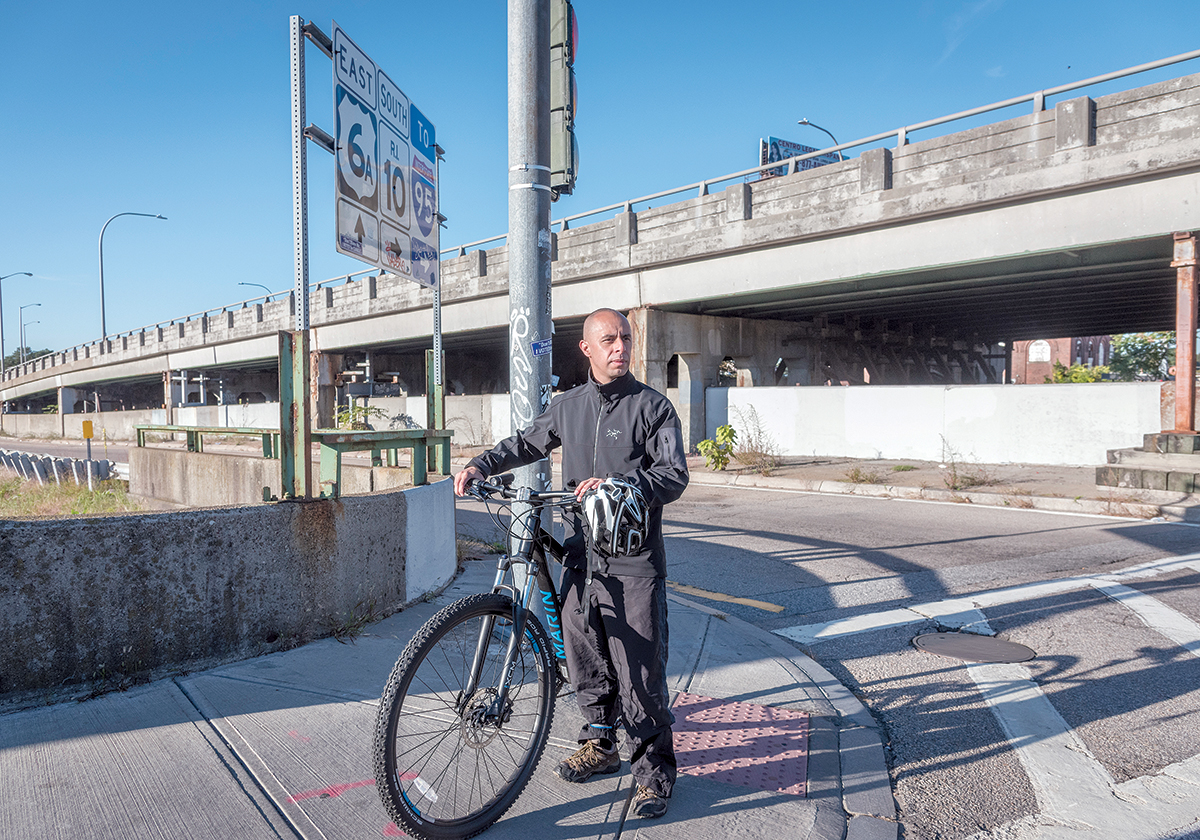
The 6-10 connector is a twisted knot of roadways where Route 6 from the west meets Route 10 from the south. The 1.6 miles of highway connects downtown Providence to surrounding suburbs and cuts through some of the capital’s poorest neighborhoods.
DOT has estimated the project will cost about $400 million.
Earlier this year, the state went through a “request for quotation” process, asking for design-build proposals to help fast-track the project, according to St. Martin.
“Our design-build approach saves two years versus the traditional design-build process,” St. Martin said. The state estimates the approach will help get the project done by 2023, instead of 2025. So far, the state has spent about $2 million on the process.
But for some neighborhood advocates, expediency should not trump addressing the needs of the impacted communities.
“We are in contact with RIDOT … to ensure the communities’ needs are being met,” said Seth Zeren.
Zeren is a spokesman for Fix the 6-10, a coalition of civic and business organizations that formed out of concern for how the state was originally proceeding with its rehabilitation of the 6-10 connector. Zeren is also a resident of the West End neighborhood, abutting the 6-10 connector.
‘There are tens of thousands of people who live near this road.’
SETH ZEREN, Fix the 6-10 spokesman
“This isn’t going to be a project that’s out in a county where few people live, there are tens of thousands of people who live near this road,” he added.
Another concern for the group is communication, which Zeren says the state has not handled well since the start of this project.
The state, however, contends it’s moving along as planned, and will ramp up the appropriate communication with neighborhoods once construction gets underway.
“We’ve been working diligently in the background since December, and when we start to get going to make the changes there will be plenty of advanced notice on how it will impact the area,” St. Martin said.
RIDOT has extended its request-for-proposal deadline two months, until November, which state officials say will save time in the long-term. The RFQ process enabled the state to determine who could qualify for the RFP, and two groups of eligible developers are under consideration.
The first, dubbed the JF White Cardi Joint Venture, comprises JF White Contracting Co. and Cardi Corp. The second is called the 6/10 Construction Joint Venture, made up of Barletta Engineering and Heavy Division Inc., O&G Industries Inc., D.W. White Construction Inc. and Aetna Bridge Co., according to the R.I. Department of Administration.
The state expects to award a bid after the November deadline, and the goal is to begin construction by year’s end, St. Martin said.
Providence officials, who played an intermediary role between the neighborhoods and state last year, largely approve of how the project is progressing.
“This project is very large and very complex,” said Victor Morente, spokesman for Providence Mayor Jorge O. Elorza.
Elorza rides his bike by the 6-10 connecter most days and has long advocated the roadway should better connect neighborhoods, rather than divide them. Last year, he helped negotiate with the state to reach a more-inclusive design that addressed some of those concerns.
Despite the overarching concerns related to safety, the state hasn’t yet been forced to close any parts of the 6-10. That’s in part because RIDOT has authorized $5 million to repair various parts of the roadway.
The patching work, which was done throughout the summer, addressed six bridges, including a variety of joint repair, minor steel repair and the shoring up of the Tobey Street on-ramp, along with some paving, according to St. Martin.
“Given that complexity, our administration has been working closely with RIDOT every step of the way forward and believes that the project is still on target and on schedule,” Morente said. “We believe the project will be a success.”
Eli Sherman is a PBN staff writer. Email him at Sherman@PBN.com, or follow him on Twitter @Eli_Sherman.