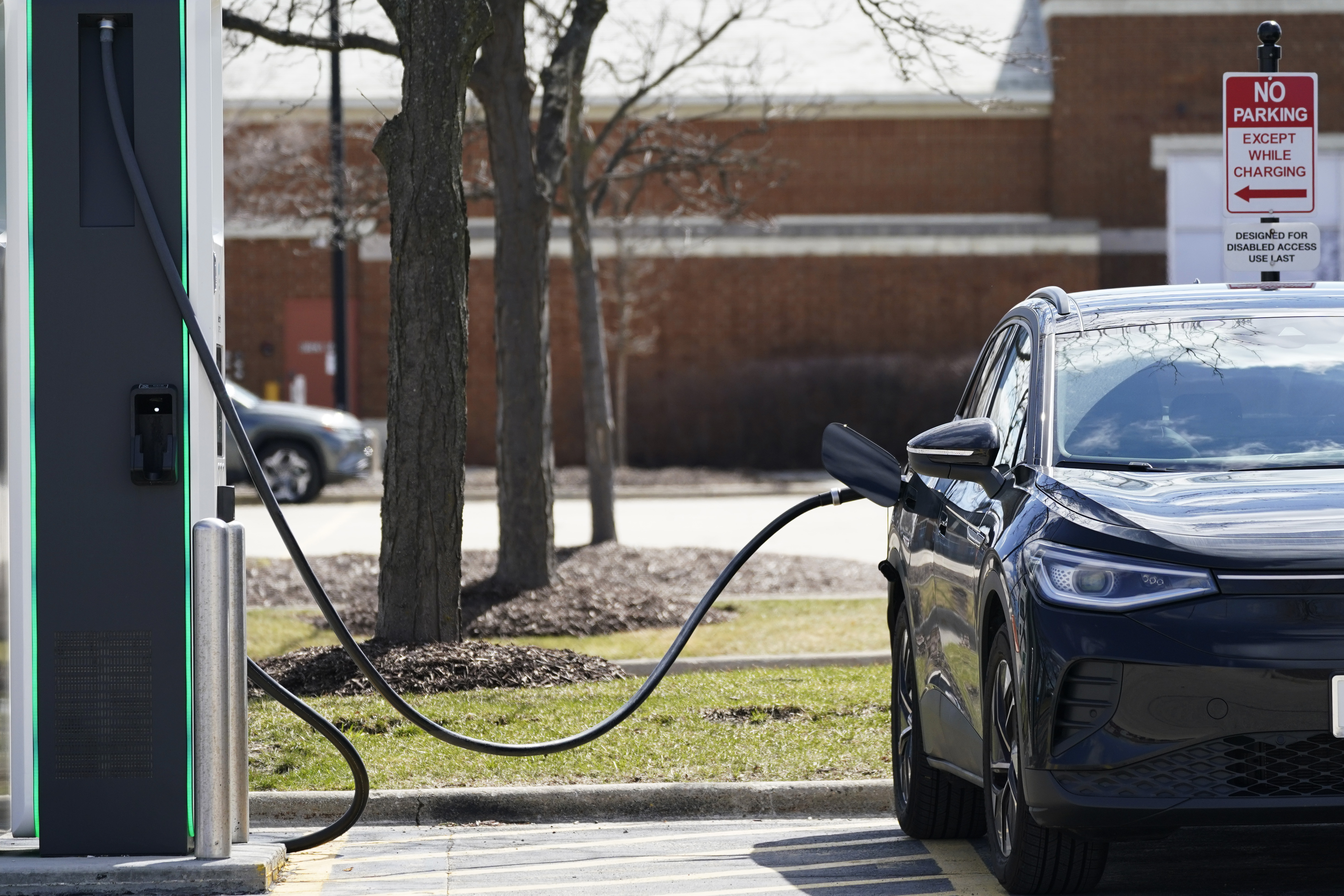
PROVIDENCE – Citing efforts to expand the program’s longevity, the R.I. Office of Energy Resources recently implemented cuts to rebates on electric cars and e-bikes.
The changes, which went into effect on Aug. 1, lower the rebate amounts granted to purchasers and also removed Medicare enrollment as an automatic qualifier for the program’s low income benefits.
Building a Strong Data Foundation in the Age of AI
Artificial intelligence (AI) has become a key priority in the boardroom and across management —…
Learn More
Under the updated guidelines, electric vehicle rebate amounts were reduced by $500. The state will now provide a rebate of $1,500 to $3,500 for new electric vehicles, depending on their power source, whether the use full or hybrid electric power and if a resident qualifies for the low-income program; and $750 to $2,500 for used electric vehicles based on these same conditions.
For e-bikes, the new regulations provide a $350, or 30% rebate under the regular program, going with whichever amount is lower. In the low income program, the state will provide a $750, or 75% rebate.
Previously, the program allotted $400 and $1,000 rebates, respectively, for the e-bike programs. The percentage regulations did not change with the recent update.
“The goal for both the DRIVE EV and e-bike rebate programs is to maintain their accessibility and availability for Rhode Island residents,” Robert Beadle, a spokesperson for the R.I. Office of Energy Resources, said in a statement on the program adjustments.
“To sustain the longevity of these programs, we’re exploring options for additional funding,” Beadle continued, and in upcoming months, the Executive Climate Change Coordinating Council will vote on funding efforts that would extend the program into 2024.
The office decided to drop Medicare eligibility as an automatic qualification for the low income program after finding that this policy resulted in “some cases where individuals who were not genuinely low-income were benefiting from these rebates,” Beadle said.
“Previously, individuals over 65 could qualify for Medicare regardless of their income level, which allowed them to access the low-income programs as well,” he noted, and the change will “ensure that the resources are directed to those who genuinely fall into the low-income bracket.”
As of July 31, the program has paid out $1.6 million in electric vehicle rebates, and $543,104 for e-bikes. That leaves $347,500 remaining in the DRIVE EV fund, $35,371 for the standard e-bike fund, and $40,000 left for its e-bike income-qualified program, according to program dashboards.
The program continues to limit rebates to two purchases per household.
The EV rebate program launched in July 2022 with $1.25 million in funding, while the e-bike program launched two months later.
The state also announced that nine out-of-state dealerships now qualify for purchases covered under the rebate program.
A list of those dealerships, as well as a full table of updated rebate rates, is available at drive.ri.gov/program-modifications.
Jacquelyn Voghel is a PBN staff writer. You may reach her at Voghel@PBN.com.