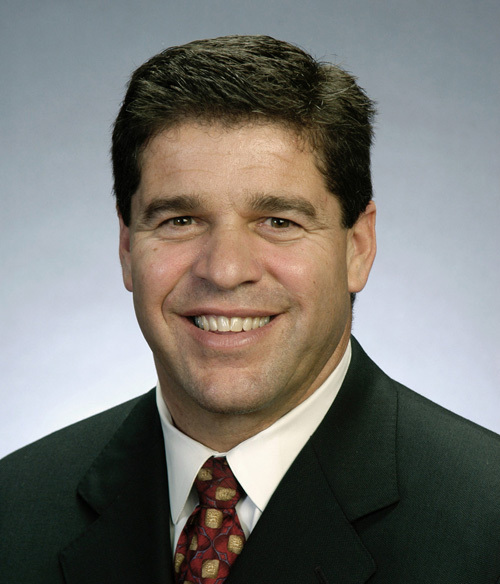
It can’t get much better on a professional level for Ernest Almonte.
Rhode Island’s auditor general for the last 14 years, Almonte this month will be named chairman of the American Institute of Certified Public Accountants, a trade group that represents 350,000 CPAs nationwide. It’s a part-time, volunteer role, but Almonte says it’s akin to being named chairman of the American Bar Association in the legal profession.
In addition, he will be the first chairman in the organization’s 121-year history to come from the public sector.
But he still has many concerns locally, particularly in light of the state’s fiscal woes and the effects that the Wall Street turmoil has had on public pension funds.
PBN: Last year, you issued a report concluding that many of the pension funds overseen by municipalities are woefully underfunded. One of the recommendations was that they join the state-run plan. What has happened since then?
ALMONTE: In some communities, they took the report seriously and they’re funding more of their annual pension requirements. But in some other communities, they’re still not doing that. … If you’re not putting in 100 percent of what you’re suppose to, it’s automatically going to be behind. And every year that you don’t do that, it gets further behind. It’s still an extremely serious concern of mine, that by not paying what we’re supposed to pay into the funds, we’re passing on our debt to future generations. If we’re going to continue to do this, then we shouldn’t send our kids birthday cards or Christmas cards – we should just send them invoices. We’re just taking debt and passing it on to them.
Rhode Island's Market Has Changed. Developers, Builders, Investors and Sellers Must Change With It.
By Emilio DiSpirito IV License Partner | Engel & Völkers Oceanside Leader | The DiSpirito…
Learn More
PBN: What were some recommendations of the report?
ALMONTE: One was that you have to pay 100 percent of your annual required contributions. … When you make a decision not to put that money in, you’re forgoing the future by using that money for something else. Sometimes it’s more attractive to build a soccer field than it is to fund a pension plan. … I understand that, but this is critically important.
PBN: Did your report suggest that municipalities switch from defined-benefit plans to defined-contribution plans?
ALMONTE: What we recommended was they look into the defined contribution, and there are committees looking into if that should be done. But it’s not a slam dunk. There are some ramifications from making that switch, like additional costs in the first few years.
PBN: Why recommend that municipalities join the state plan?
ALMONTE: First of all, on average the state was getting a higher rate of return than the cities and towns. You can have more diverse investments, so you don’t have your eggs in one basket and you reduce your risk. And you can reduce management fees. And
at the city and town level, they didn’t all have the skill-set to handle the investments.
It’s a more prudent way to handle the finances. … With the economy being the way it is, with revenue shortfalls everywhere and expenses going up, I get worried the cities and towns may decide to use the [pension] money somewhere else. … They need to put the money in the pension funds. If that means less revenue to spend on other things, well we might have to cut back on other things.
PBN: But the state-run pension plans are underfunded as well, aren’t they?
ALMONTE: Yes, and they need to do a better job, too, in putting more money in the pension funds.
PBN: What is your opinion on the state’s financial woes?
ALMONTE: I’m of the firm belief that it’s a very simple formula: Revenue minus expenses is either surplus or deficit. If our revenues are going down, we need to cut our expenses. If you don’t do that, you’re going to have a deficit. I’m not a believer in having deficits. … When I was growing up, my father used to tell me that once you experience a luxury, it becomes a necessity. Well, that’s what’s happening here. Everyone’s been spending because the money has been around. Now that the money is being cut back, we have to change how we think, how we conduct business. We’ll have to look at sharing between towns to reduce expenses.
PBN: Municipalities now have to work under a shrinking tax cap, which prohibits them from raising the tax levy above the cap. Under law, communities can come to you for an exemption in emergency situations. Did you see more emergency exemption requests this past year?
ALMONTE: It wasn’t more than usual. … Most people know that I tend to say “No” most of the time. I know what the intent of the law is – it’s for an emergency. … To me, just because revenue went down, that’s not an emergency. That means you go back to the table and you try to figure out how to cut your expenses.
PBN: But won’t the state’s dwindling local aid and the small tax cap drive more municipalities to seek that cap exemption?
ALMONTE: This coming year, I would imagine there will be more [exemption requests]. Revenue coming from the state is either going to remain stagnant or go down. And with the reduced cap, I do see the pressure being put on the communities. But I think it’s a good law. … I keep telling the communities: “It’s time we think differently. There’s not enough money here. Be creative, think differently.” That’s my mantra for this year. •
INTERVIEW
Ernest Almonte
POSITION: R.I. Auditor General; incoming chairman of the American Institute of Certified Public Accountants
BACKGROUND: Almonte has been auditor general since he was appointed by a committee of legislative leaders in 1994. Before that, he was a CPA in his own accounting firm from 1982 to 1994. He also worked at the accounting firm Renza & Saccoccia from 1978 to 1982. He has been a member of the advisory committee for the U.S. comptroller general, and he was recently named to the audit committee for the U.S. Department of Defense. He will serve one year as chairman of the
AICPA.
EDUCATION: B.S., B.B.A. in accounting, Bryant University, 1978; M.S. in taxation, also from Bryant, 1985.
FIRST JOB: Almonte worked on a chicken farm in Johnston when he was 15.
RESIDENCE: Scituate
AGE: 52