VIBCO Inc. isn’t a Rhode Island native – having been founded in 1962 in New Jersey. But the Richmond manufacturer has put the Ocean State on the map, especially when it comes to lean-management practices.
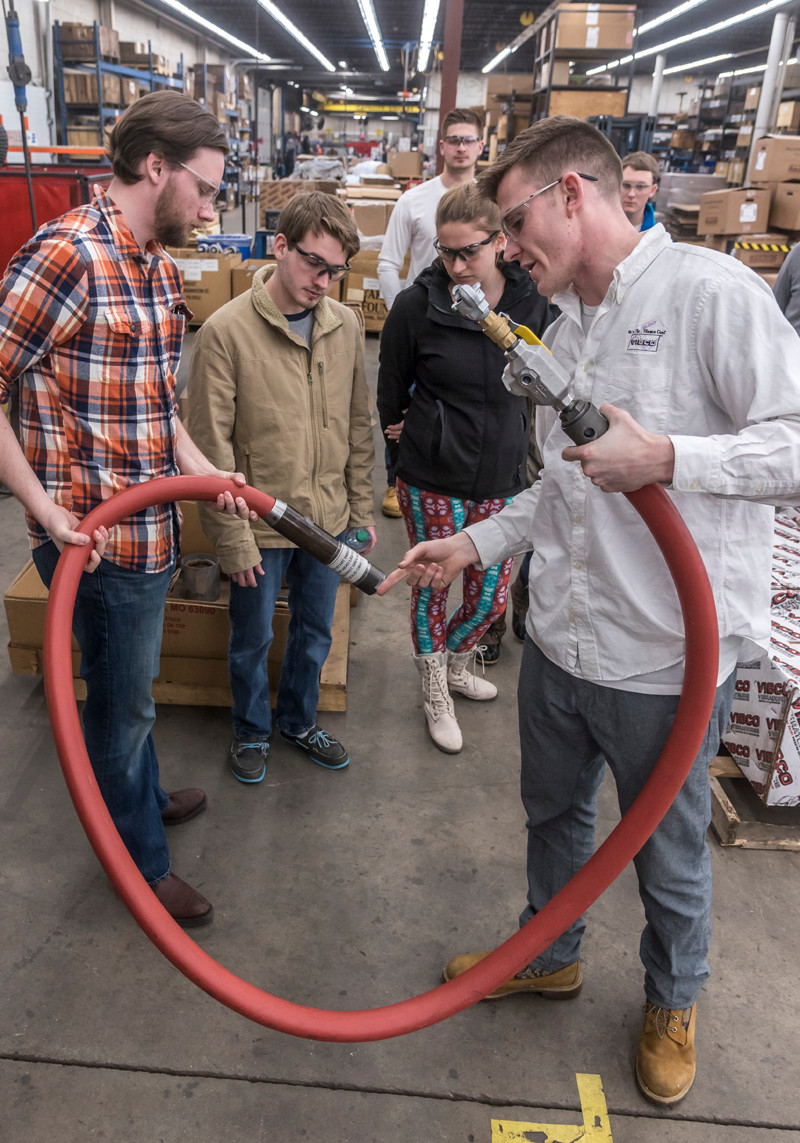
Known for its Big Bertha Dump body vibrators (used on the bottom of dump trucks), its Pothole Patchers, which repair holes and aid in construction, custom vibrating tables, industrial vibrators, mounting brackets and air cannons, VIBCO sells to more than 360,000 customer accounts across the globe, including the likes of NASA, Kellogg’s and the R.I. Department of Transportation.
For Leaders Who Don't Have Time to Get Sick
Top performers guard their calendars, delegate relentlessly and optimize every hour of the day. Health,…
Learn More
Fifteen years of embracing lean management has been instrumental in the company’s success.
“When [you’re] committed to operational excellence, there is really no stopping point,” said P.J. Dougherty Jr., company spokesman. “When improvements are being made at one point in your supply chain, slack grows in another. Being inversely related, it is crucial to identify the stakeholders affected by each change being made … and how it will affect their systems.”
Practicing lean manufacturing has helped VIBCO grow substantially. In the past three years, it has grown its customer base from 210,000 to 320,000. Its export business has grown more than 25 percent. Its dealer network has increased by 2,000 and the company has held its pricing steady for the past three years.
A typical day at VIBCO involves the employment of both Kaizen (continuous improvements) and 5S (a workplace organizational method).
“Everything has a home, and everything can be found with no hassle or added stress when proper 5S is practiced,” said Dougherty. “Understanding the processes that bug you, paired with an easy-to-understand organizational method, brings forth education of not only VIBCO’s daily operations, but how every action within VIBCO’s four walls causes a reaction, which affects … employees and end users of our products.”
Around 8 a.m. or so brings the most important part of the workday – VIBCO’s “Daily Stretch Huddle,” during which employees join together to stretch as a group and discuss improvement efforts, safety concerns and any issues. Dougherty says the conversations are strategically important.
“We are mining to expose ‘hidden factories’… processes that have evolved due to lack of accountability or awareness. When a hidden factory is found, we look toward a process known as PDCA,” which stands for plan, do, check, adjust, he said.
He said that solutions can be more accurately tracked for efficiency if team members are trained in pairing metrics with problems. If metrics get worse, the solutions can be tweaked accordingly. If they work, the company can keep the status quo or improve, he said.
After the daily stretch huddle, VIBCO workers do their various jobs in the method of Hoshin Kari – also known as policy development.
“Each employee is constantly working to achieve goals and objectives set by senior management,” said Dougherty. “It is a powerful way for senior management to set direction and allow every employee to understand their role in pursuit of our weekly, monthly, quarterly and yearly goals.”
In addition to growing as a company, practicing lean manufacturing has helped VIBCO improve vendor relations, vendor effectiveness, develop its workforce and earn the company national recognition. “Most importantly, we’ve learned that we’re in the people business,” said Dougherty. “Our job is to build people, not widgets.”
Thus, while VIBCO is looking to further distinguish itself as a global leader in lean manufacturing, it also is looking to create a teaching organization in the future.
“Not just on manufacturing, but how all types of organizations can come and learn about systems thinking,” said Dougherty. “We are all process-driven at the end of the day. Now imagine if everyone’s processes – personal and work-related – could come together and flourish in a well-functioning system, serving individuals, organizations and the world as a whole.” •