In the relatively nascent sphere of financial technology, Rhode Island – echoing its relationship to the biotech industry – hasn’t caught up with neighboring Massachusetts.
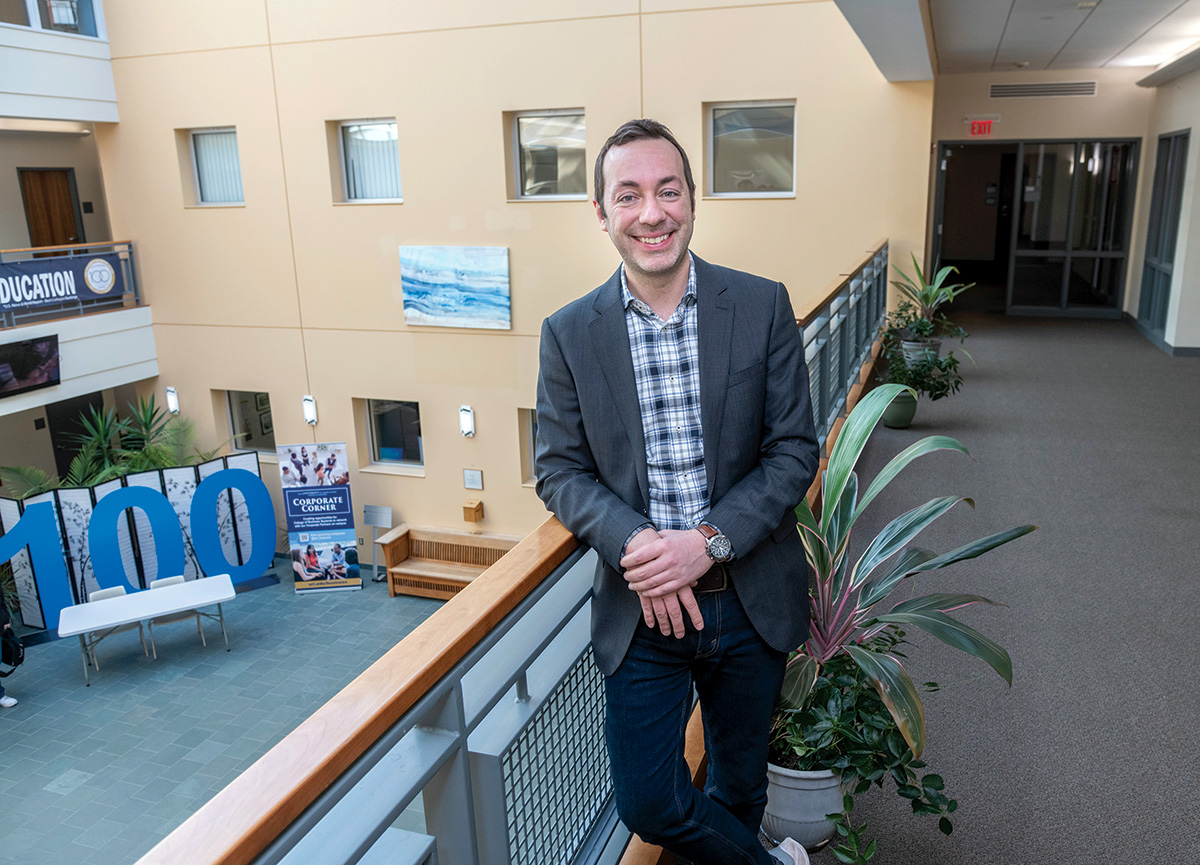
But H. Zafer Yuksel, an assistant professor of fintech at the University of Rhode Island, hopes that through acknowledging this gap, the Ocean State can begin its own push into the emerging sector.
“Fintech companies are in Massachusetts” more so than the Ocean State, Yuksel said. “But I am hoping this is going to change over time, and Rhode Island is going to get its share eventually.”
Yuksel teaches in URI’s Fintech Certificate Program, launched in 2022, which finance majors can meld into a fintech-track degree.
“We are training students, educating them and hoping they will come back to Rhode Island to create their own fintech companies,” he said.
But with the limited resources currently available in Rhode Island, the path forward is collaboration, Yuksel says. To kick off this effort, the University of Rhode Island last month announced that it has formalized a partnership with Mass Fintech Hub, a public-private collaboration that describes itself as “focused on cultivating a robust ecosystem in Massachusetts.”
This Bay State focus, however, doesn’t mean there’s nothing in the partnership for Rhode Island, Yuksel says. Furthermore, while he also looked for partner organizations in Rhode Island, Yuksel says he couldn’t find a good match for the academic program.
“My goal is to provide the best to my students,” he said. “There’s always a spillover effect. Joining Mass Fintech Hub allows our students to access fintech professionals, whether they are in Massachusetts or not.”
In February, for instance, URI students attended a fintech boot camp at Stonehill College, where they met with fintech professionals and executives. Through such connections, Yuksel hopes to see students forge relationships that lead to mentorship and future employment opportunities.
Financial technology emerged around the 2008 recession as developers began to look for new ways to leverage technology for financial stability and gain – think blockchain, mobile payments and investing apps, including payment services such as Venmo.
“The goal of fintech is to improve financial activities, making them more efficient and accessible,” Yuksel said.
Even in Boston, long known as a global tech leader, efforts to capitalize on this industry are still materializing. The Mass Fintech Hub itself was established in 2021, just one year before URI launched its fintech certificate program.
Despite the Bay State’s prominent tech industry, and the presence of sector-focused organizations such as the nonprofit FinTech Sandbox, Massachusetts’ fintech sphere remained somewhat disjointed at the time, says Elizabeth Thomas, program director at Mass Fintech Hub.
“There was really nobody to kind of bring them together,” Thomas said. “So a lot of those leaders in Massachusetts got together and said, ‘If we can create a hub that brings it all under one umbrella, that would really enhance the ecosystem.’ ”
The effort has attracted 50 members since its establishment, including 10 colleges and universities. The University of Rhode Island is the first out-of-state higher education institute to partner with the Massachusetts hub, though not its first Rhode Island connection – Mass Fintech Hub also counts Providence-based Citizens Financial Group Inc. among its earlier contributing partners.
Outside of Rhode Island, the closest Mass Fintech Hub has to a partner in another state is The MITRE Corp., a nonprofit with two locations in Massachusetts and Virginia. But the hub intends to make a push for more out-of-state members, Thomas says, touting the same benefits that attracted URI.
“Our contributing members are able to join and set the agenda, contribute to our programming,” Thomas said. “They get to really have a hands-on approach and build that network.”
Mass Fintech Hub doesn’t have additional Rhode Island partnerships lined up at the moment but plans to continue looking to the Ocean State, and well beyond, as it further establishes its presence in Massachusetts.
“While there are so many things going on in Massachusetts, we can’t do this alone [or] in a vacuum,” Thomas said. “We’re in a global economy.”
And with the industry’s relatively recent rise, these partnerships provide vital insights into advancing the sector on a global scale, Yuksel says, including through educational efforts.
“No one knows exactly how to teach it,” Yuksel said. “We are sharing strategies.”
Despite this uncertainty, students see potential in the field, if URI’s program is any indication. Around 80 to 90 students enrolled in Yuksel’s fintech class this year, he says, compared with 20 to 30 the previous year.
It’s “growing exponentially at this stage,” Yuksel said of the URI program. “We were expecting that, but we weren’t expecting this much demand.”