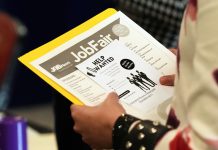
WASHINGTON – Confidence among U.S. consumers unexpectedly declined in May to a six-month low as Americans’ outlook for business conditions and the labor market soured.
The Conference Board’s index dropped to 60.8 from a revised 66 reading in April, figures from the New York-based private research group showed today. The median forecast of economists surveyed by Bloomberg News called for a rise to 66.6. Other data today showed a drop in home prices and weakening manufacturing.
Rhode Island's Market Has Changed. Developers, Builders, Investors and Sellers Must Change With It.
By Emilio DiSpirito IV License Partner | Engel & Völkers Oceanside Leader | The DiSpirito…
Learn More
Americans became more pessimistic about their incomes, which are getting squeezed by higher grocery bills and gasoline that’s exceeded $3.50 a gallon since early March. The lack of faster job and wage growth means consumer spending, which accounts for about 70 percent of the economy, may remain restrained and keep the expansion from quickening.
“Consumer spending could be quite stagnant because of the elevated fuel prices,” Lindsey Piegza, an economist at FTN Financial in New York, said before the report. “Lower fuel costs would lead to a somewhat more favorable pace of consumer spending. It comes back to the need for faster job creation and income growth.”
Stocks maintained gains after the U.S. data, on speculation the European Union will pledge more aid to Greece. The Standard & Poor’s 500 Index increased 0.7 percent to 1,339.85 at 10:05 a.m. in New York.
Other Sentiment Data
Tuesday’s report, in which results are compiled based on responses up to May 18, runs counter to other figures on sentiment. The Thomson Reuters/University of Michigan final index of consumer sentiment increased to 74.3 in May from 69.8. The Bloomberg Consumer Comfort Index ended a monthlong slide, rising to minus 48.4 in the week to May 22 from a nine-month low the prior week.
A separate report Tuesday showed home prices fell more than projected in March. The S&P/Case-Shiller 20-city home-price index dropped 3.6 percent from March 2010 to 138.16, the lowest level in eight years.
Nationally, housing prices decreased 5.1 percent in the first quarter from the same three months last year. At 125.41, the quarterly index was the lowest since the second quarter of 2002.
The Institute for Supply Management-Chicago Inc. said its May business barometer dropped to 56.6 from 67.6 in April. Readings higher than 50 signal expansion and this month’s gauge is the lowest since November 2009. Economists watch the Chicago index and other regional manufacturing reports for an early reading on the national outlook.
Economists’ Estimates
Estimates for consumer confidence ranged from 60 to 71 in the Bloomberg survey of 68 economists. The measure averaged 98 during the expansion that ended in December 2007.
The group’s measure of present conditions decreased to 39.3 from 40.2 a month earlier. The gauge of expectations for the next six months slumped to 75.2, the lowest since October, from 83.2.
The percent of respondents expecting more jobs to become available in the next six months decreased to 15.9 from 17.8 the previous month. The proportion expecting their incomes to rise over the next six months fell to 14.8 percent from 17 percent.
The share of consumers who said jobs are hard to get increased to 43.9 percent from 42.4 percent.
Consumer spending cooled to a 2.2 percent annual pace in the first quarter, less than the 2.7 percent calculated last month and weaker than the 2.8 percent median forecast in a Bloomberg survey, according to revised figures from the Commerce Department issued on May 26. The economy grew at a 1.8 percent pace last quarter, the same as previously estimated.
Gasoline Prices
Fuel prices, while easing in May, have prompted Americans to cut back on less-essential items. The average price of regular fuel was $3.78 a gallon yesterday, according to AAA, the nation’s biggest motoring organization. It had reached $3.99 on May 4, the highest level since July 2008.
At the same time, higher-income Americans are holding up well, according to Stephen Sadove, chairman and chief executive officer of Saks Inc., the New York-based luxury retail chain.
“High-end consumers are feeling much better about themselves today,” Sadove said on a conference call with analysts last week, specifying such customers have an average income of “a couple of hundred thousand dollars.” Unemployment among this group is not high and they’re feeling “more secure about their situation” due to stock market gains, he said.
The S&P 500 has climbed 21 percent in the 12 months to May 27.
The economy created 244,000 jobs in April, the most since May 2010, even as the jobless rate climbed to 9 percent. Data from the Labor Department due on June 3 may show payrolls climbed about 180,000 this month, according to the median forecast in a Bloomberg survey.