
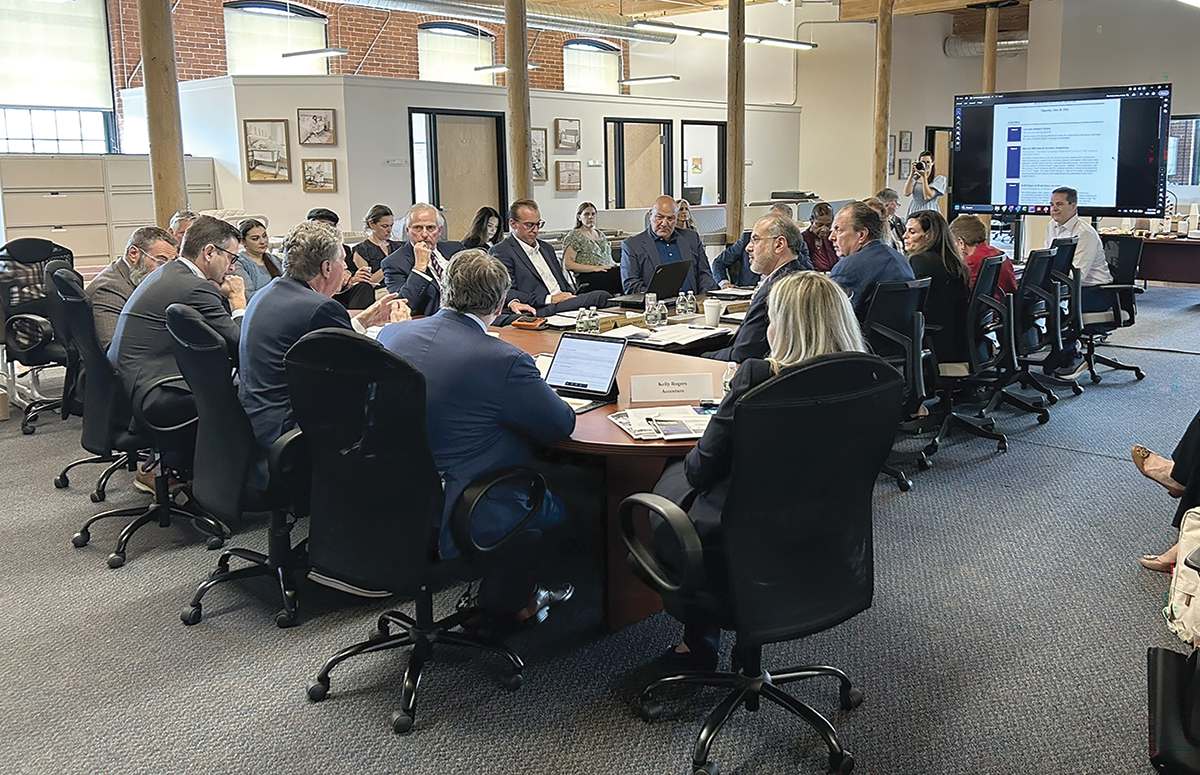
On the top floor of the Wexford Science & Technology building overlooking Providence’s I-195 District, Gov. Daniel J. McKee stood before business executives and state officials celebrating what his administration considers one of its signature economic development victories. The July 14 announcement that biotechnology company Nabsys 2.0 LLC would add more than 200 jobs and
Already a Subscriber? Log in
To Continue Reading This Article
Become a Providence Business News subscriber and get immediate access to all of our premier content and much more.Learn More and Become a Subscriber
- Critical RI business news and analysis updated daily.
- 1 year of print (26 issues).
- Unlimited access to all subscriber only content on our website, on any device.
- Free email alerts.
- Annual Book of Lists Print Edition.
- All special issues produced during subscription term.
Click Here to purchase a paywall bypass link for this article
PBN Branded Content
Beyond Cash Donations: How New Forms of Giving Are Transforming Not-for-Profit Accounting
Evolving Funding Landscape for Not-for-Profits Not-for-profit organizations are being asked to do more with less,…
Learn More












The Nabsys announcement opens this story and then quickly widens into the larger question of how the state invests in growth. That’s a fair debate to have — and a good moment to step back and look at what Nabsys actually represents. It’s one of many life sciences companies already here — an established Rhode Island company, not a newcomer — and the point worth picking back up: the story shouldn’t rest on any single company, but on the whole of what life sciences in Rhode Island actually is — and what it contributes to the economy.
First, a word on the debate itself: it’s a good one to be having. At its heart, this is about how we support our business environment and grow jobs, and a serious conversation about how — and which industries — is essential. Life sciences is only one part of that picture. It’s not my place to say which industries matter most. What I can offer is a clearer picture of the one in which this article kicks off with…
So let’s be precise. Life sciences here is not only discovery biotech. It is contract and device manufacturing, diagnostics, distribution, research institutions and clinical care — companies of real scale and companies of six people, from Pawtucket to East Greenwich. These are not only jobs for PhDs; they’re work for machinists and quality technicians, regulatory and supply chain specialists, engineers, sales teams and clinicians — roles our colleges and universities are already training people to fill, in one of the largest employment sectors in the state.
Which brings me to the part of the debate I’d push on. Nearly all of it is about how Rhode Island brings companies in; far less is said about the ones already here. Attraction and retention aren’t competing strategies. Every state we compete with uses incentives, and we should be clear-eyed about that. But the companies already operating here are the ones most likely to expand next, and they deserve the same seriousness we bring to recruitment. That’s why our business climate belongs at the center of this conversation: the conditions we create for existing companies are what determine whether they grow, stay, or look elsewhere.
This work is also generational. Unlocking the future of healthcare isn’t something any single company, hospital or university does alone — it happens through partnerships between industry and academic medicine, between manufacturers and clinicians, between the people who discover something and the people who can build it at scale. Rhode Island is small enough that those partnerships are easier to convene here than in a larger market. That’s an advantage, not a consolation.
Rhode Island and its people have significant potential, and every reason to be confident about claiming it. That’s shared work — and it’s a privilege to be joining it.
Bob Cormier
Incoming President & CEO, Rhode Island Life Science Hub