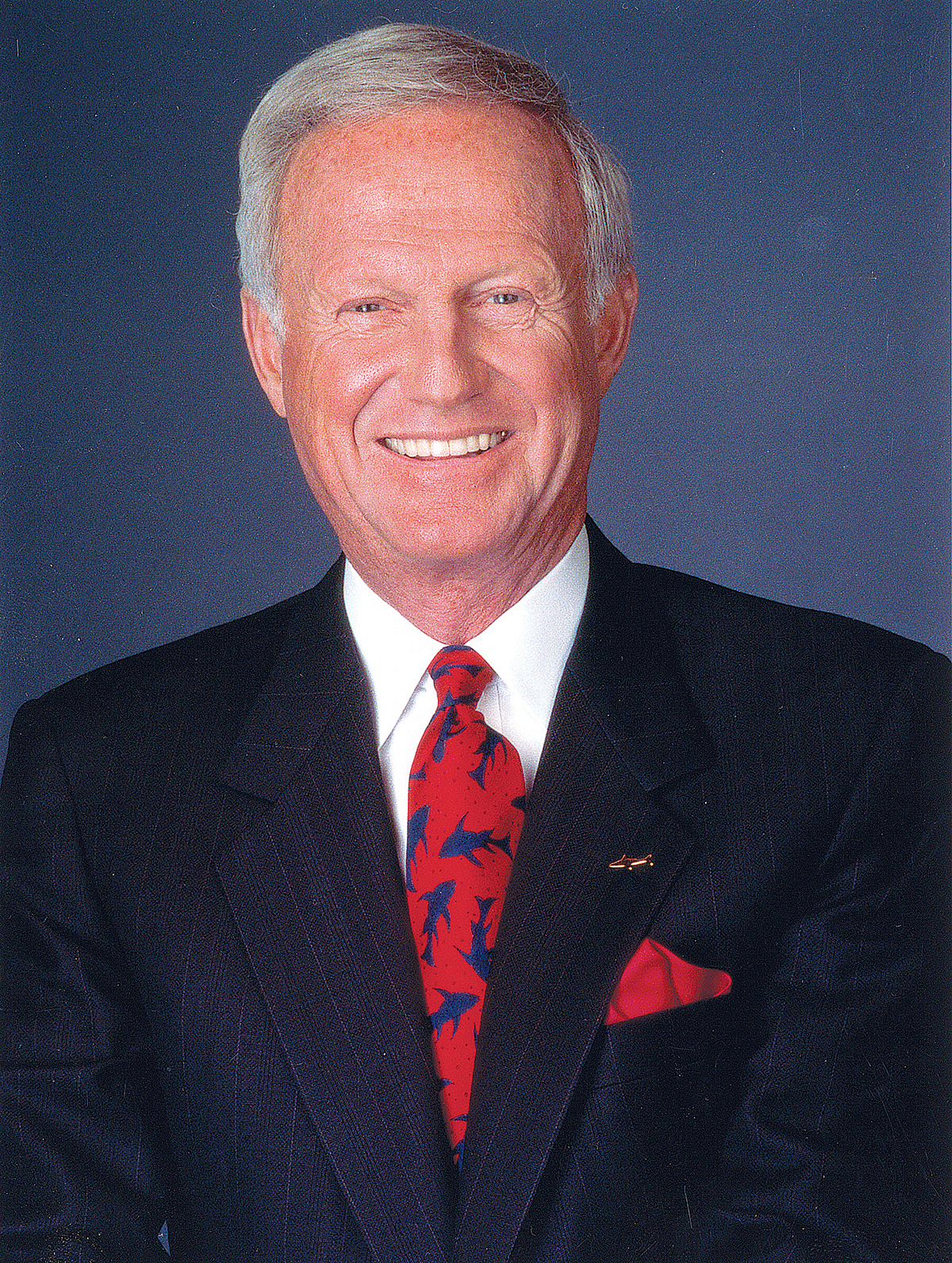
Edward J. Quinlan has served as president of the Hospital Association of Rhode Island for more than 12 years. In a recent interview with Providence Business News, he discussed the challenge hospitals face providing care in tough economic times, the relationship between the medical community and the Rhode Island legislature and why hospital operating costs are in the red.
PBN: Let’s start with the big issue. How are the state budget woes affecting Rhode Island’s hospitals?
QUINLAN: It’s a difficult year for state government, as well as virtually all sectors of Rhode Island that provide services that are, in some manner, established or required by the state of Rhode Island. And the proposed administration budget, offered earlier this year, suggests potential payment reduction to hospitals in excess of $50 million. [Ed. note: The House Finance Committee last week approved a budget for next fiscal year that increased uncompensated care payments to hospitals by $9.6 million. Quinlan could not be reached before press time to discuss how hospitals would fare in other budget areas.]
Rhode Island's Market Has Changed. Developers, Builders, Investors and Sellers Must Change With It.
By Emilio DiSpirito IV License Partner | Engel & Völkers Oceanside Leader | The DiSpirito…
Learn More
PBN: How large is a $50 million reduction for Rhode Island’s hospitals?
QUINLAN: If you look at hospitals in our state, which in recent years have gone through significant financial stress, two-thirds to three-quarters of hospitals in Rhode Island have suffered operating loses.
That trend is likely to continue this year. Any additional reduction in payments [for] services exacerbates an already very difficult situation because there needs to be an understanding that hospitals are unique in that they will provide services to all Rhode Islanders under all circumstances, at all times. … Hospitals in our state essentially are private yet they are the public safety net for health care services.
PBN: Short of making hospitals public entities, what’s the solution?
QUINLAN: I think we continue to encourage government – the executive branch and the legislative branch – to see that the vital human services provided by hospitals need to be properly supported and that the stress in which we find the state budget this year [is similar to] the stresses that hospitals have been going through for some time.
I think the answer is to continue the active dialogue and discussion that we have with lawmakers to research and identify any and all opportunities to provide funds to care for patients. And that’s a collective responsibility that we all have and have practiced for years and will continue to do so. And I think the Assembly is trying very, very hard to assist hospitals at this time.
PBN: What’s at the root of the loss of operating costs?
QUINLAN: In our state, there’s a series of factors. Within the nation, we have historically been under-reimbursed by public – mainly Medicare and Medicaid – and commercial payers. If you were to examine data published by the R.I. Department of Health, our state has the lowest cost structure. They also have the lowest reimbursement. Yet we score very highly on all quality measurements. So we are providing high-quality, important health care to the people of Rhode Island while continuing to struggle financially. And at a point, the concern over sustainability becomes a critical issue and therefore becomes a public-policy issue.
The impact is significant. The hospitals in Rhode Island in FY07 suffered operating losses that exceeded $30 million. The doubling of our uninsured rate – it has doubled in five years – and the rise of our unemployment – now at 6.1 percent – those factors contribute mightily to the stresses being experienced by hospitals.
Example: The uncompensated care provided by hospitals in our state … exceeds $100 million annually. That number is growing.
PBN: Is the number of hospital employees growing in the Ocean State?
QUINLAN: It’s been growing in recent years. It’s approaching 25,000. If you take the health care industry in our state, which exceeds 50,000, we are the largest private-employment sector in the state.
PBN: What effect is the nurse shortage having?
QUINLAN: There are shortages in several health professions, including nursing. The nursing shortage is a national, if not international, [phenomenon] that we’ve been trying to address in our state for years. There are also isolated instances of shortages in radiology and pharmacy.
I think if you look at Rhode Island, you have to recognize that there are some unique elements in our state: we have a high elderly population, therefore requiring a higher intensity of services and requiring more care; in Rhode Island we have worked successfully to stimulate interest in the health care industry and have seen a significant increase in applications, universities and internship programs; we do have a new phenomenon, which is a shortage of faculty.
PBN: What’s the state of hospital mergers in Rhode Island?
QUINLAN: You can look at the merger-affiliation era in our state matching the national trend. It began about 15 years ago, with the creation of our two major systems, Lifespan and Care New England. Over the years, there have been merger and affiliation efforts on an ongoing basis.•