Incubators have saved the lives of countless newborns. But at $20,000 each, the machines are often prohibitively expensive for people in developing countries.
Luckily, a group of Stanford graduates have come up with a solution. They have invented Embrace, a low-cost incubator that looks a bit like a sleeping bag and will be sold for just $25.
But how would a physician traveling to the developing world or a midwife in a remote African village learn about the device?
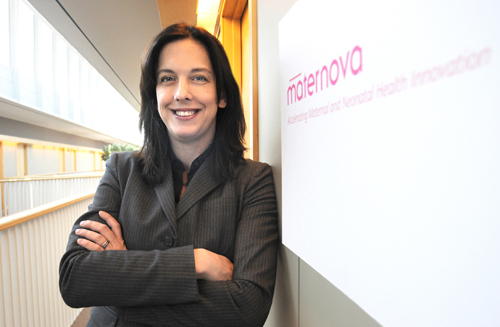
The answer, says Providence resident Meg Wirth, is through the Web – specifically, a Web site that aggregates and shares information about Embrace and other innovative technologies with those working in the field.
Most foundations focus on their own work, and academic databases stick to scholarly research. To fill the void, Wirth has founded a nonprofit called Maternova and launched a Web site, MaterNova.org. The name – combining the Latin “mater,” or mother, and “nova,” the feminine form of new – was chosen after research found it to have cross-cultural appeal.
Maternova received a start-up grant a year ago from the Cambridge-based SEVEN Fund. Now, Providence-based design firm Basics Group Inc. is helping Wirth to build and publicize its Web site.
The organization is still in the early stages of its development, but Wirth said she is already receiving positive feedback. Enough, in fact, to made her decide to expand the scope of the site. Although the directory of new technologies is still an integral goal, she is now planning to transform Maternova into a social-networking site for thousands of health professionals around the world.
“This is going to be a hub for connection around maternal and neonatal health workers,” Wirth said, adding: “It really is like a Facebook.” The site is expected to launch in the next three to four months, she said.
If it works as Wirth hopes, Maternova also could help people find others working nearby, which could lead to useful connections. Right now, a doctor working in a remote Rwandan village has no simple way of finding out if another doctor is working in the next village over, to say nothing of whether the other doctor has a tool she needs.
“There is huge duplication of effort and inefficiency in the field,” she said. Maternova aims to help reduce that.
Wirth is intimately familiar with the challenges faced by maternal-care workers in the developing world. The 39-year-old – whose other job is as a consultant to biotech companies creating products for low-income nations – has been working in public health and international development since she graduated from Harvard University, where she was inspired by the Nobel Prize-winning professor Amartya Sen.
After college, Wirth spent time working in health clinics from Appalachia to Asia, and eventually earned her master’s at Princeton. It was during a period spent working in Indonesia that she came to understand the indispensability of midwives in any effort to improve maternal and neonatal health in poor countries, where OB/GYNs are few and far between.
From 2003 to 2005, Wirth worked under Columbia University professor Jeffrey Sachs on the U.N. Millennium Project, which was tasked with creating plans to meet the Millennium Development Goals set out in 2000. Wirth was part of a team tasked with creating the plan for improving maternal health, and although the final report focused on the need for more midwives and emergency obstetric care, Wirth said she saw another opportunity.
“I kept thinking, OK, that’s true, but there’s still room for innovation in anything you do,” including medical technology, she said. Wirth was particularly taken with “high-tech ideas in pretty low-tech packages,” like the Embrace incubator or a solar-powered headlamp for midwives to wear during baby deliveries at night.
Wirth saw the potential for harnessing the entrepreneurial energy that had pushed the tech sector forward and applying that to health problems. But after months of research, she realized there was no easy way for people to share information about those ideas — and Maternova was born.
Wirth, a mother of two, estimates that she needs to raise about $200,000 for the organization’s first year. She hopes the site could eventually become self-supporting with a steady stream of income from corporate sponsorships and advertising. •