
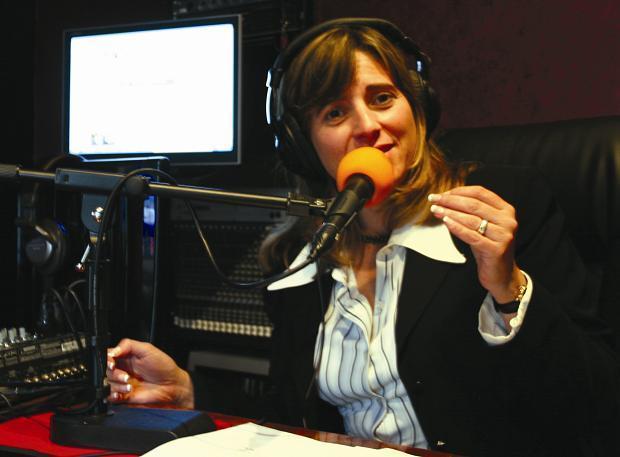
Reynaldo Almonte begins his broadcast at 5 a.m. every day by announcing in his deep voice: “This is Exitos 88.1FM. Latino Public Radio, nationwide and on the Web at lprri.org.”
A 20-year veteran of broadcasting, Almonte is proud of the work he’s done – from basement talk shows to investigative reporting. And his greatest accomplishment, as he sees it, has been building LPR over the last two years into a media force with a reach well beyond its regional market.
ISO 9001:2026: A Practical Opportunity to Build for What’s Next
For Rhode Island manufacturers, ISO 9001 has been much more than a certificate on the…
Learn More
Started by Almonte and two Latino physicians, Dr. Pablo Rodriguez and Dr. Alvaro Olivares, LPR is like no other Spanish-language station in the United States. It is incorporated as a nonprofit, and its goal, like National Public Radio’s, is to be a community-oriented, high-quality source of news and educational programming.
Only Radio Bilingue on the West Coast comes even close in terms of programming. But it targets the Mexican-American population in particular. LPR aims to reach Latinos from all backgrounds, and its coverage extends beyond the Latino community itself.
“Contextualizing information for the Latin American community isn’t about being isolationist,” Almonte said. “What happens in the Asian, African American, or white communities affects the Latin community just as much.”
Already, LPR’s lineup has grown to include 12 locally produced shows, providing news coverage, analysis and expert opinion on family issues, health care and the growing Latino presence in mainstream business, among other subjects.
And when WRNI, Rhode Island’s NPR station, upgrades completely to an FM frequency in the near future, LPR, which now shares its frequency, owned by The Wheeler School, with Brown Student Radio, is considering taking over the familiar 1290AM frequency.
The station also has found a major underwriter, Rhode Island Hospital, which has been supporting LPR for nine months.
“We’ve already seen tangible and highly positive results,” said August B. Cordiero, vice president and chief administrative officer of Rhode Island and Hasbro Children’s Hospital in a statement. “LPR provides the vehicle for us to showcase our capabilities and services to the listening audience in a personal and unique fashion.”
Before becoming LPR, Exitos 88.1FM was a popular music and talk station. And Almonte still includes music and some entertainment in the programming – just as NPR does. Last Tuesday, for example, the pop star Kat DeLuna paid a visit to the studio.
But while most Spanish-language stations fill their hours with music and the banter of disc jockeys, LPR doesn’t rely on entertainment as its main draw.
“Anybody can be a disc jockey,” Almonte said. “At LPR we are professionals in our field.”
Yet the program hosts are not, except for Almonte, professional broadcasters, but rather Latinos with expertise to share with the community.
Dr. Rodriguez, who also serves on the station’s board of directors, is a well-known physician and former chairman of the state’s Latino Political Action Committee. Dr. Olivares is a clinical professor of psychiatry and human behavior at Brown University. Vanessa Toledo-Vickers, host of “La Empresa De Hoy” (Today’s Company), is founder of Ethnic Business Partners, a consulting firm that helps companies reach Hispanic consumers and businesses.
On her radio show, Toledo-Vickers said, she talks “directly to the Latino market about mainstream business, about tools that are not necessarily targeted to Latinos, and ways to do business more efficiently and effectively.”
In May, for example, Toledo-Vickers covered the e-mail platform Constant Contact, which she said is “an important means for businesses to connect with potential clients via the Internet.”
The show began in April, on Saturday mornings, and Toledo-Vickers and Almonte have worked together to create a rhythm and structure for it. Bicultural Latinos can switch gears easily from being very Latino to very American, but there’s still a balancing act, she said, switching back and forth between English and Spanish when she interviews non-Spanish speakers.
Toledo-Vickers has to listen to her guests, conduct the interview, and guide the topic, but “at the same time summarize what is being said, in Spanish, for those that don’t fully understand the English version.”
Almonte said that extra challenge is an outgrowth of LPR’s mission. While most Spanish-language stations tend to focus more narrowly on their communities, he said, LPR “isn’t about isolating the Spanish-speaking community. It’s about opening that community up to wider possibilities.”
LPR also makes a point of covering the context of issues of importance to Latinos – such as the recent debate on immigration, which Rodriguez said is “a complex issue that needs complex discussion and complex answers.”
Rodriguez, who got into broadcasting with “Nuestra Salud,” an educational program on health issues, now hosts “Cuarto Poder” (Fourth Estate), a news and panel discussion show. He broadcasts both out of his office at Women’s Care, his medical practice in Pawtucket, and sees both shows as part of a broader community mission.
“Health involves more than the physical health,” he said. “There is emotional health, there is financial health, and there is the political health of our community.”
The station’s broad coverage is making it increasingly appeal to Spanish speakers not just in Rhode Island, but nationwide and even abroad.
“We are streaming all of our content on the Web,” said Almonte, “and because of that, people are calling and listening from other countries: Colombia, Mexico, Spain, Dominican Republic, Peru, Argentina.”
With the Latino population growing rapidly in Rhode Island and nationwide, Almonte said, there’s a momentum for LPR that cannot be denied.



