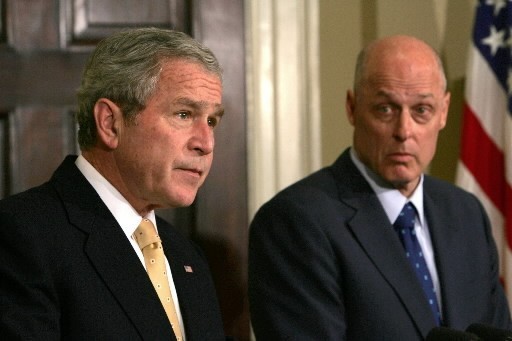
WASHINGTON – President George W. Bush, Treasury Secretary Henry M. Paulson Jr. and Secretary of Housing and Urban Development Alphonso Jackson today announced an agreement to freeze some subprime mortgage rates. “The approach announced today is not a silver bullet,” Paulson said in a statement. “We face a difficult problem for which there is no perfect solution.”
Rates on some loans will be frozen for five years under the pact with lenders, which was forged by Paulson and other regulators as part of their effort to stem the nationwide surge in foreclosures. “The current system for working out those problem loans would not be sufficient to handle the anticipated 1.8 million owner-occupied subprime mortgage resets that will occur in 2008 and 2009,” Paulson said, according to Bloomberg News.
Seifert Systems Invests in Energy Efficiency to Strengthen Operations
For manufacturers, energy is more than just another operating expense. It plays a critical role…
Learn More
The effort includes new guidelines from The American Securitization Forum – a group representing mortgage investors and mortgage servicers – “to streamline the process of refinancing and modifying subprime loans for able homeowners,” Paulson said in a statement. “We hope that these guidelines will be adopted as reasonable and customary standard practice across the entire servicing industry.”
The agreement focuses on borrowers with adjustable-rate mortgages who would be unable to keep up with payments when their initially low rates reset to higher levels. They will be offered three options: freezing rates; refinancing with a new private mortgage; or refinancing with a Federal Housing Administration-backed loan, a White House official said.
Paulson added that estimates from HOPE NOW – an alliance representing the servicers of 84 percent of current subprime mortgages nationwide, indicate that under the new guidelines – as many as 1.2 million borrowers with adjustable-rate loans “will be eligible for fast-tracking into consideration for affordable refinanced or modified mortgages.”
“The magnitude of the economic impact on housing prices in the absence of this plan under current conditions is large,” Susan Wachter, professor of real estate at the University of Pennsylvania’s Wharton School in Philadelphia, told Bloomberg News. Credit Suisse Group, estimates that more than 30 percent of borrowers with subprime ARMs are behind on their payments even before their loans reset at a higher rate. Its analysts predict that 775,000 homes, with mortgage debt totaling $143 billion, will enter foreclosure in the next two years.
“We know when foreclosures hit, it brings down the value of the neighborhood by 20 percent,” David Olson, president and co-founder of Wholesale Access Mortgage Research and Consulting Inc. in Columbia, Md., told Bloomberg News. “That’s what they are trying to avoid.” The collapse of the subprime mortgage market, and the securities backed by such mortgages, already has roiled financial markets around the world, cost the CEOs of Merrill Lynch & Co. and Citigroup Inc. their jobs and spurred the Federal Reserve to cut interest rates twice, the wire service noted.
Additional information, including U.S. Treasury Secretary Henry M. Paulson Jr.’s statement today about the “Framework to Help Preserve Communities by Preventing Foreclosure,” can be found at www.treas.gov.