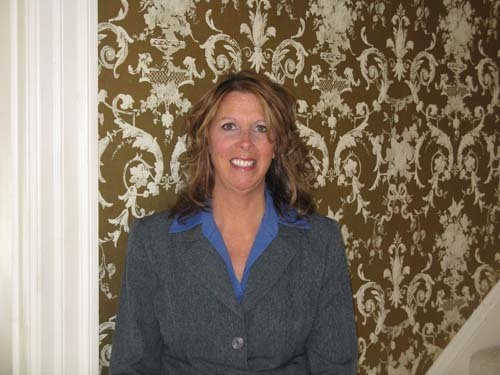
Rhode Island businesses looking for a small loan from the nonprofit South Eastern Economic Development Corporation will usually end up speaking to Laurie Walsh, the agency’s commercial loan officer and business-assistance manager.
She not only processes loan applications for up to $200,000 for Taunton-based SEED, Walsh provides technical assistance and runs business workshops.
For those reasons and her work with the U.S. Small Business Administration’s micro-loan program – loans up to $35,000 – Walsh was named Rhode Island 2010 Financial Services Champion of the Year by the SBA.
PBN: Who is calling you for a loan, instead of turning to a conventional institution?
WALSH: Anyone and everyone who has some kind of inkling about wanting to start a business or somebody who is already in business that is potentially in need of financing. … I get a lot of my referrals from financial institutions because the bank may know in a five-minute conversation that they’re not going to be able to help this individual. So they refer them over to me. We don’t compete with banks; we essentially are stepping in and providing financing in situations where the financial institutions can’t or won’t.
Rhode Island's Market Has Changed. Developers, Builders, Investors and Sellers Must Change With It.
By Emilio DiSpirito IV License Partner | Engel & Völkers Oceanside Leader | The DiSpirito…
Learn More
PBN: Have the types of phone calls changed since the recession started?
WALSH: Previously, it was a lot of startups, mostly startups. Banks and credit unions were able to provide financing to the existing businesses because things weren’t bad back then. When the recession started and the banks really started tightening their belts, I noticed there was a shift. Existing business owners were approaching us for financing and technical assistance. The startups started to fall off. I think people felt they were lucky enough to still have a job, they figured they needed to keep it because perhaps it wasn’t the best time to start a business.
Within the last six to eight months, there has been another shift where we’re being approached by a lot of startups. One of the reasons why – that I can tell – is unemployment is running out, and they’re doing it essentially out of desperation because they’re unable to re-enter the work force. … That’s not going to put fast money in somebody’s pocket.
PBN: So do you spend a large amount of time bringing potential borrowers back to reality?
WALSH: I think we do a good job of that. We’re brutally honest in workshops we teach. It’s actually a reality check: These are the brick walls that you’re going to run into; you have to make the determination if you have not only the wherewithal but the financial capacity to be able to get over those brick walls. It’s better for them to know ahead of time.
A lot of these folks will never be approved for financing anyway because perhaps they’ve experienced some credit issues. They’ve had trouble paying their bills. Their cash flow situation is not good because unemployment isn’t covering all their bills. Or they may not be lucky enough to be living with somebody who is employed who helps cover the household expenses. One of the differences between us [and a bank] typically is that when we look at an existing or startup business, we also look at an entire household. … every penny of income coming into the household and every penny of debt.
PBN: Do applicants assume SEED’s lending standards are more relaxed because, say, the micro-loan program is funded by the SBA?
WALSH: They’re under that misconception. But as far as we’re concerned, our money is not guaranteed by the SBA. They are SBA funds, but it’s a loan to us. So if that business goes bad and the debt is not repaid, then we’re out.
PBN: SEED is relatively new to Rhode Island. When did the agency start serving the state, and under what circumstances?
WALSH: We entered into the state as the SBA intermediary for micro-lending in March 2009. The Rhode Island Coalition for Minority Investment [RICMI, the state’s former micro-lending intermediary] went defunct, and then the SBA approached us to enter into the state.
PBN: That was in the depths of the recession. Was there a demand for products such as micro-loans?
WALSH: It was crazy. It was difficult to handle the volume because we were getting five and six loan applications in a day. People may not have even known about RICMI, but we got a lot of press when we first entered into the state. There have been 11 micro-loans in Rhode Island, three of them for startups.
PBN: Now you operate both in Massachusetts and Rhode Island. What differences do you see between the states?
WALSH: There is a higher decline rate [on loan applications] in Rhode Island. It’s in much more dire straits than Massachusetts.
But we’re also finding that existing business owners tend to be proud people. They always think they’re going to be able to turn a corner. There is so much seasonality in Rhode Island, but the high season for these folks hasn’t been as high. … People always wait too long to apply for money. It’s not because they have their heads in the sand, but it’s because they have faith that it’s going to get better.
And we’ve seen a drop-off in the amount of Rhode Island applications we’re getting right now. That very well may be because of the seasonality in Rhode Island.
[Business owners] think they may be ready to go and not need to apply for money because their doors will open and the people will start coming in so they should be OK. Whether that’s true or not, that will be indicated maybe in October when we may see more folks coming to us and saying “I didn’t do as well as I thought I was going to do in the summer.” •INTERVIEW
Laurie Walsh
POSITION: Commercial loan officer and business-assistance manager for South Eastern Economic Development Corporation
BACKGROUND: Walsh has been with SEED since 2002, starting as an administrative officer and micro-lending and business-assistance coordinator. She moved up the ranks to loan officer and business-assistance manager in 2004, and then to her current position in 2007.
EDUCATION: Community-Based Business Advisor Training Program, 2007, Pioneer Institute; Massachusetts Banker’s Association School of Commercial Lending and Advanced School of Commercial Lending Training, 2007, Babson College
FIRST JOB: Waitress at age 16
RESIDENCE: Lakeville, Mass.
AGE: 47