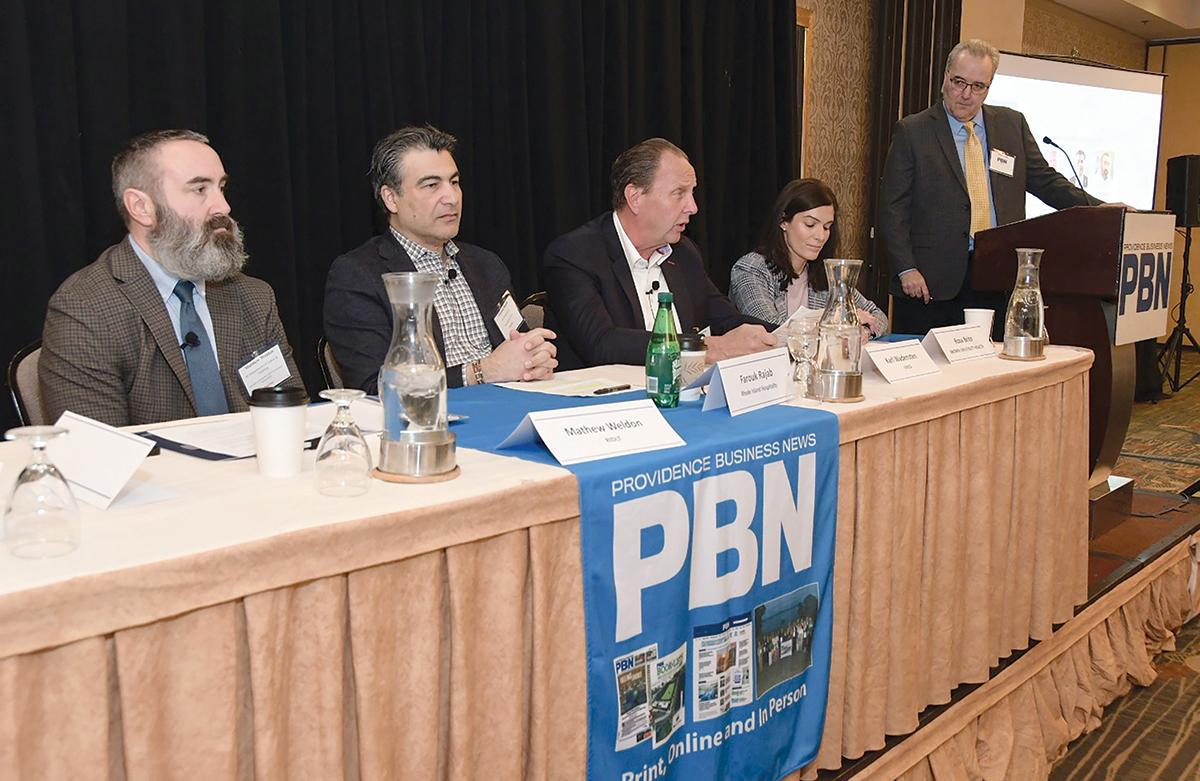
Rhode Island has built what Matthew Weldon, director of the R.I. Department of Labor and Training, calls one of the most replicated workforce systems in the country.
In fact, the state’s approach has served as a model for federal workforce initiatives under the Biden administration, Weldon said at the 2026 Providence Business News Workforce Development Summit, held at the Providence Marriott Downtown on Feb. 19.
Still, Weldon said the system’s capacity depends heavily on federal funding, which has become less predictable.
“We’ve depended on federal money for a long time, but it’s not guaranteed,” he said.
The Workforce Innovation and Opportunity Act – designed to help job seekers access employment, education, training and support services to succeed in the labor market and to match employers with the skilled workers they need to compete in the global economy – provides funding through the U.S. Department of Labor to states, but Rhode Island has seen a nearly 10% reduction compared with what it received in recent years, Weldon said.
“If federal dollars are withheld, we can’t process it, and the state budget isn’t a place to absorb that,” Weldon said. “It directly affects how much training we can put on the street.”
Despite these challenges, the state has developed employer-driven workforce programs that give businesses the tools to train and retain workers effectively.
One example is Real Jobs Rhode Island, launched in 2015. The program has placed 50,000 workers through partnerships with roughly 7,000 employers across industries from advanced manufacturing to information technology. Another program is Real Skills for Youth, which is designed to equip young people with the tools they need to pursue meaningful careers through career exploration, work-based learning and essential skill-building.
Industry leaders in hospitality, manufacturing and health care said during the summit’s opening panel discussion that they have used state workforce programs to upskill employees, reduce turnover and address critical staffing shortages.
Joining Weldon on the panel were Rosa Brito, manager of workforce development at Brown University Health; Karl Wadensten, CEO and president of manufacturer VIBCO Inc. and a member of the R.I. Commerce Corp. board of directors; and Farouk Rajab, CEO and president of both the Rhode Island Hospitality Association and the Rhode Island Hospitality Education Foundation.
Health care has seen steady progress, according to Brito.
Turnover at Brown Health, which employs more than 17,000 people statewide, has been improving and recently fell to 15%-20%, Brito said, aligning with the national benchmark.
Nationally, the hospital turnover rate stands at 18.3% and registered nurse turnover is recorded at 16.4%, according to the “2025 NSI National Health Care Retention & RN Staffing Report” released by national nurse staffing and recruiting firm NSI Nursing Solutions Inc.
But even with these state workforce development programs in place, employers say staffing challenges remain.
Rajab said restaurants and hotels continue to face workforce pressure, particularly in recruiting front-line and supervisory staff members. While training programs are helpful, the industry still competes with other sectors for workers in a tight labor market, he said.
Brito, too, said staffing gaps remain in nursing, diagnostic imaging and behavioral health.
Wadensten said manufacturers in the state continue to face difficulty finding workers with specialized technical skill sets, even as overall employment levels remain near historic highs.
“In order to grow, we need skilled people,” he said. “Without them, it’s not getting done.”
Addressing those shortages, however, requires sustained investment, Weldon said. And funding for these initiatives comes from a combination of state and federal resources.
Weldon highlighted that nearly $14.6 million has been invested in workforce development for this year [fiscal year 2026], including $13 million from state general revenue and additional federal support.
These funds support Real Jobs RI and other initiatives such as Real Skills for Youth, which brings experiential learning into schools and ensures that young people enter the workforce with meaningful workplace experience.
But future funding isn’t guaranteed, as Weldon emphasized the uncertainty surrounding federal dollars.
Federal funding has dropped by roughly 9%–10% in recent years, he noted, and discussions about withholding money from certain states add to the uncertainty.
Weldon said these cuts directly impact how much workforce training the state can deliver.
“A lot of this is our money that we’ve given up but is legislated to come back to us,” he said. “We have to make sure it’s used in the highest and best way so we can continue to grow Rhode Island’s workforce for the future.”
Meanwhile, Weldon stressed that these workforce programs can only succeed if more employers step up and get involved.
“We’ve built a great system, but we need employers to meet us halfway,” Weldon said.
Real Jobs RI’s 7,000 participating businesses represent only a fraction of Rhode Island’s more than 45,000 private-sector employers, according to March 2025 DLT figures.
“Everybody in this room has to be participators,” Weldon told the audience at the summit. “We want to change the paradigm, and those who didn’t participate for whatever reason – too busy, maybe – you’ve got to have two sides to the story for it to work out.”