
[Editor’s Note: First of a two-part series]
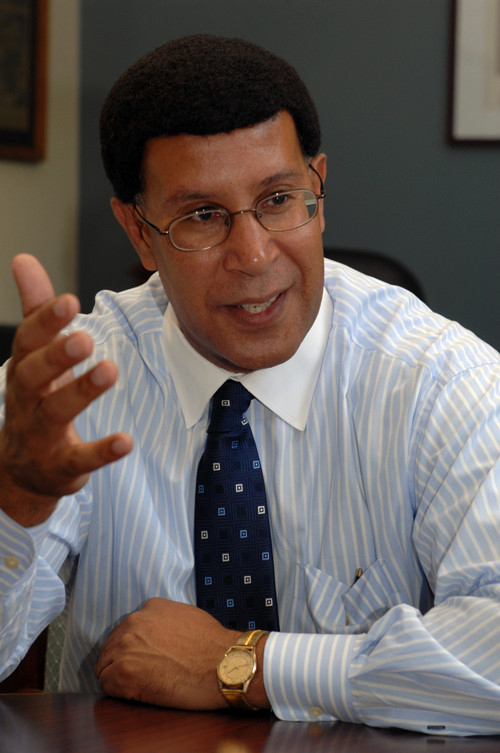
Since becoming executive director of the R.I. Economic Development Corporation in January 2010, Keith Stokes has seen a new governor and a new board arrive. He also closed a deal with 38 Studios LLC, a video game developer that secured a $75 million loan backed by the state and moved to Providence. But Stokes says there’s a lot more happening at the agency than one big loan. He recently sat down with PBN to discuss how the board is transforming itself to better serve businesses, especially startups.
Beyond Cash Donations: How New Forms of Giving Are Transforming Not-for-Profit Accounting
Evolving Funding Landscape for Not-for-Profits Not-for-profit organizations are being asked to do more with less,…
Learn More
PBN: How does the EDC best help small startups?
STOKES: First of all I’ve said this for 18 months. There’s no such thing as a Rhode Island economy. It’s a New England economy. … So when I look at the capital continuum, it’s not simply that we’re trying to scale Rhode Island up to Massachusetts or Connecticut and certainly not Texas or North Carolina or Virginia. We’re trying to fit within this New England marketplace.
If you’re a business person, existing business person who’s looking to grow [or relocate here] … we want to make sure your expectation of cost and your expectation of resources would be similar to or even more competitive in Rhode Island as compared to the balance of New England.
If you’re a venture capitalist and you happen to be in Boston … you’re looking at investments in the New England marketplace. It isn’t necessarily Cambridge. In fact, Manchester, N.H., has made a very clear case in the last 20 years of significant growth, and they’ve competed with Cambridge, Boston and the North Shore quite well.
My point is our goal is to have similar products and programs that are scalable in Rhode Island and then a cost structure that’s competitive.
So when we look at a Betaspring, that’s a model we want to build upon. Betaspring has built a model of identifying and then bootstrapping and building the base and seeding young entrepreneurs.
So our goal is to look at a Betaspring and say, how do we make them more relevant? How do we give them more capital, more resources, so that they can be more impactful to the base of entrepreneurs that are here but no one is looking at and no one quite understands or recognizes?
That’s a large part of economic development: where you grow organically. We’ve not done very well in this state because we focus on what’s right there before us: existing companies looking to grow or trying to attract either a company or a sector that’s the flavor of the month or the year that people want to focus on, be it life sciences or whatever it might be.
My general sense, and I believe this very passionately, is that we’re going to continue to realign the cost structure, we’re going to continue to realign resources so that anyone who might be growing initially in Boston or Hartford or those metro areas we now can showcase and market Rhode Island [to them] as an alternative.
PBN: There appeared to be some debate among board members about whether to focus on larger, existing companies or smaller startups, with you in the latter camp. It sounds like you, when the board granted a $1.5 million loan guarantee to NuLabel Technologies, won the argument.
STOKES: I don’t think it was winning an argument at all. I think it was an evolution.
What I admire about Gov. Chafee is that as a mayor he was very successful in Warwick, and what he saw, like most mayors in economic development, was land-use planning, public projects, capital projects, development issues. And then as a senator, it’s a policy approach.
Now it’s the first time he’s involved in the transactional side of economic development, which is investment. That investment sometimes requires making a risk decision, and you have to be very careful, and you have to be very pragmatic within that.
In this case, you’ve got a governor saying, I really value the life experience, the business experience, the expectations, the perceptions that you have, and you’re going help shape the decisions here at the EDC board.
So I don’t see it as winning or losing. It was an evolution. It was a learning process to understand what we do, what we do well and then focus on those areas. And then ensure that whatever we invest in, there’s some measurable return.
Are there going to be times when businesses fall down? Absolutely. The Small Business Loan Fund has been in place since 1986. We’ve turned that fund over five times. Highly successful. Two weeks ago, we announced that a couple of companies are closing on those loans.
But there have been companies that have fallen down. That’s the risk. But that risk is worth it, because we can give you thousands of people employed through that program and hundreds of companies touched by that program.
PBN: How confident are you that what you’re setting in place now can survive the political process?
STOKES: My objective was to build a case for the EDC and the realignment as publicly as I possibly could. The two things that we’ve done, which have been unique and I think have been impactful, is we’ve formed very robust subcommittees of the EDC. For the first time in our history, board members along with private-sector stakeholders actively participate in evaluating performance and programs, shaping program plans and developing some policy recommendations for the board to consider.
My job is to build the best organization with or without myself being here. It’s like the private sector. I should be able to turn the keys over at any time and have someone come in and say, “I’m going to hit the ground running with this.”
The other piece of it is I’ve spent a tremendous amount of time meeting with all the mayors and all the town administrators at least four times … understanding what their priorities are.
I speak with the leaders, [House Speaker] Gordon [D. Fox] and [Senate President M. Teresa] Paiva Weed weekly. We have their staff involved with a lot of our reviews and programs. That never happened before. I try to talk to both Gordon and Teresa all the time on things. … What do you think about this? Do you have a staff person that might want to sit in with us?
I just met with [General Treasurer] Gina [M. Raimondo] last week and said, “Gina, you and I have to partner on some things. I know you’ve got pensions, but there’s the economy.”
So I think it’s been the level of openness and partnership that we’ve strived to do over the last year and a half that’s made a great difference.
And I’m trying to be fair with that, because there was some anger. We fell down on certain things and other things people just misunderstood and didn’t recognize what we did. … [But] I think we’re right where we need to be, and I think the governor, through his leadership, has assembled a really eclectic and dynamic board that we’ve never quite seen here before at the EDC. •












You are doing a GREAT job Keith! Thank you.