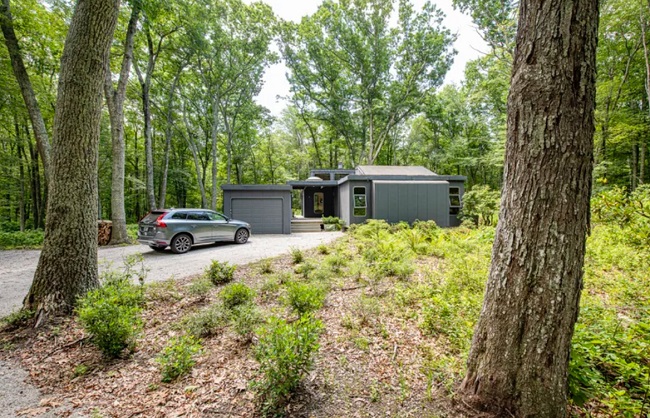
FOSTER – An effort to get the ILZRO House listed on the National Register of Historic Places is progressing, according to stakeholders involved with the initiative.
The modernist industrialized home was built in the early 1970s in Foster as a collaboration between the International Lead and Zinc Research Organization and Rhode Island School of Design faculty and students led by professor Marc Harrison. The house, which began construction in 1972 and was completed in 1976, is known for its innovative design with features for people of all abilities, including wheelchair users, and utilizing zinc/steel construction.
Beyond Cash Donations: How New Forms of Giving Are Transforming Not-for-Profit Accounting
Evolving Funding Landscape for Not-for-Profits Not-for-profit organizations are being asked to do more with less,…
Learn More
The housing prototype serves as an early experiment in disability design to benefit “the largest minority in the United States,” according to the National Park Service.
On Oct. 25, the R.I. Historical Preservation & Heritage Commission released a request for proposals for a grant of up to $18,000 in federal funds for consultant services to conduct contextual analysis, research and documentation to prepare a nomination form for the ILZRO House for the National Register of Historic Places.
The one-story, 1,100-square-foot structure set on 8 wooded acres was built with interlocking zinc panels. The design features light switches lowered to the height of doorknobs that can be operated with a palm or fist. The kitchen island is wheelchair accessible, and the sinks are 6 to 7 inches deep with rear drains, enabling wheelchair users to slide underneath without obstruction from plumbing.
The initiative is supported by the National Park Service Underrepresented Communities Grant Program’s preservation fund and marks the first project in the program’s history to highlight the contributions and history of Americans with disabilities.
The ILZRO House was occupied by Harrison and his family until 1978, when Lorraine Howes, the chair of the Apparel Design Department at RISD, took over.
Howes maintained the home as originally designed, preserving its furnishings, fixtures and overall aesthetics. In 2021, Harrison’s daughter, Natasha, purchased the property with her husband, Ben Randall.
The National Park Service Underrepresented Communities grants support projects that survey and catalog historic properties associated with underrepresented communities, as well as the development of nominations for specific sites to the National Register of Historic Places.
Christopher Allen is a PBN staff writer. You may contact him at Allen@PBN.com.