PBN 2025 DIVERSITY EQUITY & INCLUSION AWARDS
Professional Services (Financial): Amica Mutual Insurance Co.
At Amica MUTUAL Insurance Co., diversity, equity and inclusion are ingrained in the culture.
From its headquarters in Lincoln, the insurer employs a group of more than 3,500 people in an array of roles from customer service and sales to management.
“Amica has always been committed to DEI,” said Scott Boyd, chief human resource officer. “The company benefits from having more diversity in the room. And it’s the right thing to do.”
The organization’s leaders are committed to treating people fairly and they believe that’s a big part of what makes the company an employer of choice.
“People want to come work for us because of the environment we’ve created,” Boyd said. “A diverse workforce fosters a sense of belonging for employees.”
At Amica, they’re particularly proud of the innovative approaches that bring staff together to explore challenging subjects.
“We wanted to think a little differently about how to handle DEI to address specific topics, even difficult ones,” said Shameem Awan, senior assistant vice president.
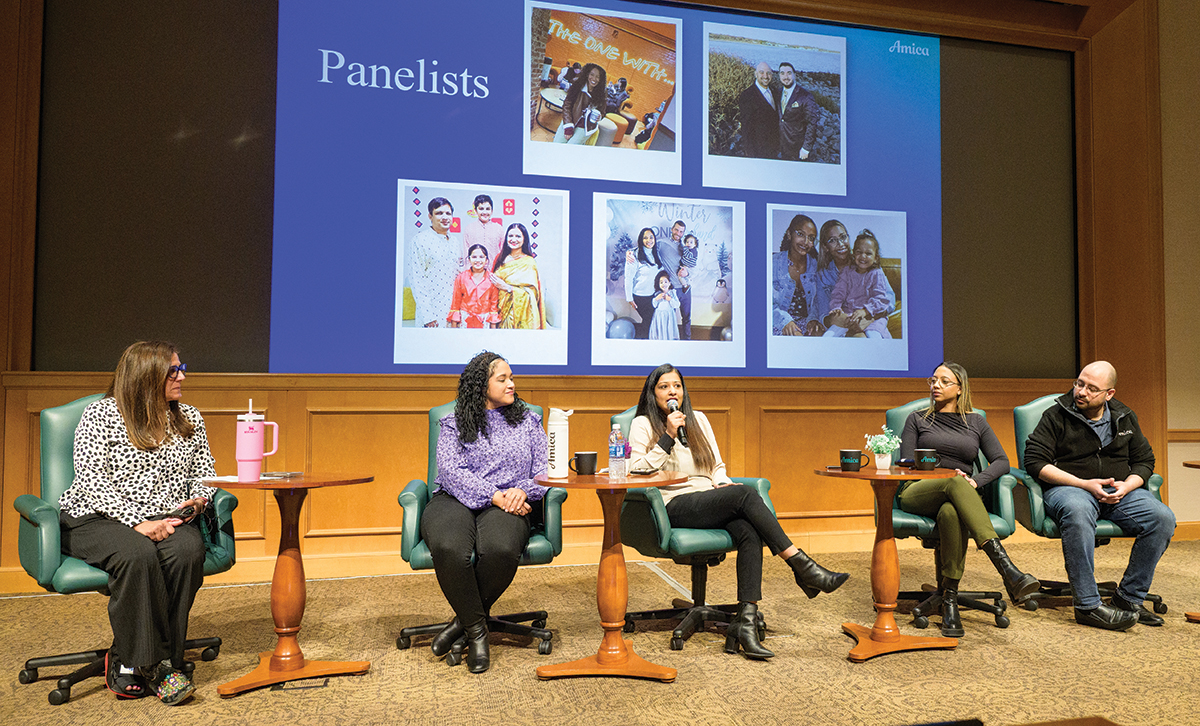
She led the way by launching two initiatives, employee resource groups and Courageous Conversations.
Efforts began with a dialogue around LGBTQ+ issues for Pride Month and expanded into a focus on women in leadership. The goal of this DEI work is to provide resources in areas where employees seek it most. Programming choices are based on requests and feedback from staff rather than from leadership.
For example, Amica has developed quarterly support groups around parenting and neurodiversity while building networks among employees that go far beyond formal meetings.
“We want our folks to have a voice, to feel comfortable,” Awan said. “Together, they can support one another, with advice and suggestions. Amica is that type of place.”
Often, the discoveries resulting from these activities lead to positive changes in policies and practices throughout the organization. They can even lead to ways for employees to explore career growth and professional development, such as through the Emerging Leaders or the Excel and Elevate Mentorship programs.
“It’s healthy for our employees and for the business to open up these conversations,” Boyd said. “It also helps with retention. Our employees know that we’ll be there for them in their time of need. They can say, ‘We know Amica is going to take care of us.’ ”
Awan recognizes that Amica’s high retention rates result from a strategy of promoting from within. Employees know and appreciate that there are many opportunities for advancement. The minimal voluntary turnover is directly attributed to the culture that the company has created.
Both Boyd and Awan spotlight the high level of empathy present among Amica staff members. It’s a critical competency when engaging customers who may be going through difficult times, but it’s also an invaluable asset in fostering an environment of caring among employees.
“You have to have empathy to do this job and that can’t be taught,” Awan said. “Plus, it leads to employees staying with us for a long time and getting to know and support one another.”
Finding such caring employees begins at the recruitment phase. Although, like many companies today, Amica may use artificial intelligence during the hiring process, it ultimately comes down to face-to-face interviews before a final choice is made.
“We’re a people-focused business with much of our staff working in the field or in the office,” Awan said. “We want to be able to assess whether it’s going to work for us and for them. There are certain competencies that we look for so that we know they’ll be there for our customers at any time, day or night.”
Amica is committed to its stance on DEI, regardless of changes and discussions currently happening outside the company. Amica recognizes the importance of a diverse workforce, and the benefits show in both employee retention and corporate performance.
“There is a lot of noise about changes with DEI right now, but Amica has stayed the course,” Boyd said. “We do it because it’s the right thing to do. It’s the right way to treat people.”