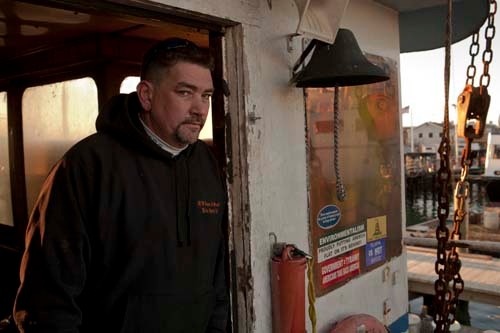
Fishermen throughout the Northeast, including in ports at Point Judith and New Bedford, say a system of regulating catches put into place earlier this year is threatening to decimate the multimillion-dollar groundfishing industry.
Fishing advocates argue that the system known as “catch shares,” which took effect on May 1, has failed miserably, forcing many boat owners to stay in port and others out of business.
The new program – implemented by the federal government – groups boats into fishing cooperatives called sectors, assigns catch limits for certain species of fish, and allows fishermen to sell, trade or lease those allotments. The intent is to protect fish, such as yellowtail flounder, deemed overfished.
But many in the groundfishing industry say the quotas aren’t big enough for boats to turn a profit, particularly when factoring in the new fees that have come with the program.
Many boat owners say they’re not bringing in enough cash to make loan payments on vessels and equipment.
“If your boat isn’t paid for, you’re on the verge of bankruptcy,” said Jeff Wise, who owns the 80-foot, offshore boat Johanna Lenore, which is docked out of Narragansett’s Point Judith.
The controversy has led to lawsuits challenging the catch-shares system, including one filed by the American Alliance of Fishermen and their Communities, a nonprofit group led by Point Judith fisherman Tina Jackson.
In addition, Mass. Gov. Deval L. Patrick earlier this month asked U.S. Commerce Secretary Gary Locke to raise the catch limits, saying fishermen in that state faced an “economic disaster.”
And now the Massachusetts congressional delegation is urging fellow lawmakers to withhold funding for the catch-shares program until the limits are increased.
But so far the National Oceanic and Atmosphere Administration, which oversees catch shares, has defended the system.
Catch shares focus on about 20 species, 13 of which have been deemed overfished.
By setting limits on those species, the program is allowing depleted stocks to recover.
At the same time, NOAA data show that total groundfishing among Northeast ports from May to October this year increased 5 percent to $37.14 million, compared with the same period in 2009, when the days-at-sea system was in place.
(Revenue from Rhode Island-based boats declined 8 percent to $1.88 million, NOAA said, while New Bedford-based revenue figures increased by 15 percent to $7.03 million.)
But Brian Rothschild, dean emeritus of the University of Massachusetts Dartmouth’s School for Marine Science and Technology, said the revenue doesn’t take into account the additional costs to boat owners under catch shares, or the effects of laying off crew members when one owner sells fishing allotments to another fisherman.
Rothschild, an outspoken opponent of the new program, said 385 Massachusetts-based boats have joined a catch-shares sector but nearly 60 percent have not fished this year. About 10 percent of the boats have landed 65 percent of the total revenue, he added.
Other opponents point to a report from the Mass. Division of Marine Fisheries and UMass Dartmouth that concluded that fishermen in the region could catch 14,500 metric tons more of groundfish without depleting the stocks. •