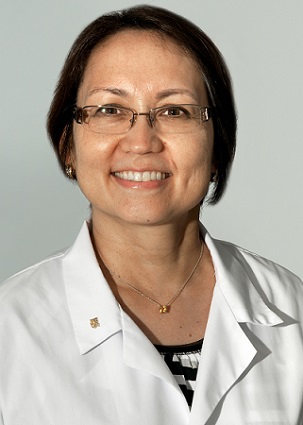
Dr. Karen Tashima, an infectious diseases specialist, is director of clinical trials at The Miriam Hospital’s immunology center. She is leading a phase three clinical trial at The Miriam for a COVID-19 vaccine developed by Novavax.
Tashima, who was recently named The Miriams’s 2021 Physician of the Year, discusses her roles in the Novavax trials and in two clinical trials for COVID-19 treatments.
Your Business Has Gone Global. Has Your Insurance?
A decade ago, “doing business internationally” was mostly a large-company concern. Today, a manufacturer in…
Learn More
PBN: What was the process behind you and The Miriam being selected to lead clinical trials for Novavax’s COVID-19 vaccine?
TASHIMA: I’ve directed a clinical trials unit at The Miriam Hospital since 2000 to address the needs of HIV patients in finding better and more tolerable treatments. Through my HIV clinical trials connections, I was able to connect with the pharmaceutical company that had remdesivir (Gilead) and we initiated two remdesivir treatment trials. I was involved with obtaining remdesivir to treat some of the first patients admitted at The Miriam Hospital. At the time – March 2020 – I thought, we really need a vaccine for this.
I receive clinical trials funding from NIH [National Institutes of Health] and they anticipated that we might have a pandemic at some point and asked if we would participate if needed. As part of the government’s scientific response to COVID, they asked established federally funded clinical trials sites to jump in and participate in the evaluation of the five COVID vaccines – Moderna, Janssen, Astra Zeneca, Novavax, Sanofi. My clinical trials unit was selected for the phase 3 Novavax vaccine study. My site is one of many in the U.S. and Mexico. Overall, the study enrolled close to 30,000 participants.
PBN: Roughly how many participants have been enrolled in Rhode Island in the Novavax trials, and what is the effectiveness rate of the vaccine so far?
TASHIMA: I enrolled 135 people. There is another site in Rhode Island that enrolled to the same trial. The early results released in June 2021 showed that the vaccine was 90% effective at preventing COVID illness, and 100% prevention of more severe illness. Participants are followed for two years to determine long-term efficacy and collect safety data.
PBN: As COVID-19 variants continue to develop and spread, how confident are you that vaccines will be effective protection against serious illness and death?
TASHIMA: Vaccines are highly protective against severe illness and death, even for some of the variants that are circulating recently. As new variants are identified, we’ll have to determine how effective the current vaccines are and be ready to modify the vaccines to combat the new variants as needed.
PBN: Are you or The Miriam involved in any other clinical trials related to the pandemic?
TASHIMA: Yes, most definitely. I am directly involved with two other studies, but there are many studies going on at Lifespan [Corp.]. PreventCOVIDU is a study for young people, ages 18 to 29 who have delayed vaccination and want to join us to help with understanding transmission of the virus and get paid for doing so. We will ask them to swab their noses daily for four months and ask them to identify their friends or family to enroll as potential participants.
Another study we are doing – ACTIV2 – is testing new treatments for people who have a case of COVID but are not hospitalized. Again, there is compensation for participation. Anyone interested in hearing more can contact us by email IDResearch@lifespan.org or phone 401-793-4317.
PBN: Have you continued to see patients during the pandemic? If so, how have those experiences affected you professionally and personally?
TASHIMA: I continue to see my outpatients during the pandemic. I have been fortunate to be able to respond to the pandemic with my skill set. We had to “pivot” away from our usual studies, but I’m glad my clinical trials team and I could contribute to some important advances. We came to work six or seven days a week when needed, and I am grateful to my team, my ID colleagues and to the public for participating in studies. Everyone has been eager to help!
Elizabeth Graham is a PBN contributing writer.