Patient safety has become a top priority for health care industry leaders and policymakers, both for its own sake and because medical errors add greatly to costs. A key part of that effort is to systematically track and report adverse events.
In 2002, the National Quality Forum published a report, “Serious Reportable Events in Healthcare,” that identified 27 types of events occurring in hospitals that were serious and largely preventable.
Now the NQF is expanding its list of SREs to cover non-hospital settings, including nursing homes and physician offices.
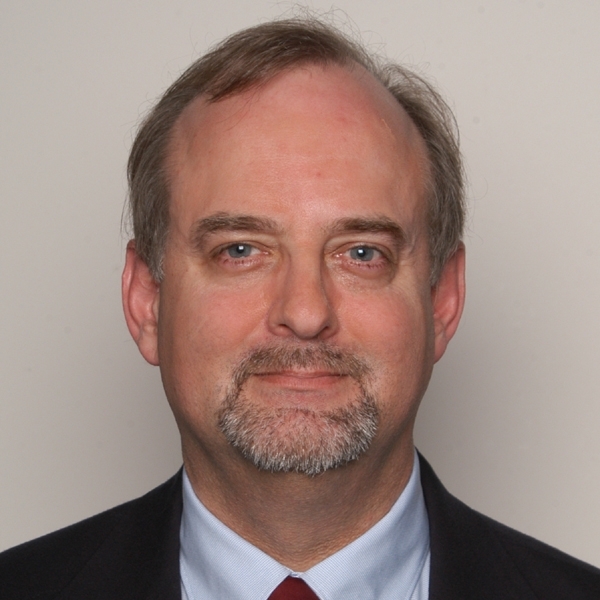
Dr. Stefan Gravenstein, clinical director of Quality Partners of Rhode Island, is one of six experts advising the NQF on safety in long-term care.
PBN: Can you explain the thinking behind the Serious Reportable Events in Health care list? How effective has it been at helping improve safety in hospital settings?
GRAVENSTEIN: There is growing awareness that certain clinically important health care events can be either diminished or avoided altogether with better care. Those that are serious and should never occur with the right systems in place are now labeled “never events,” and include things like wrong-side surgery.
In order to improve care, we have to identify those kinds of events, figure out how to count them, and decide on what quantity of such events is acceptable, if any. The NQF is a clearinghouse that defines reportable events based on their importance and on the ability to count them. It’s hard to improve things we cannot count and monitor to know how we’ve done and where we’re going.
Beyond Cash Donations: How New Forms of Giving Are Transforming Not-for-Profit Accounting
Evolving Funding Landscape for Not-for-Profits Not-for-profit organizations are being asked to do more with less,…
Learn More
PBN: The list is now being expanded to cover physicians’ practices, nursing homes and other settings. Why is it important to look beyond hospitals?
GRAVENSTEIN: Recognizing adverse outcomes, counting them over time (tracking them) and reporting them is a sure way to bring providers’ attention to the quality of care they are providing. Speaking as a physician, we typically will rate ourselves as performing better than we actually do. It is important that we add rigor to our perceptions, so we can identify where we fall short enough to change what we do, and then measure it to assure that the change is effective and lasts.
Hospitals and nursing homes have experienced the highest levels of scrutiny; nursing homes are the most regulated sector of the health care industry. Quality care has been shifting from a subjective assessment (such as patient and family satisfaction) to a measurable outcome (such as patient experience). It is important that the approach to measuring processes and outcomes becomes part of the culture of care, and that quality improvement (measuring, tracking, changing) is part of what we expect to do, are paid to do and [actually] do.
PBN: How much do we know about adverse events in long-term care settings now?
GRAVENSTEIN: In the long-term care setting, there are a variety of important risks to patients, such as falls, restraints, pressure ulcers and management of difficult behaviors (i.e., use of antipsychotics to control those behaviors). These also occur in all other settings, such as assisted living facilities and home care.
Our knowledge about what happens in nursing homes is already substantial, but it has plenty of room to grow. The knowledge about these issues in assisted living and adult day care facilities is practically absent, but will mirror in scope if not magnitude the occurrence in nursing homes. Less oversight [can lead] to a greater risk for adverse outcomes for a given degree of disability. Regulation for these other settings is forthcoming.
PBN: How much of a commitment does this project require from you?
GRAVENSTEIN: Our engagement is relatively brief. The work for the current round has a completion term of only a few months. However, the NQF process is ongoing, and panels are convened recurrently with typically rotating memberships over the years.
PBN: What do you hope to accomplish?
GRAVENSTEIN: Our scope is focused on serious adverse events. The outcome this round includes attention to harmonizing across to measures that apply to other settings, as well as the development and approval of new measures, and maintenance of current measures, such as around falls, the use of restraints, etc. I see this as an extension of my work at Quality Partners, as well as that of my academic work as a geriatrician at Brown University.