Across the United States, businesses, policymakers and industry leaders are increasingly betting on primary care to make us all healthier while controlling spiraling costs.
Every year, more than 120,000 Rhode Islanders get their primary care in community health centers, which take patients regardless of their insurance status, with reduced rates for those with lower incomes, and have led the way in trying to build true “medical homes.”
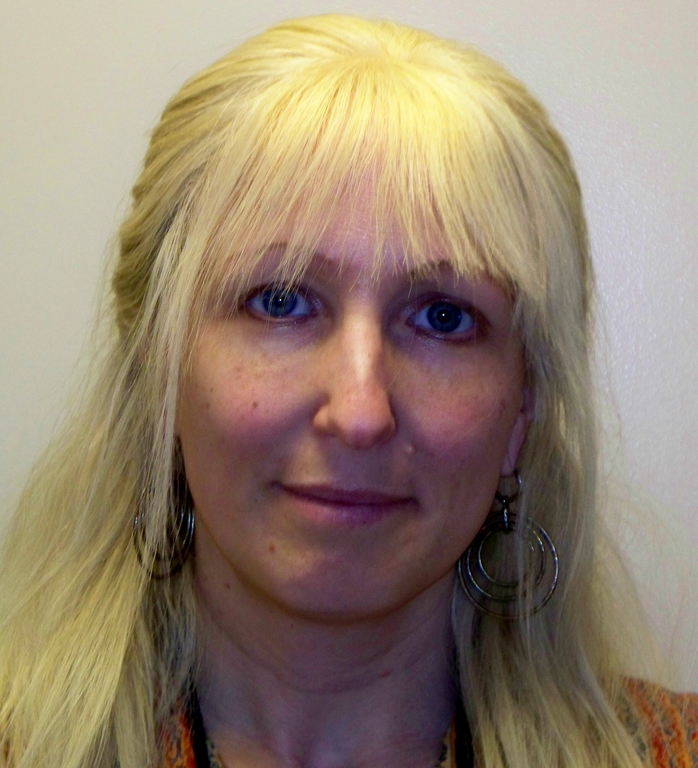
Linda Eibel, a family nurse practitioner at WellOne Primary Medical and Dental Care, was recently honored by NRI Community Services Inc. for her efforts to coordinate care for her patients with community mental health centers.
Eibel answered questions about community health, nurse practitioners’ role in primary care, and the connections between physical and mental health.
PBN: What’s your background?
EIBEL: I’ve been an nurse practitioner for 18 years. When I was an uninsured student I went to a community health center. Although I didn’t know it at the time, I saw an nurse practitioner and remember thinking that I had never had a “doctor” spend so much time with me or seem as interested. After college I thought I would go into social work, maybe counseling. While working at a homeless shelter I realized how difficult it was for clients to address mental health issues until basic needs were met: food, shelter, health. Clients ignored “counselors” but talked to the nurses because they offered more tangible help, such as Tylenol or Band-Aids. Being an nurse practitioner in primary care allows me to address all the needs of the patient.
Seifert Systems Invests in Energy Efficiency to Strengthen Operations
For manufacturers, energy is more than just another operating expense. It plays a critical role…
Learn More
PBN: What is your role at WellOne?
EIBEL: Nurse practitioners see patients just as the [doctors]. We try to encourage patients to see the same provider regularly, whether it’s an nurse practitioner, a physician’s assistant or an MD. All the providers work as a team and often consult with one another.
Historically the nurse practitioner role was created to help with the shortage of primary care providers and was based on the model of the public health nurse – which focused on disease prevention and health promotion. However, at WellOne, I would not say that nurse practitioners necessarily do more teaching than MDs. Primary care providers in general do a lot of teaching because of the chronic illnesses we see most – such as heart disease, diabetes – and their connection to lifestyle issues such as diet, exercise, smoking and stress.
PBN: You’re in a community health center, but a rural, not urban one. How does that shape your patient population?
EIBEL: We serve a broader swath of patients geographically – everything is farther away and harder to get to than in an urban center. In rural northwestern Rhode Island, the population is primarily Caucasian. It is rare that a client doesn’t speak English. However, it is quite diverse in terms of income and education. A lot of people have lived in the area their whole lives and like a lot of Rhode Islanders, traveling to Providence seems like a major excursion. Many have private insurance, some are uninsured, and others have medical assistance or Medicare. Although less than 20 percent are uninsured, that number has increased dramatically over the last couple of years [the number of uninsured patients treated at WellOne rose 88 percent from 2008 to 2009].
Just as in the rest of the state, many of our patients have lost their jobs and then their insurance. Without an income, some have lost their homes. And when the car breaks down, they might not be able to afford to fix it. Without a car and without significant public transportation in this part of the state, getting around, for work or medical appointments, is very difficult. We are in downtown Pascoag, and many clients walk to WellOne.
PBN: You’ve just won an award for your work with community mental health centers. How much of a need do you see for mental health services among your patients, and to what extent is it unmet because of lack of providers, unaffordable rates, poor coverage, etc.?
EIBEL: There is a huge unmet need for mental health care, and I believe the reasons are all of the above. Whenever you see an increase in poverty or stress in a population, you will see more depression, anxiety, alcohol and substance use. People stop taking their medication because they can’t afford them.
There is definitely a lack of providers, especially in rural areas. We are fortunate to have four psychologists, a licensed mental health counselor and a clinical nurse specialist. Before the clinical nurse specialist began at WellOne, we had no one in the area who was expert in psychiatric medications. … We treat depression and anxiety on a regular basis, and other issues such as bipolar disorder less commonly. Substance abuse and alcoholism affect a large number as well – and these can impact other mental and physical conditions.
Along with prescribing medications, there is always some degree of counseling in primary care. We can refer clients to psychologists here or elsewhere and when needed to psychiatrists. Some will refuse formal counseling and some are unable to go for a variety of reasons. Unfortunately the reality is that when there are no psychiatrists or psychiatric specialists available, it falls to the primary care provider to do what we can.
PBN: How do you work with the community mental health centers?
EIBEL: Most of our interactions with community mental health centers involve clients who are unable to advocate for themselves because of their mental illness or substance abuse issues. Often these are patients living in supervised group homes due to their psychiatric condition. Years ago they would have been institutionalized – before the policy shift against long-term hospitalization and toward a return to the community. Regardless of their psychiatric diagnoses, these clients have the same physical ailments and chronic medical conditions as anyone else, but they may not be able to articulate their symptoms. They may be fearful or confused. They often cannot answer questions about their symptoms in a clear, coherent fashion. They may be distracted by voices they are hearing. It takes a lot of patience, time and understanding.