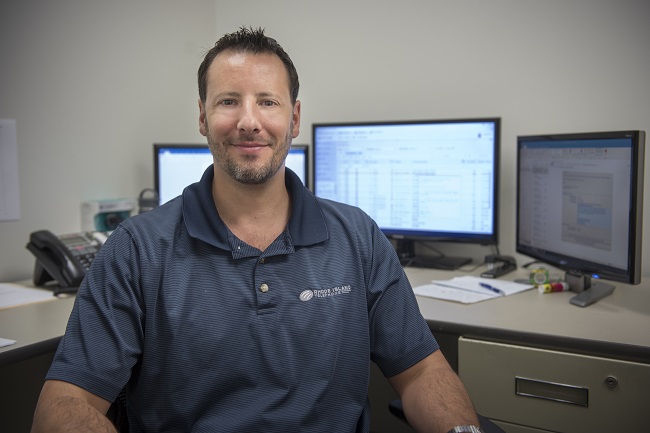
COVID-19 has more people working from home and to do that, we need phones, says Rhode Island Telephone Service Manager Rob Hiller.
Cloud-based Voice over Internet Protocol systems have been allowing companies to pivot quickly with allowances for accountability, such as key metrics for managers, he said. Some of the benefits are proving their value in terms of productivity and cost.
Building a Strong Data Foundation in the Age of AI
Artificial intelligence (AI) has become a key priority in the boardroom and across management —…
Learn More
PBN: In light of COVID-19, are you seeing more companies with employees working from home requesting creation of redundant internet connections?
HILLER: There’s a range of at-home office setups; some people use just a personal cellphone and a laptop or tablet with some success, while others have a full at-home office setup with a desktop, multiple monitors and a more traditional office phone that connects to a main office.
As for redundant internet connections, we are seeing a lot of people leveraging their mobile phones to receive calls via a mobile-phone application connected to their main system or using call forwarding. We have also seen a lot of people increasing internet bandwidth at home to accommodate for more internet usage.
PBN: Rhode Island Telephone advocates for cloud-based VoIP phone systems for what they can offer in terms of business continuity, as opposed to traditional phone systems. Can you explain?
HILLER: There are a few major advantages to a cloud-based VoIP system, especially during COVID with remote workers, staffing changes and quickly changing business protocol.
The customers we have using our cloud-based hosted phone system, CloudWorx, can simply unplug their desk phones at work and plug them into their router at home with no programming changes needed. The remote phone user at home can make, receive, transfer and park calls just as if they were in their office. Office administrators can log in to a web-based management portal from any computer or device to make quick changes to the phone system, such as voicemail greeting updates, auto-attendant messages, holiday greetings and more.
Managers can access user-friendly call reporting to track employees’ call volume, abandonment rate and other key metrics, all from the web-based management portal. More-traditional phone systems, in most cases, can only offer these features in a limited capacity, with much more complex programming required to make most changes. Also, because a more traditional system requires hardware in your office building to function if your building loses power or internet, all your remote workers will be down.
With a hosted cloud-based system, you have built-in redundancy with multiple backup locations running your phone system. So, one location losing power or internet will not affect any other location.
PBN: Any real-life local business success stories highlighting VoIP’s flexibility?
HILLER: After working with a not-so-user-friendly Cisco Phone System for the first five months of COVID, the team at Blackstone Valley Community Health Center decided it was time to make a change. With over 300 phones at six locations with dozens of employees working from home, Blackstone needed a more flexible, dynamic and user-friendly solution.
We were able to upgrade Blackstone to a CloudWorx Hosted VoIP Phone System in less than a month, allowing every employee to work from home as needed. With CloudWorx, if any employee at Blackstone needs to work from home at a moment’s notice, they now can easily unplug their desk phone at work and plug it back into their router at home to make and receive calls as if they were in the office with no programing needed.
Managers at Blackstone are now able to fully monitor and control all calls remotely with the CloudWorx web-based administrators’ portal, with built-in redundancy with two separate data centers, as well as local technicians ready to respond to any emergency 24/7. Blackstone also lowered their phone bill over 40% a month, recouping the cost of the phone system in less than a year.
PBN: Rhode Island Telephone works a lot with public and private schools around the state. How was the company able to help schools with reopening this year?
HILLER: Every year at the beginning of August, we schedule visits with each school to test the phones, overhead paging systems and to make any updates needed before the school year starts. This year, due to COVID, some additional updates were required for the schools to open. Many schools did not have a dedicated phone near the entrances, where students would be temperature-checked by nurses before going into the building for the day.
The team ran new lines, setting up dedicated phones near the entryways, so school nurses and staff will have a safe way to communicate with the office administrators. The team at Rhode Island Telephone is proud to be able to help in any way we can to keep students, parents and staff safe this school year.
PBN: We have all adjusted to videoconferencing and video meetings being our new normal, at least for now. Do you feel it will remain a mainstay of the corporate world?
HILLER: We have received numerous requests to set up video phones in homes and offices. We also have gotten a lot of requests from our customers for phone systems that can quickly and easily be set up at home in case of a second wave of COVID. Rhode Island Telephone has also adapted to the new normal, moving all in-person CloudWorx manager training to a remote setting.
I think a lot of employees and business owners are seeing the benefits in working remotely: commutes being eliminated for many employees; reduced commercial office space costs; and future employees unrestricted by region, allowing employers access to a much larger talent pool. I do feel that many of the behavior changes in business will remain long after COVID because in many cases, these changes can increase business productivity and efficiency.
Susan Shalhoub is a PBN contributing writer.